Diamonite Electrathon America Racer

Functional Artist

Well-known member
Messages
5,544
Reaction score
3,140
Location
Toledo, Ohio
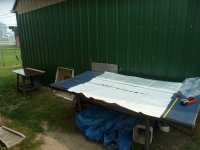
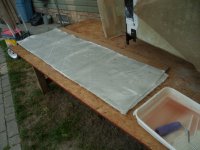
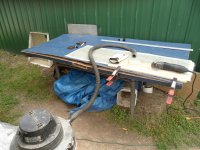
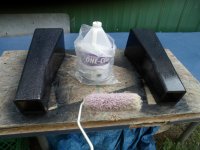
I got everything ready for the procedure :wai:
SAM_8464 (1).JPG
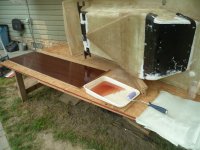
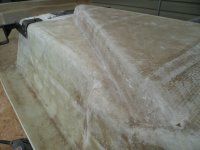
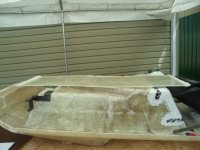
I "gooped on" a good coatin' of the resin
SAM_8465 (1).JPG
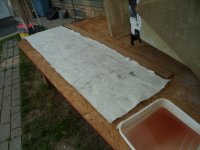
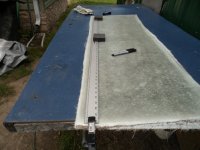
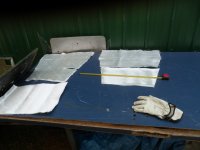
Layed down a "sheet" of the 1708 FG cloth
SAM_8466 (1).JPG
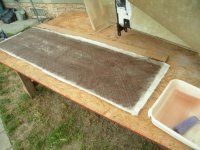
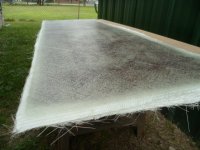
Then, added a bit more resin, ta saturate the cloth from the top side
SAM_8467 (1).JPG
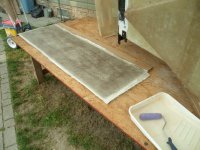
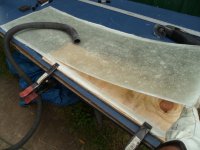
Layed down the second layer
SAM_8468 (1).JPG
Then, saturated that piece too
SAM_8469 (1).JPG
That entire procedure took about 30 minutes :thumbsup:
 

Functional Artist

Well-known member
Messages
5,544
Reaction score
3,140
Location
Toledo, Ohio
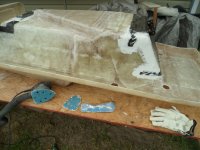
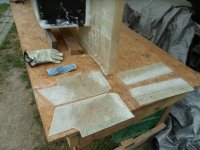
Whilst that wasa curin' I did some roundin' & smoothin on the monocoque
....& did some extra "roughin' up" of the areas, that I'm gonna be bondin' more pieces onto
SAM_8471 (1).JPGCured/rough FG is really hard on sandpaper
...& hands

So, make sure ta wear thick leather HD gloves (them white ones are ~$5.00 @ HF)
SAM_8472 (1).JPG
A view of some of the smoothed off/cleaned up areas
SAM_8473 (1).JPG
A couple of hours later
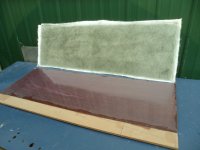
...& the FG panel looks like this
SAM_8475 (1).JPG
I gave 'er a little liftin' action on the corner & she started releasin' :wai:
SAM_8476 (1).JPG
Easily "popped" the whole panel right off
...& now, we have a FG panel :2guns:
SAM_8477 (1).JPG
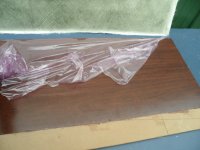
The PVA (barrier layer) just peels off
...kinda reminds me of Cellophane (plastic)
...& then, gets disposed of ;)
SAM_8478 (1).JPG
 

Functional Artist

Well-known member
Messages
5,544
Reaction score
3,140
Location
Toledo, Ohio
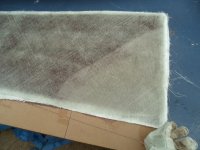
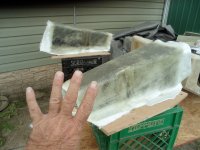
So now, we have a (2) layer sheet or panel of 1708 Bi-Axial FG
SAM_8488 (1).JPG
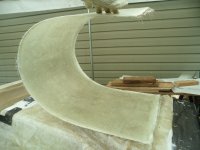
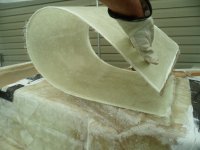
It's pretty flexible
SAM_8486 (1).JPG
Even more flexible than that
SAM_8487 (1).JPG
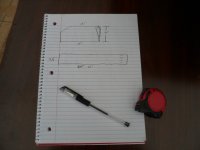
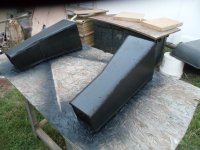
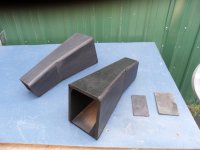
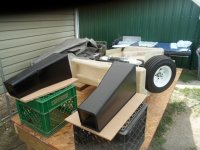
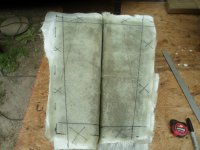
Here is "the plan" so far
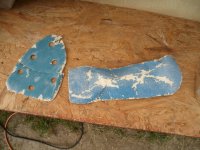
top: "nose" re-enforcement panels
bottom: air channel "sides"
SAM_8489 (1).JPG
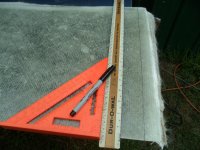
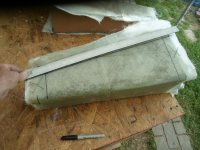
Let's start off with a nice-n-straight edge
...set up a marking station
SAM_8492 (1).JPG
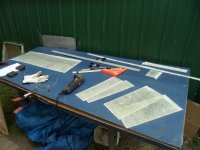
Then, set up some cuttin' stuff
...set up a cutting station
SAM_8497 (1).JPG
Halfway thru the cut
SAM_8504 (1).JPG
Now that we have a straight edge ta work with
...lets "square up" the side
SAM_8508 (1).JPG
I got 'em all cut out
...(2) "nose" re-enforcement panels
...& (2) air channel "sides"
SAM_8512 (1).JPG
 

Functional Artist

Well-known member
Messages
5,544
Reaction score
3,140
Location
Toledo, Ohio
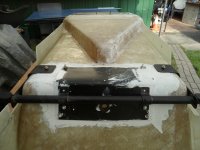
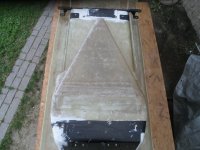
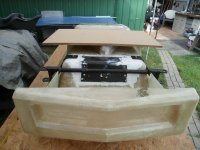
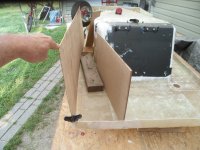
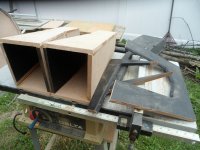
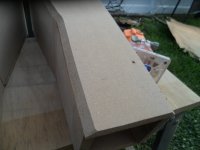
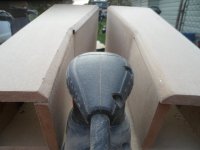
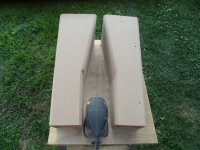
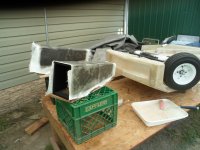
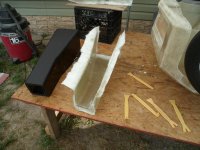
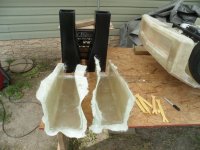
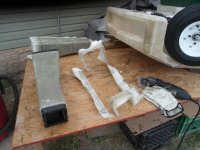
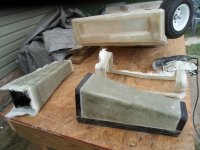
Mock-up/fitment test
SAM_8521 (1).JPG
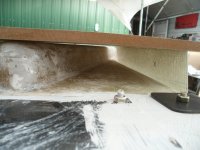
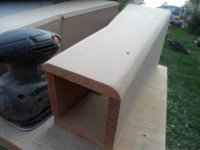
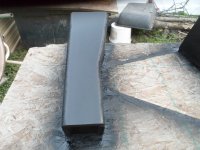
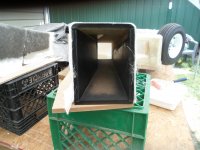
Air channel
SAM_8522 (1).JPG
"nose" panel
SAM_8523 (1).JPG
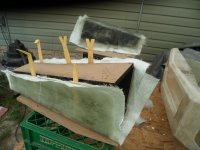
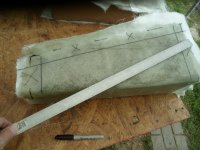
First, I roughed up all areas, that are to be bonded
SAM_8526 (1).JPG
Then, cleaned all areas, that are to be bonded
SAM_8530 (1).JPG
Mixed up some resin
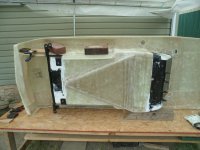
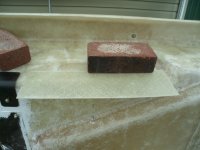
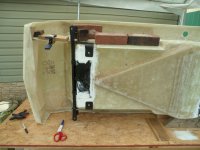
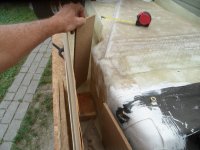
...& bonded the left side panels to the monocoque
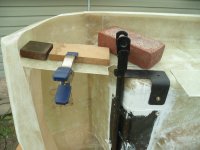
...& then, gravity clamped 'em "in place"
SAM_8534 (1).JPG
I figured it would be best ta only do (1) side at a time
...so, I could use gravity, to "my advantage" ;)
Also,
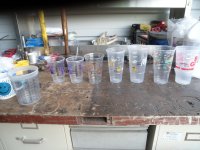
About the smallest batch of resin I can mix up, with the measurin' devices that I have, is ~8 oz.
&
I'ma pretty sure it ain't gonna take 8 oz of resin ta bond these littlt "guys" on
So,
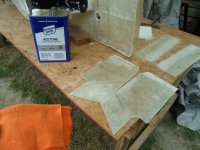
I figured that I'd "seal up" or weatherproof
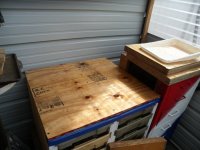
...the top of a storage drawer unit, that I made up :2guns:
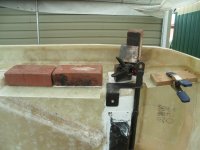
SAM_8537 (1).JPG
 

Functional Artist

Well-known member
Messages
5,544
Reaction score
3,140
Location
Toledo, Ohio
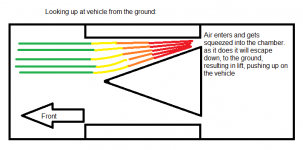
Am I seeing this correctly? Just for what it's worth, I don't think you'll be achieving speeds where this will matter.

View attachment 163616
Hey Ez,

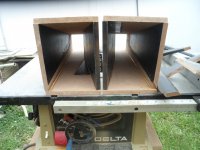
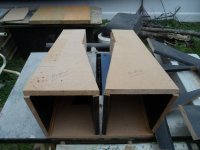
I'ma tryin' ta "play with" Venturi's
...& doin' some learnin' more about, the Venturi Effect
...whilst doin' some "real world" experimentin' & explorin' :thumbsup:

This seems ta explain "it" pretty well ;)

How the Venturi Effect Creates Airflow and Suction

The Venturi effect is a phenomenon where a fluid’s speed increases as it travels through a constricted section of a pipe. This increase in velocity results in a simultaneous decrease in the fluid’s static pressure. The principle is observable in various natural and man-made environments, from the way wind funnels between tall buildings to its use in complex machinery. It provides a method for altering fluid pressure and velocity without mechanical parts.

The mechanics of the Venturi effect are illustrated using a Venturi tube, which has a wide entrance that narrows into a constricted throat before widening again. To maintain a constant flow rate as fluid passes through the smaller throat, its velocity must increase.

This relationship between velocity and pressure is explained by the Bernoulli principle. The principle states that for a fluid in motion, an increase in speed occurs alongside a decrease in pressure. In the Venturi tube, the highest fluid velocity and lowest pressure are therefore reached within the throat.

This can be visualized as a crowd moving down a hallway that narrows to a single doorway. Each person must speed up to pass through the constrained opening. Similarly, fluid particles accelerate through the throat, causing a drop in pressure. After the throat, the tube widens, allowing the fluid to slow and its pressure to increase toward its initial level.

The reduction in pressure within the Venturi throat can be harnessed to create suction. This low-pressure zone creates a pressure differential relative to the higher ambient pressure outside the tube, generating a vacuum force. This suction enables a process known as entrainment.

Entrainment occurs when this low-pressure area is used to draw a secondary fluid into the primary flow stream. By placing a port at the throat, the higher external pressure pushes the secondary fluid into the main tube, where it mixes with the primary flow.
A classic example is a perfume atomizer. When the bulb is squeezed, it forces a jet of air to move at high speed across a small dip tube extending into the liquid perfume. The fast-moving air has a lower pressure than the atmospheric pressure inside the bottle. This pressure difference pushes the perfume up the tube and into the airstream, where it is dispersed as a fine mist.

The principles of accelerated flow and pressure drop have been adapted for a wide array of practical uses across various industries.

  • Automotive Carburetors: Older vehicles utilized carburetors that relied on the Venturi effect. Air passing through a constricted passage in the carburetor would speed up, creating a low-pressure zone that would draw fuel from a small jet into the airstream, forming the combustible air-fuel mixture needed by the engine.
  • Household and Industrial Tools: Paint sprayers employ this principle. A stream of compressed air moves at high velocity over a tube leading to a paint reservoir. The resulting low pressure siphons the paint into the airflow, where it becomes atomized. This concept also applies to pressure washers that entrain cleaning solutions.
  • Medical Nebulizers: In the medical field, jet nebulizers use the Venturi effect to deliver medication for respiratory conditions. Compressed air flows through a narrow channel, creating a vacuum that draws liquid medication from a reservoir. The airflow then breaks the liquid into a fine aerosol or mist for inhalation.
  • Aviation Lift: An aircraft wing is shaped with a curved upper surface and a flatter bottom surface. This design forces the air flowing over the top to travel faster than the air flowing underneath. This higher velocity creates a zone of lower pressure above the wing compared to the higher pressure below it, resulting in a net upward force that lifts the aircraft.

  • https://engineerfix.com/how-the-venturi-effect-creates-airflow-and-suction/
 
Top