busted_blocks
Active member
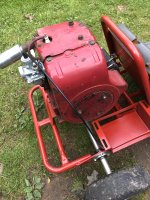
I'm trying to design a connecting rod for a GX200. My goal is to make a cheap'ish connecting rod that will do something like 8000rpm. I don't want to be as fancy as an Arc Racing rod, the cost for small batch production is too high. I need to limit the number of setups for machining but more importantly I'd love some experience with failed rods to know what I'm trying to improve.
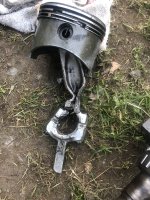
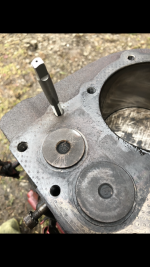
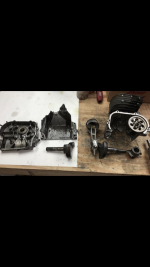
My failed connecting rods all failed due to lack of lubrication. What I don't know is if lack of lubrication was due to stretching and deformation of the rods due to extra stress or simply lack of lubrication. My engines had 15W40 oil which may have contributed to thefailures.
I have a few options. Design a completely new rod or modify existing rods.
1. Does a high rpm rod absolutely need removable bearing surfaces?
2. Any idea of why stock rods fail? Mine have been due to friction and the piston wrist pin end never showed damage. Never saw them break along the length either.
3. Do you think adding an extra lubrication hole in the stock rod would help?
4. Do you think it's absolutely necessary to have removable bearing surfaces? It's not the removable surface that's the problem it's stock screws that have a large head and cut into the top of the rod weakening it. I'd like to avoid custom screws, though socket head cap screws are available, but I don't know if I can get the torque wrench with hex head in the block to torque them. Waiting for the adapter to arrive to check.
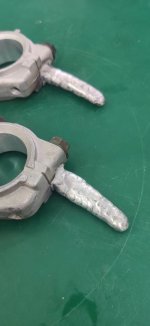
Features of an Arc rod:
- 7075 aluminum vs cast
- Custome removable bearing surfaces
- Thicker "top" of the connecting rod side
- Splash stick lubrication scoop/hole
- Oil retentions groove in bearing surfaces
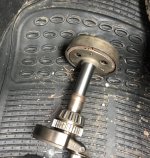
Many car rods have no lubrication holes in the crank end of the rod, but I think they have one in the crank shaft (I'm not really a car guy). Removable bearing surfaces are available for very cheap, but the mounting tab is at a different spot from Arc. I'm not opposed to using those assuming I can solve the bolt issue.
Possible new rod:
7075 is no issue, cost is almost the same as 6061
Extra lubrication holes no issue
Removable bearing surfaces?
I don't want scoop hole, though I can plot a path through the rod for a similar hole, the Arc design needs a deep drill, custom shank bolt and a internal groove cut in the cap bolt hole.
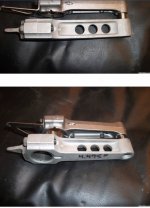
Another option is can I modify a stock rod to be good enough. I could simply add an extra lubrication hole, but I think this has limited value. What I want to try is machining the top of the cap flat, add a piece of tool steel 4mm thick on top and bolt it down. This should increase the stiffness of the stock rod. If the weight is an issue I'm sure I could use titanium and even have a different stiffer shape to the stiffener. I'm pretty sure it will allow me to add a hole in the cap for lubrication as well. I've seen some tik tok car guys groove car rod bearings to a add more oil retention. I could add such a groove, but it reduces the rod bearing surface. I'm not opposed to blowing up some more blocks testing
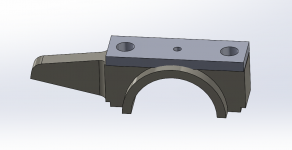
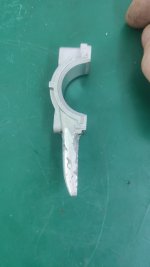
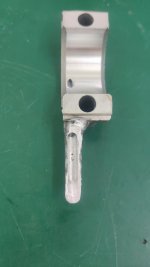
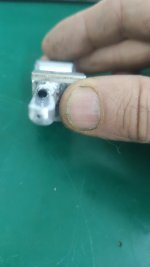
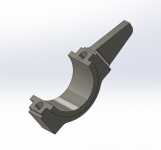
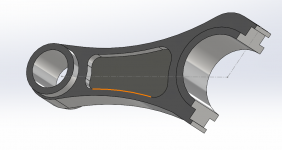
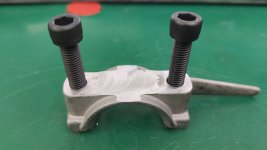
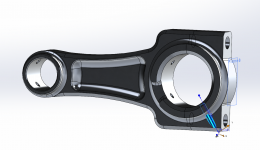
I drew up a conrod, which absolutely will not work as the cap needs to be at 120degrees to clear the cam shaft, but the overall shape of the fillets etc. is OK. I started another one with the 120 degree angle. I won't forget that again. I also machined a cap ready for a stiffening bar and got longer bolts. Very hard to find M7*1.0...
Attachments
-
 simple rod cap.png121.1 KB · Views: 6
-
 simple rod1.png127.4 KB · Views: 6
-
 machined stock cap.jpg1 MB · Views: 5
-
 con rod1.png474.3 KB · Views: 6