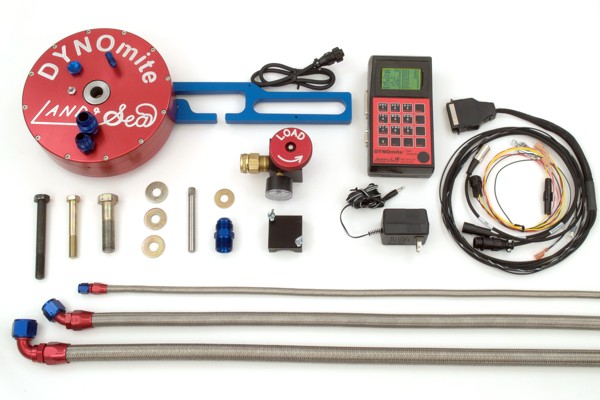
in theory... yes.
it's far from practical though, just the changes in viscosity alone will ruin the measurement.
And the temperature of the fluid WILL change (thanks to the pressure)
Of course one could generate a lookup table with viscosity at temperature,
but even that has to be an interpolated value at some point which again will be inaccurate.
But then another inaccuracy kicks in (the pulsing behaviour of the pump)
IDK about the number of veins in FHB's pump but chances are the pulses are significant enough to be picked up during measurement.
And we're back to interpolation ...
giant flywheels are a pain to run (from a security standpoint) but in the end, due to the inertia they provide (evening out pulsing and other side effects)
and the more massive they are, the more you can ignore even their bearings and whatnot.
In the end you do not only end up with the much 'simpler' setup, you also have the easiest possible math to calculate the torque provided.
But truth is.. nobody want's to have a giant weight spinning in his workshop, for sure not at the rpms we talk about here...
if it catches on your clothes you'll break some of your bones, your skull even..
if it breaks free of it's fixture it'll create some serious mayhem (and again breaks bones if you get too close)
Sooo fluid pressure measurements is the way to go for DIY... IMHO...
and a load cell does make sense to cancel out most of that guessing and interpolation,
measuring "real" physical torque the old fashioned way (torque bar length and force applied)
'sid