

bob58o
SuckSqueezeBangBlow
I played around for a lil bit today and I learned how to start this engine jetted as is (0.38mm Pilot Jet).
This worked repeatedly so I'm documenting my launch procedure.
-Mixture screw about all the way out (4+ turns, it is an air screw so I am allowing more air - leaning out the idle mixture).
-Idle Speed Screw all the way in.
-No Enrichment Circuit (no choke).
-Crank Starter Motor until it begins to run on its own (it begins as a really slow stumble)
-When it starts to run under its own power, SLOWLY blip the throttle a tiny bit (it will take off to about 4500 RPM, blip too aggressively and it will die).
-Back off the idle speed screw until I get desired idle RPM
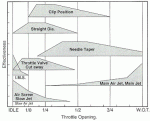
Moral of the story - me thinks the idle jet is too big. Logic don't fail me now.
And don't try to tune a carb that isn't tightly clamped to the boot.
I have a video. I'm not sure if it captured the 6" blue flames that constantly shoot out the short exhaust.
The video also captured a glowing ember coming out the exhaust. Like a shooting star. I guess there is a reason spark arrestor mufflers exist.
https://www.youtube.com/watch?v=cUnsstYHGWg&feature=youtu.be
This worked repeatedly so I'm documenting my launch procedure.
-Mixture screw about all the way out (4+ turns, it is an air screw so I am allowing more air - leaning out the idle mixture).
-Idle Speed Screw all the way in.
-No Enrichment Circuit (no choke).
-Crank Starter Motor until it begins to run on its own (it begins as a really slow stumble)
-When it starts to run under its own power, SLOWLY blip the throttle a tiny bit (it will take off to about 4500 RPM, blip too aggressively and it will die).
-Back off the idle speed screw until I get desired idle RPM
Moral of the story - me thinks the idle jet is too big. Logic don't fail me now.
And don't try to tune a carb that isn't tightly clamped to the boot.
I have a video. I'm not sure if it captured the 6" blue flames that constantly shoot out the short exhaust.
The video also captured a glowing ember coming out the exhaust. Like a shooting star. I guess there is a reason spark arrestor mufflers exist.
https://www.youtube.com/watch?v=cUnsstYHGWg&feature=youtu.be
Attachments
-
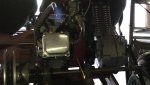 AA5DD93C-2CD6-4AF9-B705-2ED7B6285447.jpg55.3 KB · Views: 8



 Triangles.