Ratio for a jackshaft is as follows.
JS in/engine sprocket * Axle sprocket/JS out
So if you has a 10T on the engine, a 20T on the JS in, a 10T on the JS out and 60T on the axle your ratio would be (20/10)*(60/10) = 2*6 = 12
So your ratio would be 12:1
You will have to count the teeth on your sprockets and do the maths. Even better, give us the sprocket counts and we can then verify your maths
---------- Post added at 08:21 AM ---------- Previous post was at 08:18 AM ----------
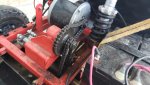
I think it's actually a Razor "Dune Buggy", but not 100% certain.
---------- Post added at 05:26 PM ---------- Previous post was at 05:05 PM ----------
I think I see the use-case for such a gearing setup - space limitations? Instead of a 2, big vertical sprocket setup, it makes for a 4, small horizontal sprocket setup? Is this correct? I also noticed by switching the two jackshaft numbers, extreme ratio differences in opposite directions come about. Awesome...thanks for that link!
Space limitations is the EXACT reason for this type of setup. You can get compund gear reduction without having a huge axle sprocket that will carve the ground up. Imagine wanting a 10:1 ratio. That means a 10T on the engine and 100T on the axle!!!! A 100T sprocket will more than likely be bigger than your rear tyres


 20190703_155919.jpg297.6 KB · Views: 9

