Best welds thread :D

Status
Not open for further replies.

AMMFAB

New member
Messages
57
Reaction score
0
Location
Phoenix, AZ
Here's a few recent ones. ....

Extended strut top hats for a crx......


Aluminum bead on a fuel tank for a 32 ford......


Sch 40 304 stainless Butt weld on a turbo manifold for a nissan sentra.....


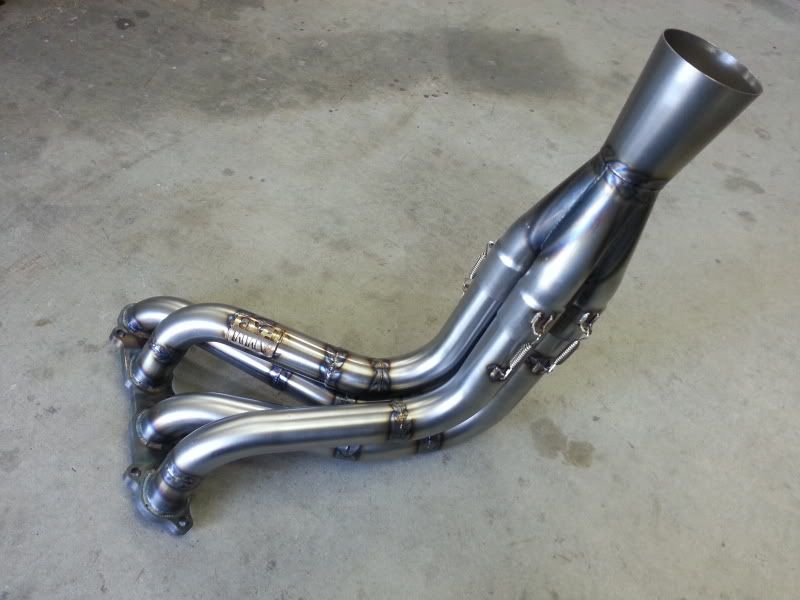
A header I just made for ak series honda civic. ....


And here's me welding some stainless 18g 3" exhaust..... I really like this pic. .....


Mike
 

KartFab

Active member
Messages
3,381
Reaction score
50
Location
Dallas, TX
Wow im jealous! I have a DC TIG welder, but its just real basic, only has lift-arc, no hf or pulsing etc. What kind of welder and settings do you typically use? I am thinking about getting either a miller dynasty dx or a miller diversion 180. What are your thoughts?

And to stay on topic, here is a pic of a kart i fixed/welded for a guy last week. I put on gussets and straightened out his spindle bracket arms.
 

Attachments

  • IMG_2552.jpg
    IMG_2552.jpg
    103.3 KB · Views: 39

machinist@large

Active member
Messages
2,865
Reaction score
28
Location
West Michigan, 49331
All these TIG welds are making me want one. So purty, lol.

Tig is an awesome tool to have, but it does have it's limits; the biggest being it has the largest Heat Affected Zone (HAZ). That's the area outside the actual weld that is affected by the heat of the weld (discolored zone). Also, if you are trying to weld larger cross sections and/or difficult matl. (like aluminum or copper) the torch and cooling system for it get huge (and $xp$nc$v$).

That being said, you can do finer detail work with Tig that any other process except maybe Laser. The fact that a good Tig power source (AKA the welder itself) is also an excellent AC/DC Stick welder means that you are actually getting two welders for the price of one.

There are universal machines out there that can do Mig as well (all three) in one machine; they are basically a Stick/Tig machine and a Mig machine in the same case. Mig takes a different type of power souce entirely to be really effective. For most work, you'll be money ahead to have a separate unit for Mig, especially if you're heavy stuff (1/2" or bigger) with it.

Short and sweet? No one process can do everything. Pick the one you need to do the job best (or make do with what you have).

All this talk about Tig has me missing my old machine; I had to sell some stuff recently (crunch time) and that machine was one of the two I found buyers for. Still got my Lincoln 135 Mig and my Miller Dial Arc AC/DC Stick box though.....(I'm not totally dead in the water at least).

:cheers2::thumbsup::popcorn: Pat
 

AMMFAB

New member
Messages
57
Reaction score
0
Location
Phoenix, AZ
Thanks guys, I have a Lincoln v205 ( the miller dynasty 200's direct Competition)..... if ur going to Get a Miller the dynasty is the only way to go but it'll cost u. I really thought I would use all the features on my welder when I got it. ....... I use one feature. ....... ill adjust the frequency on thin aluminum, that's it. Pulse, different wave forms and everything else it could do I don't use.
Mike
 

KartFab

Active member
Messages
3,381
Reaction score
50
Location
Dallas, TX
....... I use one feature. ....... ill adjust the frequency on thin aluminum, that's it. Pulse, different wave forms and everything else it could do I don't use.

Yea I hope I don't go all in and find out that i could have got something else with less features.

I looked at the selling prices for a used dynasty on ebay, (about $2,500-$3,000)... then I paused for a minute looked at the maxstar 200 dx ($1,800 but it doesn't do AC/aluminum)... then the diversion, but its so new that nobody is selling used ones ($1,900 new). I really think the diversion 180 would be adequate for what i need.

So now the little game I am playing in my head is between a new diversion 180 for $1,900 or a used dynasty 200 dx for $2,500 its 'only' a 600 difference... have to do a lot more welding jobs before i can justify to my wife that I am dropping a few G's on an unnecessary welder. (I have already tried the 'but it brings me so much happiness, whats 3 grand for a lifetime of happiness?' line and that didn't go over well).

...and here is a picture of the most recent welding job that I have done. Part of two pillars and an arch for a wedding/floral designer.
 

Attachments

  • IMG_1244.JPG
    IMG_1244.JPG
    150.3 KB · Views: 15
  • IMG_1247.JPG
    IMG_1247.JPG
    155.7 KB · Views: 12

oscaryu1

New member
Messages
2,767
Reaction score
6
Tig is an awesome tool to have, but it does have it's limits; the biggest being it has the largest Heat Affected Zone (HAZ).

no...

gran pann - look into Eastwood's TIG welder... $700 IIRC, AC/DC. Fixed 60hz pulse is the only downside, but unless you're doing aluminum sheet, you should be fine.

Best plus is it can run off of 120v! Done up to AC 140amps on 120v wall socket before it tripped the surge protector breaker!
 

machinist@large

Active member
Messages
2,865
Reaction score
28
Location
West Michigan, 49331
Tig is an awesome tool to have, but it does have it's limits; the biggest being it has the largest Heat Affected Zone (HAZ).

no...

gran pann - look into Eastwood's TIG welder... $700 IIRC, AC/DC. Fixed 60hz pulse is the only downside, but unless you're doing aluminum sheet, you should be fine.

Best plus is it can run off of 120v! Done up to AC 140amps on 120v wall socket before it tripped the surge protector breaker!

:confused::confused:

You used a part of my post; apparently referring to Tig having the largest HAZ of all the arc processes, then jump to recommending a brand/model for the OP to consider. I've been following the thread and the fact that the OP desires a tig welder for himself. Absolutely nothing wrong with that, all I was pointing out was that Tig, like all forms of welding DOES HAVE plusses and minuses. No more, no less.

If you disagree with what I posted, could you please tell us what and/or why?
 

machinist@large

Active member
Messages
2,865
Reaction score
28
Location
West Michigan, 49331
Especially since my original post was five paragraphs; a one word argument just has me going "WTF!?!"

And, for the record, all I was trying to say is that ALL welding processes have pro's and con's; knowing what those are BEFORE you shell out hard earned cash would be a GOOD thing (at least, as far as I'm concerned).
 

Doc Sprocket

*********
Messages
15,677
Reaction score
142
Location
Ontario, Canada
Especially since my original post was five paragraphs; a one word argument just has me going "WTF!?!"

And, for the record, all I was trying to say is that ALL welding processes have pro's and con's; knowing what those are BEFORE you shell out hard earned cash would be a GOOD thing (at least, as far as I'm concerned).

No.

Bwahahahahhahahhaaaaaaahhhh!!!!! :roflol:
 

machinist@large

Active member
Messages
2,865
Reaction score
28
Location
West Michigan, 49331
No.

Bwahahahahhahahhaaaaaaahhhh!!!!! :roflol:


:devil2::bannana::stir: So is this where you decide to forget the in depth details of safety and confuse safe practices for gas welding with safe for ARC? "Lets see, I don't want to set myself on fire with the torch, so I'll soak myself with the garden hose, and keep it running over my bare toes, while I throw the switch on my 350 amp Mig welder......:oops: Oh, did that hurt?
 

Doc Sprocket

*********
Messages
15,677
Reaction score
142
Location
Ontario, Canada
:devil2::bannana::stir: So is this where you decide to forget the in depth details of safety and confuse safe practices for gas welding with safe for ARC? "Lets see, I don't want to set myself on fire with the torch, so I'll soak myself with the garden hose, and keep it running over my bare toes, while I throw the switch on my 350 amp Mig welder......:oops: Oh, did that hurt?

No.
:lolgoku:
(I could do this all day! :cornut:)
 

oscaryu1

New member
Messages
2,767
Reaction score
6
Especially since my original post was five paragraphs; a one word argument just has me going "WTF!?!"

And, for the record, all I was trying to say is that ALL welding processes have pro's and con's; knowing what those are BEFORE you shell out hard earned cash would be a GOOD thing (at least, as far as I'm concerned).

Calm down lol, I simply wanted to point out that TIG does not in fact have the largest HAZ... it does have the most visable (assuming adequate gas coverage and heat input).

I like to nitpick :feedtroll:
 

machinist@large

Active member
Messages
2,865
Reaction score
28
Location
West Michigan, 49331
Really!! You enjoy nitpicking?

Calm down lol, I simply wanted to point out that TIG does not in fact have the largest HAZ... it does have the most visable (assuming adequate gas coverage and heat input).

I like to nitpick :feedtroll:

:toetap05::toetap05:

OK; it sounds like we might be splitting hairs here (opinion wise); lets see if I can explain what i have been taught.

Of all the Arc Welding processes, Tig generates the largest Heat Affected Zone (HAZ) due to the fact that you are using the Arc generated much like the gas flame of a Ox/Act torch; you establish the arc, then wait for the parent/base metal to come up to heat (melting point). The size of the HAZ is dependant on several factors; the matl. to be joined, the cross section of same, the size of the filler matl. (when not just fusing the joint), as well as at least a few more esoteric ones that escape me ATM.

The reason the other Arc processes have a lower HAZ is because (especially with Stick) when you strike the arc and start welding, there is precious little "heat up" time; you strike the arc, you go to town.

What separates Tig from the other Arc processes, (and leads to it generally having the largest HAZ), is the very act/ nature of the fact that you have the most control over the actual process.

Lets break this down a little; when welding, a whole lot of information is coming to you, both visually and audibly. While your ears are recognising the correct "sound", your eyes are taking in whether or not you are performing the physical "act" of welding. This involves a lot more hand/eye motor coordination than most people will ever be aware that they might possess; its also why learning how to weld is also described as learning how to write all over again.

Where Tig is awesome, is the fact that you can slow the actual process down enough that you can make actual decisions about where you place your filler matl., what angle you wish to use for your torch,etc. That very fact (that you have time to think) is one of the biggest contributing factors to Tig having the largest HAZ; you have to maintain the arc while you brain is processing all the information.

A skilled Tig welder will have a much smaller HAZ than a tyro, or someone like me who doesn't use it very often (I'm a machinist who has welding skills; it's just another facet of what it takes to do my job). Someone who practices every day will have the least noticeable HAZ; for the rest of us, that HAZ is going to stick out like a sore thumb.

Feel free to nitpick this; unless some egghead in a tunnel/cave in Europe has rewritten the rules of the Universe, the really basic rule of "If you hold a heat source over a given point, it's going to get warm, and the heat will spread" is still true.....

Pat:cheers2::thumbsup::popcorn:
 

oscaryu1

New member
Messages
2,767
Reaction score
6
Of all the Arc Welding processes, Tig generates the largest Heat Affected Zone (HAZ) due to the fact that you are using the Arc generated much like the gas flame of a Ox/Act torch; you establish the arc, then wait for the parent/base metal to come up to heat (melting point).

..you just basically described every process of welding lol. SMAW and MIG both require a puddle of base/filler metal in order for "welds" to happen. SMAW and MIG both heat up, they just do so so quickly you can't physically see it. Welding 1/4" plate, assuming short circuit MIG would take around 120-150amps. You could equivalently weld 1/4" with TIG easily with less than 100amps. You can physically start a puddle at 40-50 amps... go see for yourself.

TIG does not have the largest HAZ. Gas welding does. Think about it. bai.
 

machinist@large

Active member
Messages
2,865
Reaction score
28
Location
West Michigan, 49331
Hmm, ya don't say.....

..you just basically described every process of welding lol. SMAW and MIG both require a puddle of base/filler metal in order for "welds" to happen. SMAW and MIG both heat up, they just do so so quickly you can't physically see it. Welding 1/4" plate, assuming short circuit MIG would take around 120-150amps. You could equivalently weld 1/4" with TIG easily with less than 100amps. You can physically start a puddle at 40-50 amps... go see for yourself.

TIG does not have the largest HAZ. Gas welding does. Think about it. bai.

:toetap05::toetap05::toetap05:

You claim I'm wrong, yet the argument you use to try to prove it (in your favor) proves ME RIGHT. It's the waiting time (which you just agreed with) that gives Tig the largest HAZ of all the Arc processes.

While you are correct about Gas welding having the largest HAZ of all, my original post was for Arc processes; I see going back and looking at it I failed to clarify that point (i.e. addressing Gas welding as well).

For the record, the amperage required for a given weld does not directly translate into a larger/ smaller HAZ; it is the TIME at that TEMPERATURE that determines how big the HAZ gets. The faster you get to temp, do the weld, and move on will, in most cases, give you the smallest HAZ. Amperage at the weld zone alone does not control that. Using your own chart above, I can undercut your Tig amperage with 7018, 1/16" dai. welding rod, DC reverse polarity Stick at around 75~80 Amps, and that's on the high side. Arguing amperage alone over simplifies things. If that was all that mattered, then I should be able to produce the strongest possible welds, with the smallest HAZ using a hot melt glue gun.

Care to post a video? Showing how it's done, so the rest of us can see the error of our ways?:devil2::stir::bannana::bannana:
 

KartFab

Active member
Messages
3,381
Reaction score
50
Location
Dallas, TX
Here is my most recent weld on a roll cage I have been working on. It is a 4 point cage now, but the owner wants it to be an 8 point cage.

Looking back at the weld, it is definitely solid, but I could have dipped filler rod more frequently so there would be more 'stacks', but it is definitely solid as I welded it with 150 amps and it needed only 130 amps.
 

Attachments

  • IMG_1281[1].JPG
    IMG_1281[1].JPG
    85.1 KB · Views: 18
Status
Not open for further replies.
Top