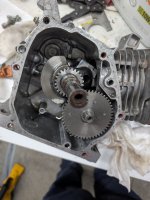
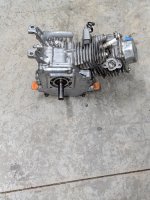
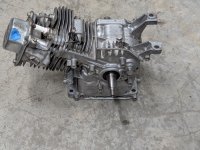
I’m catching up on this thread but I love how the governor was removed, only by its own volition it appears. By that I mean it looks like it exploded and the previous owner shrugged and left the remnants of the gear on the shaft.
On a governor delete, I usually leave the governor gear shaft intact (to keep it simple, stupid) and just remove the gear because it is simply a press-on fit (but hard to get to if you have 800lbs gorilla hands).
I vote to add Denny’s submission to the bad grammar thread…


(and yours too, Ezcome).
The Grammar in some of the posts here has been appalling. While entertaining as it may be, it is scary that the education system in this country churns out students that cannot write a comprehensive sentence. I have been collecting the best of the worst for my upcoming book,"Edukshaion in...
www.diygokarts.com
You can use compressed air to blow out the shavings (or swarf as it is called), assuming you have a compressor. But it is best to do all your machining and cleaning first, then wash the block in hot soapy water and let it dry with the assistance of compressed air. Yes I said soapy H2O.
I don’t know why you used oil as a solvent or cleaning agent, it’s too thick. If you want, you can pre-lube by adding oil to the crank, con rod and camshaft bearings (or just dribble some fresh oil on all the moving parts) but the best thing to use is assembly lube because it is tacky.
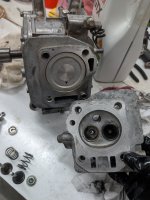
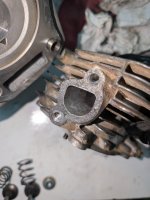
Before you button everything up, use a fresh scotchbrite pad or maybe some medium/fine steel wool (manually or with a rotary tool) to clean both mating surfaces of the sump cover and the cylinder head. If you’re extra talented you can use a single edge razor blade or a gasket scraper (dedicated tool for the purpose). The steel wool will create its own shavings/debris so do it first and then wash the block last. The preceding process ensures the gaskets can do their job and seal properly.