

supermanotorious
Winchmaster 5000
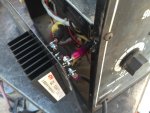
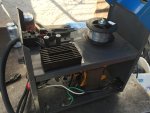
Sorry in advance for the semi-duplicate post. Here are the rectifiers I installed on my black Harbor Freight (modern) 90 amp welder and my brother-in-law's blue (older) HF 90 amp. These rectifiers cost less than $20 each and turned these janky, AC electrode-positive flux-core machines into DC electrode-negative boxes and the results are remarkable.
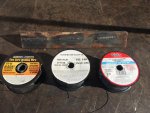
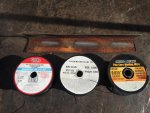
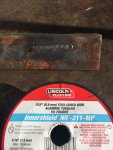
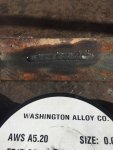
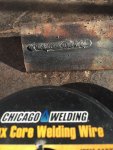
I woke up this Easter morning with the desire to burn some steel. I thought it would be fun (yes, fun, cause I'm handy with the steel, I earn my keep) to lay some test beads between my various flux rolls and let them go head to head. I wanted to check splatter, penetration, and ease of slag removal.
I did a warm up bead with each before hitting the test piece of angle. I would almost swear the Chicago Electric had better penetration than the Lincoln! Washington Alloy was a dead ringer for 2nd place in each category. However, Lincoln takes the belt in splatter control and slag removal.
After all 3 welds cooled, I made several passes on each with a wire cup attached to my angle grinder. I did not use a pick tool or anything else to clean slag. You'll see the Chicago wire had some stubborn slag left along the bottom edge of the weld. I hope you enjoy the results!
My conclusion is that I would not mind using any of these rolls on a customer product, now that the machine is DC. For the ultimate finish, I will surely use nozzle gel on each. Please note I did NOT use gel for these tests.
I woke up this Easter morning with the desire to burn some steel. I thought it would be fun (yes, fun, cause I'm handy with the steel, I earn my keep) to lay some test beads between my various flux rolls and let them go head to head. I wanted to check splatter, penetration, and ease of slag removal.
I did a warm up bead with each before hitting the test piece of angle. I would almost swear the Chicago Electric had better penetration than the Lincoln! Washington Alloy was a dead ringer for 2nd place in each category. However, Lincoln takes the belt in splatter control and slag removal.
After all 3 welds cooled, I made several passes on each with a wire cup attached to my angle grinder. I did not use a pick tool or anything else to clean slag. You'll see the Chicago wire had some stubborn slag left along the bottom edge of the weld. I hope you enjoy the results!
My conclusion is that I would not mind using any of these rolls on a customer product, now that the machine is DC. For the ultimate finish, I will surely use nozzle gel on each. Please note I did NOT use gel for these tests.
Attachments
-
 013.jpg237.2 KB · Views: 9
 -
 017.jpg283.1 KB · Views: 5
 -
 001.jpg467.3 KB · Views: 10
 -
 006.jpg465.8 KB · Views: 6
 -
 002.jpg286.5 KB · Views: 9
 -
 004.jpg235.1 KB · Views: 7
 -
 005.jpg420.8 KB · Views: 6


