Pullys are free, have a bunch of old cast ones laying around. Belts I would use are automotive v belts, that I also have laying around $5 each for replacements. Tensioner system would be fabbed up by me, near free, well maybe $10 for the threaded rods. I could make some jackshafts, it's really not that hard just cut some steel stock the proper size and thread the ends/make some reliefs for the keys or set screws. Pillow blocks I would have to buy, and I actually don't have a clutch yet cause I'm still in the planning/frame building stage, but ya fairly cheap.
I actually had another thought about it again when I woke up, and started doing a little research. I found someone that's tried it before, except they used a pully on the engine instead of a clutch, and it worked fairly well... except the aforementioned constant breaking of belts because of strain. Now I've had 2 thoughts on this. 1: of course the drive pully was constantly putting strain on the system because it's constantly going and when you apply a tensioner to shift it drags across the belt for a split second, friction, heat, premature belt failure. I would eliminate this via the clutch. You disengage the tensioner on that gearset, let off the gas which disengages the clutch, which takes the friction out of the system. You then engage the next tensioner and hit the gas bringing the cluth to reengage and deliver power.
Possibly maybe might work, but still would get belt failure just not as much.
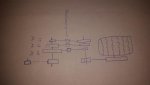
2nd thought: if the whole system is in straight line it puts more undo pressure on the spot where the tensioner engages. Let me explain my train of thought here. If the tensioner is pulling back toward the driver, which would be easiest for a mechanical manual tensioner, and the jackshafts are in line horizontally it means it's going to pull the belt toward the driver instead of down. If it does that it's causing friction because the belt is never going to fully engage the tensioner. The way to combat this is to have the jackshafts in line vertically, one on top of the other, belts coming down from one to the other straight down. You could then have a simple tensioner system that pulls the belts tight, pulling the vertical belts toward the front. This would allow the system to engage fully on all pullies/tensioner.
Again though, this is just a thought I had while exhausted and working. I personally would LOVE a manual gearing set up (would really love if I could figure out how to do it with chains) but at this point IDK if it would be feasible at all. I was actually planning on saving up for a tav2 since it's only like $100, but would really love to have something manual instead.


 20150306_033014.jpg32.1 KB · Views: 30


