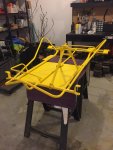
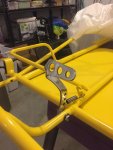
Keep this in mind: although all paints have guidelines for ambient air temperature, you can manipulate that, (as previously mentioned), to an extremely high degree by controlling the temperature of the paint and parts.
One thing I would NOT do is take a heat gun to a can of spray paint. It's probably ok, but it's much safer and more effective and controllable to put the can in warm water.
I often find the other problem, it's too hot to paint! I put the spray paint in the fridge, and at LEAST get what I'm spraying in the shade. Soooo, the point being, at 100° the paint would practically dry as soon as it left the can. But by using cold paint, on as cool a surface as possible, it greatly extends work time.
So, the reverse also holds true. One caveat tho, the old "heat the paint so it flows better" thing is overused and in most cases unnecessary. Commercial spray paints are formulated to deliver fine at ambient temperature.
(In otherwords, if it's 70°, there's no need to heat the paint.)