Predator 212 has limits!

Solomonster212

High Compression Member
Messages
234
Reaction score
12
Location
Hoover, Alabama
Predator 212 limits... have... been... pushed...

Well, I installed beehive valve springs on a stock Predator head. Apparently that was too much stress on it, it dropped a valve guide and has stress cracks all over it. Since I have a clear valve cover, I could see it fogging up really badly in there and that's how I knew something was wrong. I will take pictures later...

Just making this thread so that you become aware that the Predators are NOT invincible. I planned on everything breaking except the head, and then the head breaks. :2guns:
 
Messages
143
Reaction score
10
It dropped a valve guide?? There are rings that prevent the valve guides from going into the port on top of being lightly pressed into the aluminum. I agree with Brianator... That takes talent! It must have encountered enough runout to create enough friction to overcome the ring clip and force of pressure from the pressed in force to be forced into the valve bowl of the port. Geez.

I'm not sure what "Beehive" valve springs you are talking about but I will be sure not to put them in a stock Predator head if I ever encounter some made for the Predator engine! (Where they designed for a frikkin V-8?! Lol)

I want to see pics!

Just out of curiosity, were you just testing how durable the engine's valvetrain was or did you expect to gain performance or higher rpm? What is the outside diameter, height and lb/inch strength of the spings that you used? I was getting ready to make a new thread about valve springs regarding power, rpm and "floating the valves" and I honestly never considered the dropping of a valve guide as a possible result of changing springs.
 

65ShelbyClone

Active member
Messages
675
Reaction score
176
Location
SoCal
Beehive springs are wound narrower at the top to facilitate a smaller/lighter retainer. It also helps make the coil bind height shorter than a cylindrical spring because the coils don't stack directly over each other. They are original equipment in lots of current automotive engines.

I want to see the stress cracks.
 

Solomonster212

High Compression Member
Messages
234
Reaction score
12
Location
Hoover, Alabama
The "beehive" style springs are much more rigid, not only raising valve float but also reducing the amount of shake.

I'll post pics of the cracks once I pull the head. I may have just got the one that skipped quality checking, or just had a hidden casting issue...

Um, I don't see any of these "clips" on the valve guides. I'll have to take another look to be sure, but from my memory the appear to just press in. The valve guide I dropped was on the exhaust side, and moved inward toward the cylinder.

---------- Post added at 07:52 PM ---------- Previous post was at 07:49 PM ----------

TheInspiredFool

Heavier valve springs raise top rpm while sacrificing low end power. Lighter rated springs give more low end power and lower the point of valve float, lowering max rpm
 

65ShelbyClone

Active member
Messages
675
Reaction score
176
Location
SoCal
Stronger springs raise the rev ceiling, yes, but they don't affect an engine's power delivery.
 

JTSpeedDemon

2019 Build Off Winner!
Messages
4,026
Reaction score
162
Location
Texas
Well I mean, Flyinhillbilly's broken the cylinder off the crankcase on a clone before, so I can't say I'm surprised!
 
Messages
143
Reaction score
10
I know about beehive shaped valve springs but don't ever recall seeing any beehive shaped springs for the Predator engines, but that is probably due to not being interested in getting stronger valve springs and lack of research.

I also understand the reasoning and effects behind putting stronger springs in the engine. The reason that I asked why is because the effects of stronger springs in a stock Predator almost always produces an engine with less overall performance even if a slight rpm gain is seen. The "cheater" springs in box stock applications have been shown to not only produce less horsepower but actually can lead to LESS rpm. Now with an improved intake and exhaust system you can see a slight increase in horsepower and top rpm but most don't ever calculate the added energy needed for the engine to use to overcome the stronger spring rate and how you might turn more rpms and see a slight increase in horsepower the overall efficiency of the engine decreases. Especially since there is no benefit to add the additional force for the intake valve. The net gain from the BSFC becomes less efficient and the total net gain to use from the fuel to do additional work ouside from what the engine needs, the available amount of energy to do work is overall decreased. You might gain a little rpm on top by reducing the limit before valve float but physics determines that the engine becomes less efficient. You get a better gain in efficiency if you leave the stock valve spring stock and only upgrade the exhaust. I am always curious by the determination of the person to upgrade the springs and see if they understand the compromises or not.

I am more interested in the diameter of the spring that contacts the head, spring height and spring rate to try to calculate the actual force applied to the head. Also, the length of the pushrod, cam specs and rockerarm ratio would be needed but since you said it was stock I only needed the spring info to calculate the differce between the applied forces.

---------- Post added at 10:43 PM ---------- Previous post was at 10:36 PM ----------

Personally I think there might be more to the reason to why the exhaust valve "floats" when they do in these engines other than just the spring rate,but I have already gabbed too much.
 

BigWes

Member
Messages
829
Reaction score
32
Location
Alabama
I'd venture it was most likely caused by a poor casting process or something done by the mechanic. I've seen all sorts of modifications on those heads and never heard of that particular failure before. Maybe the shape of those springs were preventing the valve guides from lubing properly and they started overheating and binding against the valve stems. Maybe the valve action then started galling and broke the guides loose.

I want to see pics.
 

Flyinhillbilly

The great cornholio
Messages
2,468
Reaction score
132
Location
North West Arkansas
I’m interested to see pictures.
Like JT said, I blew the jug off of one with too much ignition timing and 30% nitromethane, but the fact is that was my fault.
I recently stress cracked every bolt and dowel hole on a block by getting too spicy with the ignition timing.
The thing those failures have in common is that I caused them both. I have a sneaking suspicion that may be the case here.
 

Solomonster212

High Compression Member
Messages
234
Reaction score
12
Location
Hoover, Alabama
My timing is only stretched as far as the PVL flywheel takes it...

Never said my engine was stock either, in fact the head and block are the only stock things left.

---------- Post added at 10:13 PM ---------- Previous post was at 10:12 PM ----------

The valve guide isn't completely dropped by the way. I stipped running the engine once I noticed it. And when I pulled the valve cover and springs is when I noticed the cracks
 

Solomonster212

High Compression Member
Messages
234
Reaction score
12
Location
Hoover, Alabama
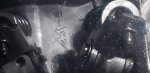
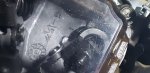
It's dark out so not the best time for pics... it you look closely, there are spider web craks surrounding the mountain symbol. And there's one next to the intake spring
 

Attachments

  • 20200703_221635.jpg
    20200703_221635.jpg
    1.2 MB · Views: 37
  • 20200703_221651.jpg
    20200703_221651.jpg
    1.3 MB · Views: 32
Messages
143
Reaction score
10
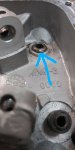
Ahh, I read "stock Predator head" and without any further information I just figured it was a stock head. That's my own fault I guess. Still, I have never seen that happen before. I will take a shot of the stock hemi head I have to show you what I was talking about when I said the retaining clip thing or the C ring.
 

Attachments

  • 20200703_235925~2.jpg
    20200703_235925~2.jpg
    1.5 MB · Views: 20

65ShelbyClone

Active member
Messages
675
Reaction score
176
Location
SoCal
It's dark out so not the best time for pics... it you look closely, there are spider web craks surrounding the mountain symbol. And there's one next to the intake spring

That's what I thought you were talking about. They aren't cracks in the head; those marks are from surface cracks in the die casting mold that made the cylinder head and raised from the head surface, not actually a crack. I have a GX140 head with them and the transmission case in my car has them. It's extremely common and not considered a problem.
 

BigWes

Member
Messages
829
Reaction score
32
Location
Alabama
That's what I thought you were talking about. They aren't cracks in the head; those marks are from surface cracks in the die casting mold that made the cylinder head and raised from the head surface, not actually a crack. I have a GX140 head with them and the transmission case in my car has them. It's extremely common and not considered a problem.

If it was cracked all the way through you WOULD expect to see carbon fouling around the cracks where combustion has forced through wouldn't you think. I agree those do have the appearance of mill scale cracks or casting flaws. Whatever you wish to call them. Normally they are harmless being only on the surface.

I don't know. Normally when these little things break...they break all the way.

If he doesn't like it a new head can be found...or used to be before the pandemic anyway...for cheap enough.
 

Solomonster212

High Compression Member
Messages
234
Reaction score
12
Location
Hoover, Alabama
Ahh, I read "stock Predator head" and without any further information I just figured it was a stock head. That's my own fault I guess. Still, I have never seen that happen before. I will take a shot of the stock hemi head I have to show you what I was talking about when I said the retaining clip thing or the C ring.

My guide is as far through as that one. Lol
 
Top