Tpdingo
Member
Hey you said it was dynomite, I don't see anything exploding? This ain't a real dyno without something exploding 
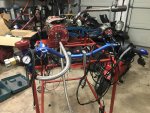
That looks like a kickass stand you got there!
That looks like a kickass stand you got there!


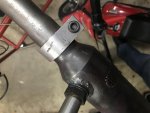
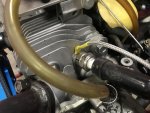
Don’t get HOSED… by that final plumbing connection between your DYNOmite absorber and its supply, drain, and vent hoses!!!! This is too easy a spot to inadvertently induce measurable torque errors! You need to carefully select each hose’s routing.
Because it’s so simple to “Zero” out minor torque offsets, even many experienced dyno operators get complacent about monitoring for errors - that hose weight and stiffness might be adding. Next time you test, take a few seconds to examine how your own lines are attached.
Press lightly (one finger) on the o.d. of the absorber housing - rotating it enough to just move the Torque reading. Then let go. If the gauges do not return, your hose routing is probably too stiff (adding torque latency and hysteresis). Try re-arranging them. Hoses that exit straight for several inches (before any bends or tie wraps) are much less prone to inducing rotational loads.
Next, open the load valve to fill up the hoses with water. Does the added weight and flow move the torque? If so, you have some more work to do. Again, avoid hose bends near the absorber that amplify the rotational leverage of the hose’s weight.
It’s often practical to replace a long drain hose with just a short hose stub - that squirts into an adjacent “catch stand” drain pipe. This trick provides a “sticktion” free junction (that can be used for the vent line as well). Just be sure that its “spray angle” is not at all tangential to the absorber’s o.d. to avoid inducing any torque reaction (from this high velocity water jet).
When things are plumbed correctly - torque readings and zeroing are more consistent, plus, inertial compensation stays in phase with measured torque. In other words, you get more accurate results...more easily!
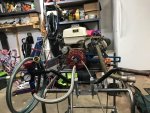
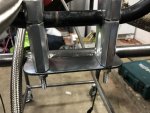

It seems like there is a significant lag in loading that the engine just jumps past, then at fully loaded, it wont bring the rpms down to 2k. So we basicallly have an engine that has 18-22 hp (if that), that this water brake advertized to handle 60+hp cannot load. Pathetic really. But who knows, maybe im just frustrated. I wanted this to handle the 10-sh ft lbs of the small blocks, which i havent even tested yet, the 19ish ft lbs of the big blocks which it doesnt handle, and screw this whole 30ish ft lbs of the v twins. I know its not going to load that for sure...

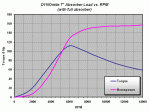
Land & Sea's 5" water brake needs to be at 3000rpm or more to control the engine at that output. It might require overdriving the absorber, which would unfortunately mean the extra work of putting it on a trunnion. Cheaper than upgrading to the 7" brake though.
https://www.dynomitedynamometer.com/absorber/dynamometer-absorbers-load-charts.htm
The lag seems to be a nuance of water brakes in particular. Every academic discussion I've read about them mentions it in some form. It has to do with the mechanics of how quickly the brake can fill and drain water. Applications that need a fast-acting brake typically employ eddy current absorbers. They come at the cost of more weight, more inertia, and lower sustainable power ratings for the size.
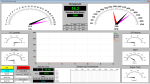
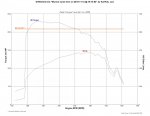
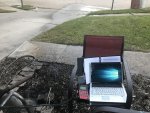
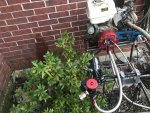
Still trying to figure out graphing capabilities, but am super bummed about the fact that my version does not allow CSV exporting, so no beautiful graphs, just these crappy ones.
 didnt even have to type anything.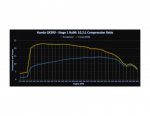
When speaking with tech support, they basically said, well since you have an air fuel meter that isnt a dynomax meter, you will have to buy the pro version so you can edit the formula for the meter to display the correct lambda/ A/F etc... screw that.




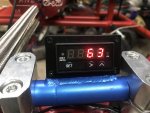
But some things i think about are, to be most consistent, you would need to get the engine up to temp, so i have this cheap IR laser thermometer, and will probably use that as my guide. Not sure what else to use, other than a legit head temp sensor/tach combo.
I have also come to the conclusion that an inertia dyno and a water brake "should" read the same, but often times they dont. I might be getting a 7.5-8.3 hp reading, when an inertia dyno person says 10 hp.... hmnmmm not adding up... I can actually hook up an inerta dyno to my computer and all i need is engine rpm and flywheel rpm, which i can easily get with a little magnet. I am seriously considering this
I did this run with an RLV muffler on and a different header.

RLV muffler has two types of mufflers. The ones i was testing with are the punched mufflers, then there are some other ones that have a more of a wire grate on them that are less restrictive.



If this dyno works accurately and consistently, do you plan on bringing it with to the meet ups?