Functional Artist
Well-known member
Electric go karts (electric vehicles in general) need many different "companion" components like switches (on/off, brake lever, 3-way etc.), fuses/circuit breakers, conductors (wires), connectors & also connectors/ports.
They should/really need to be "properly rated" for the particular purpose.
How do you know?
How do you figure the proper rating?
To do it yourself, first you have to establish the parameters of the particular circuit your working on.
You can do this by figuring the (maximum) voltage the circuit will ever encounter
(24VDC = ~26.6VDC, 36VDC = 39.9VDC, 48VDC = 53.2VDC, 60VDC = ~66.5VDC etc.)
(plus usually ~10% for an added safety margin, like 60VDC = ~72VDC)
...the maximum amperage/current that will be flowing thru it
...& also the purpose (very important), what the circuits function is (or being used for) like for a power carrying circuit, signal/control circuit, simply connecting or whatever.
Once you have established these parameters you can properly match components that meet those requirements.
What's that got to do with AC vs. DC?
In the DIY world we repurpose a lot of stuff, for a variety of reasons. (cost, availability etc.)
Looking around (for years) there is literally tons of stuff made for use with AC circuits & rated as such.
(mostly 110VAC here in the USA & ~220VAC in Europe & most Asian countries)
...but, most everything with DC ratings is for automotive/marine use. (12VDC)
So, what do you use with 36VDC, 48VDC, 60VDC etc. systems?
Lets look into it, here is some good info to begin the conversation
https://www.mouser.com/blog/which-switch-who-cares-if-its-ac-or-dc
They should/really need to be "properly rated" for the particular purpose.
How do you know?
How do you figure the proper rating?
To do it yourself, first you have to establish the parameters of the particular circuit your working on.
You can do this by figuring the (maximum) voltage the circuit will ever encounter
(24VDC = ~26.6VDC, 36VDC = 39.9VDC, 48VDC = 53.2VDC, 60VDC = ~66.5VDC etc.)
(plus usually ~10% for an added safety margin, like 60VDC = ~72VDC)
...the maximum amperage/current that will be flowing thru it
...& also the purpose (very important), what the circuits function is (or being used for) like for a power carrying circuit, signal/control circuit, simply connecting or whatever.
Once you have established these parameters you can properly match components that meet those requirements.
What's that got to do with AC vs. DC?
In the DIY world we repurpose a lot of stuff, for a variety of reasons. (cost, availability etc.)
Looking around (for years) there is literally tons of stuff made for use with AC circuits & rated as such.
(mostly 110VAC here in the USA & ~220VAC in Europe & most Asian countries)
...but, most everything with DC ratings is for automotive/marine use. (12VDC)
So, what do you use with 36VDC, 48VDC, 60VDC etc. systems?
Lets look into it, here is some good info to begin the conversation
https://www.mouser.com/blog/which-switch-who-cares-if-its-ac-or-dc
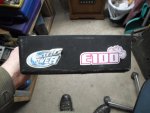
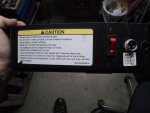
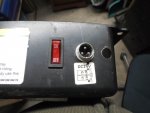


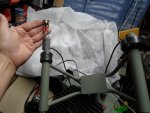

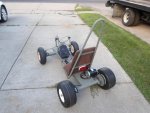


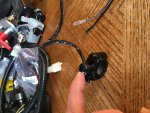


 & thought:

 I gotta get that fixed pronto