Dead spot at 3600rpm... bigger jet?

Status
Not open for further replies.

Kozi

New member
Messages
47
Reaction score
0
Predator 212 takes off great but seems to hit a wall at 3600rpm for a few seconds than flys to 5200rpm.

Only other issue I have noticed that sometimes at WOT when tank is running low engine cuts out for a few seconds and have to feather the throttle to get it to fire up again.

Bigger jet?
 

KartFab

Active member
Messages
3,381
Reaction score
57
Location
Dallas, TX
Predator 212 takes off great but seems to hit a wall at 3600rpm for a few seconds than flys to 5200rpm.

Only other issue I have noticed that sometimes at WOT when tank is running low engine cuts out for a few seconds and have to feather the throttle to get it to fire up again.

Bigger jet?

need more info like
1) whats it on?
2) whats the gear ratio?
3) whats the tire size?
4) modifications to engine?

It could be something as simple as "yeah man thats the governor trying to work" and "yeah man it doesn't run right on an empty tank because you're running outta fuel"
 

Kozi

New member
Messages
47
Reaction score
0
Are you using a torque converter?

Yes, 30 series

---------- Post added at 05:21 PM ---------- Previous post was at 05:03 PM ----------

need more info like
1) whats it on?
2) whats the gear ratio?
3) whats the tire size?
4) modifications to engine?

It could be something as simple as "yeah man thats the governor trying to work" and "yeah man it doesn't run right on an empty tank because you're running outta fuel"

1)


2) has 10 teeth on torque converter and 60 tooth sprocket

3) 15x6-6

4) gov removed, billet flywheel/Rod, mod 2 cam, intake exhaust and valve springs.

Revs to 7000 rpm wheels up, saw 5200 rpm on road at 49 mph.
 

Joe-405

Enjoying New Projects
Messages
2,673
Reaction score
97
Location
U.S.A.
Those torque converters aren’t made for anything over 5,000 rpms. And if you rev it on jack stands like that your gonna hurt yourself cause something will come apart.

Like seriously never ever rev a small engine that high without a load on it. I’ve seen alot of them come apart.
 

Kozi

New member
Messages
47
Reaction score
0
Those torque converters aren’t made for anything over 5,000 rpms. And if you rev it on jack stands like that your gonna hurt yourself cause something will come apart.

Like seriously never ever rev a small engine that high without a load on it. I’ve seen alot of them come apart.

Thank you! Only rev’d on a jack once when it was first installed. Mental note to not do it again.
 

KartFab

Active member
Messages
3,381
Reaction score
57
Location
Dallas, TX
Yes, 30 series

There you have it. that may be why you have the dead spot. the torque converter may be switching over to overdrive and then once it is locked in overdrive its only the engine rpm that is helping the kart speed up.

Also as a sidenote, stock engines (at least the big blocks) are around 23 DBTDC stock timing. Not sure about the smaller predator engines. You mentioned havinng a mod 2 cam, which calls for 32 DBTDC timing. If you dont have the timing advanced to this amount, you wont be taking full advantage of the cam.

And finally, if it is just the stock carb that wasn't rejetted. The predator 212 engines usually like a .037" main jet.

If you are having issues with the engine cutting out at WOT, the fuel bowl may not be filling fast enough. You would need to replace the needle seat in the carb with one that is for fuel pumps, and install a pulse pump to cram that fuel into the bowl.
 

Kozi

New member
Messages
47
Reaction score
0
There you have it. that may be why you have the dead spot. the torque converter may be switching over to overdrive and then once it is locked in overdrive its only the engine rpm that is helping the kart speed up.

Also as a sidenote, stock engines (at least the big blocks) are around 23 DBTDC stock timing. Not sure about the smaller predator engines. You mentioned havinng a mod 2 cam, which calls for 32 DBTDC timing. If you dont have the timing advanced to this amount, you wont be taking full advantage of the cam.

And finally, if it is just the stock carb that wasn't rejetted. The predator 212 engines usually like a .037" main jet.

If you are having issues with the engine cutting out at WOT, the fuel bowl may not be filling fast enough. You would need to replace the needle seat in the carb with one that is for fuel pumps, and install a pulse pump to cram that fuel into the bowl.

Thank you! This forum and yourself are an incredible source of help and inspiration for a novice like myself!:cheers2:
 

bob58o

SuckSqueezeBangBlow
Messages
9,646
Reaction score
1,851
Location
Chicago-town USA
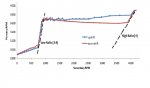
Yep, KF said what I was getting at. The engine should rev from engagement till it starts to shift. While shifting, the TC should hold engine RPM fairly constant. This is why TC's are awesome. If your TC is tuned to shift at your engine's peak HP, then your engine "always" making peak power and the TC changes the gear ratio for you.

If you look at the picture below, the engine doesn't begin to rev again until the TC has fully shifted out.
 

Attachments

  • shift.jpg
    shift.jpg
    40.1 KB · Views: 6

Kozi

New member
Messages
47
Reaction score
0
Yep, KF said what I was getting at. The engine should rev from engagement till it starts to shift. While shifting, the TC should hold engine RPM fairly constant. This is why TC's are awesome. If your TC is tuned to shift at your engine's peak HP, then your engine "always" making peak power and the TC changes the gear ratio for you.

If you look at the picture below, the engine doesn't begin to rev again until the TC has fully shifted out.

Thank you so much great info on this forum.

Anyone know how the yellow spring for the driven unit effects shifting on the TC? I already have one on hand
 

bob58o

SuckSqueezeBangBlow
Messages
9,646
Reaction score
1,851
Location
Chicago-town USA
I also have a yellow spring for the 30 series, but I haven't used it yet. Nor have tried any hole but the middle with the stock spring.

The stiffer yellow spring "should" delay the start of the shift without changing the engagement RPM. The three holes "should" also change the RPM at which the shift starts.


If your "dead spot" is really just the RPM at which the TC shifts (I wouldn't call it a dead spot), then using the yellow spring will just push that "dead spot" to a higher RPM.

So perhaps the shift occurs at 3600 RPM with the stock spring in the middle hole. If you use stock spring in the next hole (more preload on the driven spring), then perhaps the TC won't shift until 4k RPM (just guessing to give an example - like I said, I never tried it). If you use the first hole (less preload on driven spring), then perhaps the TC starts to shift at 3200 RPM.

If you use the yellow spring in the middle hole, then maybe the shift happens at 4200 RPM.
Yellow spring in next hole (more preload), maybe 4800 RPM is when it shifts.
Yellow spring in first hole (less preload), maybe 3600 RPM is when it shifts.

I just tossed some numbers in there to give you an idea of how the driven unit spring / hole selection might change how the TC behaves. More preload (either by using a stiffer spring or using the hole with the most preload) will push the "dead spot" to a higher RPM. Less preload will pull the "dead spot" to a lower RPM.

The garter springs/weight packs in the Driver unit will change when the TC engages, but will also change the RPM when the TC shifts. The TC is obviously not going to shift at 3600 RPM if you don't engage until 4k RPM. Even with the stock spring in the middle hole, if you have 4k RPM engagement, the shift point may not be until 4800 or 5k RPM.

Again don't come back and tell me the numbers I used are wrong. I know they probably are. Just easier to explain concepts when using some numbers for examples.

I haven't found too much info about tuning these TC's. They are mostly used for backyard fun. Serious racers, who provide a lot of the information I find useful, don't use TC's. Well some might in Outlaw classes, but I haven't come across too much info.

What makes sense to me and what I target is engagement at Peak TQ RPM and shift at Peak HP.
If a stock engine makes peak torque at 2500 RPM and peak HP at 3600 RPM, then I want my TC to engage at 2500 RPM and shift at 3600 RPM. If my engine makes peak TQ at 4k RPM and peak HP at 6000 RPM, then I'd first adjust the driver unit to engage at 4k RPM and see where the shift happens. If it shifts too early or too late, then I'd play with the Driven unit.

Happy tuning and please report any findings.


---------- Post added at 11:31 PM ---------- Previous post was at 11:17 PM ----------

Here is where I found that graph.
SAE Baja stuff...
https://www.cogentoa.com/article/10.1080/23311916.2017.1398299.pdf

You can also research snowmobile clutch tuning as the concepts are the same.
 

Kozi

New member
Messages
47
Reaction score
0
I also have a yellow spring for the 30 series, but I haven't used it yet. Nor have tried any hole but the middle with the stock spring.

The stiffer yellow spring "should" delay the start of the shift without changing the engagement RPM. The three holes "should" also change the RPM at which the shift starts.


If your "dead spot" is really just the RPM at which the TC shifts (I wouldn't call it a dead spot), then using the yellow spring will just push that "dead spot" to a higher RPM.

So perhaps the shift occurs at 3600 RPM with the stock spring in the middle hole. If you use stock spring in the next hole (more preload on the driven spring), then perhaps the TC won't shift until 4k RPM (just guessing to give an example - like I said, I never tried it). If you use the first hole (less preload on driven spring), then perhaps the TC starts to shift at 3200 RPM.

If you use the yellow spring in the middle hole, then maybe the shift happens at 4200 RPM.
Yellow spring in next hole (more preload), maybe 4800 RPM is when it shifts.
Yellow spring in first hole (less preload), maybe 3600 RPM is when it shifts.

I just tossed some numbers in there to give you an idea of how the driven unit spring / hole selection might change how the TC behaves. More preload (either by using a stiffer spring or using the hole with the most preload) will push the "dead spot" to a higher RPM. Less preload will pull the "dead spot" to a lower RPM.

The garter springs/weight packs in the Driver unit will change when the TC engages, but will also change the RPM when the TC shifts. The TC is obviously not going to shift at 3600 RPM if you don't engage until 4k RPM. Even with the stock spring in the middle hole, if you have 4k RPM engagement, the shift point may not be until 4800 or 5k RPM.

Again don't come back and tell me the numbers I used are wrong. I know they probably are. Just easier to explain concepts when using some numbers for examples.

I haven't found too much info about tuning these TC's. They are mostly used for backyard fun. Serious racers, who provide a lot of the information I find useful, don't use TC's. Well some might in Outlaw classes, but I haven't come across too much info.

What makes sense to me and what I target is engagement at Peak TQ RPM and shift at Peak HP.
If a stock engine makes peak torque at 2500 RPM and peak HP at 3600 RPM, then I want my TC to engage at 2500 RPM and shift at 3600 RPM. If my engine makes peak TQ at 4k RPM and peak HP at 6000 RPM, then I'd first adjust the driver unit to engage at 4k RPM and see where the shift happens. If it shifts too early or too late, then I'd play with the Driven unit.

Happy tuning and please report any findings.


---------- Post added at 11:31 PM ---------- Previous post was at 11:17 PM ----------

Here is where I found that graph.
SAE Baja stuff...
https://www.cogentoa.com/article/10.1080/23311916.2017.1398299.pdf

You can also research snowmobile clutch tuning as the concepts are the same.

Amazing read! Thanks...have almost as much fun learning and researching as I do riding... :cheers2:
 
Status
Not open for further replies.
Top