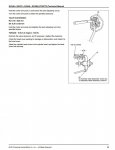
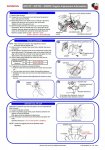
The spark plug looks good, but you didn't tell me if it is sparking. Also obviously didn't follow the flow chart. That list is good for every 4 stroke industrial engine that won't start. Follow that guide and you WILL find your issue.
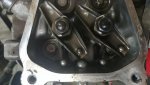
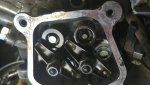
Pushrods not in place or sheered flywheel key (assuming you checked and are getting a spark) would be my diagnosis. Take the valve cover off and take me a picture.
Just discovered that there is air leaking around the rubber hose from the ohv cover to the air filter.Im going to try to tape that up real good.
That hose is just for environmental purposes. The Positive Crankcase Ventilation (comes from the valve cover - says OHV) goes to the air box. This prevents oil and gas fumes and stuff from being released to the atmosphere. It sends it back through the intake so it has a chance to be burned off a second time. Should be able to remove that hose and it shouldn't affect performance. Maybe spray a bit of oil, but nothing major.
That OHV cover is the valve cover. Take the cover off look at the valves. Also take the spark plug out and look in the hole and watch the piston. Spin the engine over and watch them. Find the intake stroke, the compression stroke, the power stroke, and the exhaust stroke. You should see the springs compress on the appropiate stroke. The intake spring will compress on the intake stroke. The exhaust stroke will compress on the exhaust stroke.
Intake stroke -
Piston moves down during the intake stroke and the intake spring compresses.
Compression stroke -
Piston moves back up and both valves are closed.
Power Stroke -
Piston moves down and both valves are still closed.
Exhaust stroke -
Piston moves back up and exhaust valve is closed.
You'll notice a small twitch of the exhaust valve during the compression stoke. This is the camshaft's compression release working properly.
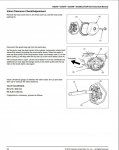
You need to set lash when the piston is at Top Dead Center between the compression stroke and power stroke. Both Valves will be closed. Valve springs will be uncompressed. Lifters are sitting on the camshaft base circle (not the lobes of the cam).
Use feeler gauges to set the lash. Take a 0.004" gauge and place it between the rocker arm and the valve stem (or lash cap if using one). Keep the gauge there while tightening the adjuster on the rocker arm. If you tighten it with a 0.004 feeler gauge, then it will probably end up being around 0.003". The 0.003" feeler gauge should slide in and out, but with resistance. The 0.004" should be too thick to slide in and out without a lot a resistance.
I'm not sure I've watched this video. We can watch it together.
 https://www.youtube.com/watch?v=4QZWV6S-5aA
At like 4 minutes or 4:30 he finds top dead center of the compression stroke and sets the lash, but the whole video is worth watching so you can learn a bit.
---------- Post added at 08:20 PM ---------- Previous post was at 08:03 PM ----------
Here's a Red Beard's video.
https://www.youtube.com/watch?v=2oHqgwsL3AY