Briggs torque mods?

Status
Not open for further replies.

JTSpeedDemon

2019 Build Off Winner!
Messages
4,026
Reaction score
162
Location
Texas
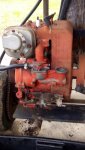
What kind of mods should I do to my engine to increase torque primarily?
I'm not after stuff like 20HP, but 20 ft/lbs of torque would be nice.
Please post your idea and why it would increase torque. :thumbsup:
 

Attachments

  • P_20190115_161340.jpg
    P_20190115_161340.jpg
    223.8 KB · Views: 7

JTSpeedDemon

2019 Build Off Winner!
Messages
4,026
Reaction score
162
Location
Texas
Yes that would increase torque, but I'm pretty sure that those primarily increase horsepower, which is what pulls at say, 40 mph(just a very rough example).
I want TORQUE, which is what squeals your tires and slams your head into the seat.
 

Tpdingo

Member
Messages
902
Reaction score
9
Location
Bellmore, NY
Yes that would increase torque, but I'm pretty sure that those primarily increase horsepower, which is what pulls at say, 40 mph(just a very rough example).
I want TORQUE, which is what squeals your tires and slams your head into the seat.

Then you want to keep or put on a long intake runner. It significantly increases torque, specifically low-end torque which for tire spinning action is what you need. Not sure if AFR helps at all, I gotta check. Maybe a tad richer may help...I'm not totally sure.
 

itsid

Moderator
Staff member
Messages
11,563
Reaction score
243
Location
Ruhrpott [Germany]
retard timing a hair (say 2 maybe 4°)

it moves the actual combustion closer to TDC at low rpms
that will actually remove high rpm speed power I'm afraid,
(since it'll be a hair late for high rpms that way)
but it gives you a very satisfying punch down low

In order to do so, you'd best get two more flywheel keys,
one to nibble away slowly to retard timing,
stopping at every 0.5° or such,
taking carefull notes about what you like and what you don't like about the power band
each time (maybe climbing up the very same hill a couple of times each new tested timing)
taking notes about acceleration and such
[find yourself a GPS dyno software for your phone for some semi scientific values]

Up to the point where you ruined the key by filing off too much
and the engine is no longer running well at all.

Then take the second key and file it to what degree you liked best;
(and the original key still remains untouched, for you to revert back whenever needed!)

Other than that it's the same as increasing power (more air in, faster air out etc...)
the better the combustion the better the torque.

You wont need as much throughput as with a 'modded for rpm' setup but easier breathing helps at all times.

You can increase compression ratio ever so slightly (thinner head gasket)
and that too will increase the punch per pop
but a flat head like yours doesn't allow too much modification in that regard..

you could make a new cam, improve on the valves and even modify the head..
but that's fairly difficult for a home gamer, and usually to just improve torque seldomly worth it.

Frankly, it's way easier to improve rpm and use that with a lower ratio to improve wheel torque
since increasing rpm is what everybody does and there are millions of how tos and ready made parts available.

'sid

PS the 5hp briggs already has a LOT of torque compared to say a gx200 clone IYAM..
So I think I'd just breathease it and maybe play with ignition timing for a bit and call it done w/o touching anything else
 

Tpdingo

Member
Messages
902
Reaction score
9
Location
Bellmore, NY
retard timing a hair (say 2 maybe 4°)

it moves the actual combustion closer to TDC at low rpms
that will actually remove high rpm speed power I'm afraid,
(since it'll be a hair late for high rpms that way)
but it gives you a very satisfying punch down low

In order to do so, you'd best get two more flywheel keys,
one to nibble away slowly to retard timing,
stopping at every 0.5° or such,
taking carefull notes about what you like and what you don't like about the power band
each time (maybe climbing up the very same hill a couple of times each new tested timing)
taking notes about acceleration and such
[find yourself a GPS dyno software for your phone for some semi scientific values]

Up to the point where you ruined the key by filing off too much
and the engine is no longer running well at all.

Then take the second key and file it to what degree you liked best;
(and the original key still remains untouched, for you to revert back whenever needed!)

Other than that it's the same as increasing power (more air in, faster air out etc...)
the better the combustion the better the torque.

You wont need as much throughput as with a 'modded for rpm' setup but easier breathing helps at all times.

You can increase compression ratio ever so slightly (thinner head gasket)
and that too will increase the punch per pop
but a flat head like yours doesn't allow too much modification in that regard..

you could make a new cam, improve on the valves and even modify the head..
but that's fairly difficult for a home gamer, and usually to just improve torque seldomly worth it.

Frankly, it's way easier to improve rpm and use that with a lower ratio to improve wheel torque
since increasing rpm is what everybody does and there are millions of how tos and ready made parts available.

'sid

PS the 5hp briggs already has a LOT of torque compared to say a gx200 clone IYAM..
So I think I'd just breathease it and maybe play with ignition timing for a bit and call it done w/o touching anything else

I thought the key was just for alignment not for actually spinning the wheel, that was what the taper was for. Am I wrong?
 

JTSpeedDemon

2019 Build Off Winner!
Messages
4,026
Reaction score
162
Location
Texas
Not sure if AFR helps at all,...

Whaddya mean by AFR?
Ok, so for now, my list of torque mods include:
  • Keep or extend long intake manifold
  • Retard ignition a bit
  • Lower gearing
  • Typical HP mods
Carry on, I'd like to learn more. :popcorn:

---------- Post added at 01:23 PM ---------- Previous post was at 01:22 PM ----------

And yes, I am aware that my purty flathead is more torquey than say, OHV engines in general.
 

itsid

Moderator
Staff member
Messages
11,563
Reaction score
243
Location
Ruhrpott [Germany]
I thought the key was just for alignment not for actually spinning the wheel, that was what the taper was for. Am I wrong?

Nope, that's correct..
when torqued down to specs with a fresh nut,
perfectly clean tapers are more than enough to spin the flywheel.

The key indeed is mainly for aligning the two
and while it could give you a benefit providing a ridge to grab to ensure alignment while spinning,
if the taper's not grabbing it's as likely to shear the key especially when filed.

But w/o a timing dial it's tricky to align the flywheel within 0.5°
and even with a timing dial it's tedious to
first align the dial each test and then slowly wiggle the flywheel to the next orientation to be tested.
So making an offset flywheel key is the easier way of testing IMHO..

Whatever one's more comfortable with would work though.

'sid
 

JTSpeedDemon

2019 Build Off Winner!
Messages
4,026
Reaction score
162
Location
Texas
A thought:
For optimum torque, wouldn't it be best to keep the stock flywheel and rod due to the rotational mass?
I'm also hoping to install a 3D Motorsports manual clutch.
 

Tpdingo

Member
Messages
902
Reaction score
9
Location
Bellmore, NY
A thought:
For optimum torque, wouldn't it be best to keep the stock flywheel and rod due to the rotational mass?
I'm also hoping to install a 3D Motorsports manual clutch.

Unless you plan on going to gear ratio city, then yes. Rod could probably be swapped, not really a huge amount of rotational mass there and the extra strength could help. When the clutch first grabs, its ALOT harder to slow down a 10lb spinning disc than a 3lb spinning disc.
 

anickode

Active member
Messages
2,296
Reaction score
72
Location
S.E. Michigan
Add a great big honking heavy flywheel like off an old cast iron air compressor, and a manual clutch of some sort. Rev the engine up to build up the kinetic energy, then dump it.

I remember seeing a concept car years ago that used a little tiny engine to spin up this gigantic (like 2000#) cylindrical flywheel. The clutch then came off that flywheel. The car had insane amounts of takeoff power, but it turned out that massive gyroscope spinning inside it made the handling quite wonky.
 

JTSpeedDemon

2019 Build Off Winner!
Messages
4,026
Reaction score
162
Location
Texas
BWAHAHAHAHAHAHAHAHAHAHAHAHAHAHAHA!!!! :D:D:D:D:D:D
"handling quite wonky"?
More like WILL NOT TURN UNDER ANY CIRCUMSTANCES! :roflol:
I'm not willing to put a heavier flywheel on, but I will keep the stock one, since I'm not planing it to be a screamer.
 

anickode

Active member
Messages
2,296
Reaction score
72
Location
S.E. Michigan
BWAHAHAHAHAHAHAHAHAHAHAHAHAHAHAHA!!!! :D:D:D:D:D:D
"handling quite wonky"?
More like WILL NOT TURN UNDER ANY CIRCUMSTANCES! :roflol:
I'm not willing to put a heavier flywheel on, but I will keep the stock one, since I'm not planing it to be a screamer.

The only benefit adding a second big flywheel would have is if you could rig it up to do clutch dumps.

Once the tires hooked up, acceleration would be dismal.
 

65ShelbyClone

Active member
Messages
670
Reaction score
167
Location
SoCal
A thought:
For optimum torque, wouldn't it be best to keep the stock flywheel and rod due to the rotational mass?

Actually, no. The mass of the flywheel or more specifically, the moment of inertia has no effect on engine torque or power whatsoever. It stores that power as kinetic energy when the engine is accelerating and it releases that energy as it slows down. When you're accelerating on the kart, the engine is speeding up to make the kart speed up. Thing is, the engine is accelerating the flywheel too, which is "stealing" and storing some of the power that could otherwise be making your kart accelerate. A lighter flywheel would make the kart take off quicker without actually increasing the engine's power. At a steady engine speed, there isn't really any difference between the two.

The rod's big end is the only part that's rotating. It is on such a small radius and the mass is so low it's not worth considering in this case. Lighter and stronger is ideal, but stronger and heavier is a compromise most engine builders are willing to make.

In order to increase torque, you have to increase cylinder pressure. To do that, there has to be more air and fuel being burned (typically through increased volumetric efficiency[note: boost does not increase VE]) and/or more energy extracted from it (increased thermal efficiency). Increasing volumetric efficiency means improving flow and increasing thermal efficiency means raising the compression ratio. Both are hard to do well with a flathead as increasing one thing almost always reduces another. For example, milling the head will increase compression and reduce flow. Big cams increase lift, but require clearancing the head which reduces compression.
 

Tpdingo

Member
Messages
902
Reaction score
9
Location
Bellmore, NY
Actually, no. The mass of the flywheel or more specifically, the moment of inertia has no effect on engine torque or power whatsoever. It stores that power as kinetic energy when the engine is accelerating and it releases that energy as it slows down. When you're accelerating on the kart, the engine is speeding up to make the kart speed up. Thing is, the engine is accelerating the flywheel too, which is "stealing" and storing some of the power that could otherwise be making your kart accelerate. A lighter flywheel would make the kart take off quicker without actually increasing the engine's power. At a steady engine speed, there isn't really any difference between the two.

The rod's big end is the only part that's rotating. It is on such a small radius and the mass is so low it's not worth considering in this case. Lighter and stronger is ideal, but stronger and heavier is a compromise most engine builders are willing to make.

In order to increase torque, you have to increase cylinder pressure. To do that, there has to be more air and fuel being burned (typically through increased volumetric efficiency[note: boost does not increase VE]) and/or more energy extracted from it (increased thermal efficiency). Increasing volumetric efficiency means improving flow and increasing thermal efficiency means raising the compression ratio. Both are hard to do well with a flathead as increasing one thing almost always reduces another. For example, milling the head will increase compression and reduce flow. Big cams increase lift, but require clearancing the head which reduces compression.
Yeah, but the flywheel weight isn't completely worth nothing. Keeping the stock flywheel will help because this isn't a V8. On a big motor with many cylinders there is little rotational distance before the motor fires a cylinder and keeps the power flowing. He gets one bang every two rotations, so having a nice heavy flywheel will help. That flywheel isn't going to provide much of a store but over like a 3lb flywheel there is more energy the wheels can "steal" until the motor can get to the next cycle and spin up the flywheel. Yeah, to create more power you do need more power pushed into the piston, and he should absolutely do that, but the flywheel still is important. Even if that piston could shove 50hp into the crank, no flywheel and the moment the clutch grabs, it will come to a screeching halt.

They are both important...but it shouldn't be confused that the flywheel does NOT produce energy, but that DOES NOT mean the flywheel isn't essential.
 

JTSpeedDemon

2019 Build Off Winner!
Messages
4,026
Reaction score
162
Location
Texas
I'm 80% sure that the stock flywheel would help with clutch dumps though.
Either way, if I do upgrade rotating parts in the engine, it will be a while, since I'm on a budget.
 

65ShelbyClone

Active member
Messages
670
Reaction score
167
Location
SoCal
Yeah, but the flywheel weight isn't completely worth nothing. Keeping the stock flywheel will help because this isn't a V8. On a big motor with many cylinders there is little rotational distance before the motor fires a cylinder and keeps the power flowing. He gets one bang every two rotations, so having a nice heavy flywheel will help. That flywheel isn't going to provide much of a store but over like a 3lb flywheel there is more energy the wheels can "steal" until the motor can get to the next cycle and spin up the flywheel. Yeah, to create more power you do need more power pushed into the piston, and he should absolutely do that, but the flywheel still is important. Even if that piston could shove 50hp into the crank, no flywheel and the moment the clutch grabs, it will come to a screeching halt.

They are both important...but it shouldn't be confused that the flywheel does NOT produce energy, but that DOES NOT mean the flywheel isn't essential.

You're talking about smoothing the delivery of combustion pulses, which yes, heavier flywheels are often used to do. That's at least partly why utility engines have heavy flywheels.

I didn't say that a flywheel is unimportant. I explained what it does and does not do, purposely leaving it up to the reader to decide how and why it's important for their application.

Food for thought: flywheel weight is often a tuning area for manual transmission drag cars. Some go quicker with a light flywheel, some go quicker with a heavy one. The key is understanding why one is not universally better than another.
 
Status
Not open for further replies.
Top