Trying to build a modified Predator 212 that stays below 5,200 RPM. Need advice.

RB55_2018

New member
Messages
16
Reaction score
4
Hello,
This is my first post in this forum, so I apologize in advance for any mistakes I might make.

I don't own a go-kart and am not currently into go-karting, but I'm posting on this forum since there are many people who have experience with the Predator 212cc engine. I built a motorized bicycle a few months ago using a lightly modified Non-Hemi Predator 212cc (governor internally removed, upgraded air filter, tuned carburetor, free-flowing exhaust, removed oil sensor) and was able to hit 46mph with a CVT/torque converter. I've had a blast riding it and I also learned a lot about engines and mechanics in general. Now, before I continue, I know that going 46mph on a bicycle is dangerous and so I take safety seriously. I use full motorcycle gear when riding, inspect the bike carefully after each ride, and only hit top speed on long straightaways with no other vehicles in sight.

The engine has been working amazingly well for a $100 clone of a Honda. I haven't had any issues with it. Currently, I have a CVT/torque converter setup which allows me to use a small rear sprocket. Unfortunately, I'll have to get rid of it and use a centrifugal clutch instead since since the chain rubs badly against the frame and I have no easy way of correcting/aligning it. Since I will no longer have the 3:1 gear reduction of the CVT when using the centrifugal clutch, I ordered a 56T rear sprocket and a 10T centrifugal clutch to get a reasonable gearing ratio with with a calculated top speed of 66mph at 5,000 RPM (I'm using 26" wheels but the actual diameter of the wheels is 25"). Realistically, I will probably reach 53mph at 4,000 RPM. I have looked at dyno charts of a Predator 212 with my same setup and the power starts to flatten out at 4,000 RPM; there is practically no power increase after 4,000.

I want to make the engine more powerful but cannot allow the it to rev much beyond 5,000 RPM because of two factors: the gearing and vibrations. Finding a sprocket with more than 56T that is designed for a bicycle wheel is impossible so I would have to modify a blank sprocket to fit my mount. I calculated that I would need an 80T rear sprocket to give me a realistic top speed of 65mph at 7,000 RPM. The Stage 2/3 kits for Predators all allow the engine to rev to 7,000+ RPM to produce maximum power and I don't think they would help much at 4,200 RPM or so. Secondly, at high RPM, the vibrations become very severe in the engine. The single-cylinder design doesn't help, and using a billet rod/piston would further throw the crank off-balance. On a go-kart, the large wheels and frame can dampen a lot of the vibrations, but when using a bicycle frame that weighs less than the engine and where the engine is between your legs, you can feel every single vibration from the engine. High RPM = uncomfortable ride.

What modifications could improve the engine's performance for my application? I already have the governor internally removed, an upgraded air filter, free-flowing exhaust, and removed oil sensor. Everything else is stock. I already ordered a genuine Mikuni vm22 carburetor. I was thinking about 1.3 ratio rockers, a better camshaft, increasing compression by using a flat-top piston, and a thinner head gasket. Thanks!
 

JTSpeedDemon

2019 Build Off Winner!
Messages
4,026
Reaction score
162
Location
Texas
Those mods you listed at the end (cam, rockers), tend to entail stiffer valve springs. Especially the cam. Cams tend to come with specs on what weight valve springs to run, and they don't usually run well without them. You might look into Honda rev limiting coils, I think they come in multiple RPM cutoffs. That way you could fully build the engine yet maintain the same max RPM.
 

RB55_2018

New member
Messages
16
Reaction score
4
Those mods you listed at the end (cam, rockers), tend to entail stiffer valve springs. Especially the cam. Cams tend to come with specs on what weight valve springs to run, and they don't usually run well without them. You might look into Honda rev limiting coils, I think they come in multiple RPM cutoffs. That way you could fully build the engine yet maintain the same max RPM.
Would doing those mods increase engine power at 5,000 rpm though? I know they support to 7,000+. I'm just afraid to spend a lot of money on nice parts and end up with little to no power gain at the RPM I want...
 

JTSpeedDemon

2019 Build Off Winner!
Messages
4,026
Reaction score
162
Location
Texas
Those mods increase power in general across the powerband. Now if you buy a specialized cam, that may change it of course, but a Mod2 cam should give you some more oomph. Yes some mods take away low end power, but those are usually the specialized ones. The general mods up to about Stage 3 simply increase power period.
 

vpd66

Active member
Messages
198
Reaction score
57
Location
Wisconsin
200cam-230.htm
I would use the 230-0211 marine cam. I've used this cam in a few 212s and it makes good low end torque and runs out just above 5000 rpm. Follow NR's spring requirements (I believe 22lb for this cam). For just under $60 it should be just what you need. You didn't mention if you upgraded to a billet flywheel and if you advanced the ignition timing? Also raise the compression has much has you can (stay under 10-1) I like to shoot for 9.5-1.
 

RB55_2018

New member
Messages
16
Reaction score
4
200cam-230.htm
I would use the 230-0211 marine cam. I've used this cam in a few 212s and it makes good low end torque and runs out just above 5000 rpm. Follow NR's spring requirements (I believe 22lb for this cam). For just under $60 it should be just what you need. You didn't mention if you upgraded to a billet flywheel and if you advanced the ignition timing? Also raise the compression has much has you can (stay under 10-1) I like to shoot for 9.5-1.
Thanks for the advice. Seems like a great cam for my application. Would 1.3 ratio rockers help or hurt my setup? They're $10 each and seem like an easy upgrade for increased lift. I will use 22lb valve springs (no need for 26lb as I will never exceed 6,000 RPM). Also, if I order this camshaft, I assume that I should select the " Predator : Old style with stamped valve cover" option for my Non-Hemi Predator 212. I do not have a billet rod/flywheel since I operate at low RPMs and have not advanced ignition timing. Would advancing it help much in my RPM range?

What is the best "cheap" way to increase compression? I know the best way is to use a billet rod that is +0.020 over and mill the head. However, I do not have access to a machine shop and I wouldn't benefit from a billet rod since I'm not turning high RPM. Would a flat top piston and thinner head gasket do the trick?

Sorry if I'm asking a lot of questions, I'm still new to the engine building community :)
 

vpd66

Active member
Messages
198
Reaction score
57
Location
Wisconsin
Yes I believe that is the correct engine but I would call NR racing and verify. They are very knowledgeable and great to deal with. Advancing the ignition should help some. You can order offset flywheel keys to advance the timing. The simplest way to increase compression is to use a thinner head gasket. I believe NR has a few different thickness head gaskets. I bought a thin copper gasket (can't remember how thick it was?) from them years ago for a motor I built and it worked great. Anytime you mill the head or put a thinner head gasket in you need to check the valve to piston clearance and you need to check to make sure your rocker arm geometry is correct especially if you start playing with different camshafts and different ratio rockers. NR has some cool pushrods that you can cut to length and press in the ends. I use them on all my builds. I've always had good luck with higher ratio rocker arms (in the clone engine world they are called "ratio rockers" because stock rockers are 1 to 1 ) giving me more power through out the whole power band.

cmpr-55.htm
cop200hg.htm
 

RB55_2018

New member
Messages
16
Reaction score
4
Yes I believe that is the correct engine but I would call NR racing and verify. They are very knowledgeable and great to deal with. Advancing the ignition should help some. You can order offset flywheel keys to advance the timing. The simplest way to increase compression is to use a thinner head gasket. I believe NR has a few different thickness head gaskets. I bought a thin copper gasket (can't remember how thick it was?) from them years ago for a motor I built and it worked great. Anytime you mill the head or put a thinner head gasket in you need to check the valve to piston clearance and you need to check to make sure your rocker arm geometry is correct especially if you start playing with different camshafts and different ratio rockers. NR has some cool pushrods that you can cut to length and press in the ends. I use them on all my builds. I've always had good luck with higher ratio rocker arms (in the clone engine world they are called "ratio rockers" because stock rockers are 1 to 1 ) giving me more power through out the whole power band.

cmpr-55.htm
cop200hg.htm
Thanks again for the advice. How much do you recommend advancing the ignition by? The offset keys range from 1 - 8 degrees of advance.

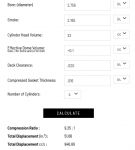
I saw that the thinnest copper head gasket you can buy is .016". I calculated the dimensions of the stock Predator 212 using the listed 8.5:1 CR as a known.


cr-stock2.PNG

Using a copper head gasket would increase CR to 9.5:1


cr-0.16 head gasket.PNG

I think that a flat top piston such as this one http://www.nrracing.com/product-p/212ftpiston570.htm has a +0.020 compression height?, although I am not sure since I was unable to find any definitive information about the Non-Hemi Predator 212's stock piston compression height. I believe it is .550 though. Using a piston with +0.020 compression height (assuming that the deck clearance is 0.20 in), the deck clearance will be reduced to about 0 and the CR will rise to 10:1.

This could also be achieved with a +0.020 billet connecting rod.


cr-0.16 head gasket + 0.020 .PNG

For the ratio rockers, camshaft, and valve geometry, these 1.3 intake / 1.1 exhaust ratio rockers I found on eBay claim that that you can use the stock pushrods and guide plate, although I'm not sure if this is true: https://www.ebay.com/itm/Predator-R...995665?hash=item1f0b535091:g:UHYAAOSwJhZeRX6E

Seems others have used 1.3 ratio rockers without pushrod adjustments???
 

vpd66

Active member
Messages
198
Reaction score
57
Location
Wisconsin
This is where it gets sticky. Pull your cylinder head and measure your piston deck height, stock head gasket thickness, and cc the combustion chamber. Then figure your existing actual compression ratio. I believe you should be able to achieve around 9-1 to 9.5-1 with just a head gasket change. Check your valve to piston clearance also. Then when you have selected the cam, head gasket, and rockers your going to use check your pushrod geometry to make sure it is correct. Don't trust anyone selling parts on Ebay to tell you stock pushrods work. Check and find out for yourself.
 

RB55_2018

New member
Messages
16
Reaction score
4
This is where it gets sticky. Pull your cylinder head and measure your piston deck height, stock head gasket thickness, and cc the combustion chamber. Then figure your existing actual compression ratio. I believe you should be able to achieve around 9-1 to 9.5-1 with just a head gasket change. Check your valve to piston clearance also. Then when you have selected the cam, head gasket, and rockers your going to use check your pushrod geometry to make sure it is correct. Don't trust anyone selling parts on Ebay to tell you stock pushrods work. Check and find out for yourself.
I'll be sure to check valvetrain geometry after I do all these mods. I found a head gasket that is .009 which is amazingly thin. Should give me at least 9.5:1. Do you recommend I also use a flat top piston to further increase compression to a bit over 10:1, or is a head gasket change enough? Also, how many degrees of timing do you recommend I advance the ignition by? Thanks!
 

vpd66

Active member
Messages
198
Reaction score
57
Location
Wisconsin
I know know if I'd use a head gasket that thin! If you can't get to 9.5-1 with just a head gasket then I would have some shaved off the head, like .010-.015. I'm mot against a flat top piston just trying to save you some money.If you do go for the flat top piston you might has well put in the billet rod. Timing all depends on the compression, camshaft, and rpms you plan to run at. 32=34 degrees is common. Once again see where your motor is stock then bump it up a little at a time until you feel no gain. Different offset keyways are cheap. You can also just lap the flywheel and run no key.
 

RB55_2018

New member
Messages
16
Reaction score
4
Check out PaulsKarts: https://www.paulskarts.com/ he sells everything you need for a stroker 212, 301, 420, and 670 honda clone.

I would love to order some of his amazing parts, but unfortunately I can only dream with those price tags... :(

I know know if I'd use a head gasket that thin! If you can't get to 9.5-1 with just a head gasket then I would have some shaved off the head, like .010-.015. I'm mot against a flat top piston just trying to save you some money.If you do go for the flat top piston you might has well put in the billet rod. Timing all depends on the compression, camshaft, and rpms you plan to run at. 32=34 degrees is common. Once again see where your motor is stock then bump it up a little at a time until you feel no gain. Different offset keyways are cheap. You can also just lap the flywheel and run no key.
I’ll probably stick with just a head gasket swap as I confirmed that the piston compression height is .550 on a Hemi and .570 on Non-Hemi. Unfortunately, changing to a flat top piston on my Non-Hemi isn’t going to raise the piston in the bore at all and so I doubt it would provide a useful increase in compression. Optimally, I could buy a billet connecting rod with enough added length to reach 0 deck clearance and use a flat top piston. Then, I could use a 0.032 copper head gasket and have exactly 0.032 of piston head clearance (minimum is 0.030).

I would be happy with shaving the head, but I’ll have to take it to a machine shop and pay a decent amount for the job.

I’ll order a 8 degree advance flywheel to start out. I know a 0.009 head gasket is very thin but it seems that it still works. I will use a torque wrench and tighten to spec.

Porting the head seems like a reasonable way to increase power as well. However, from my 2 stroke experience, porting an engine decreases lower RPM performance. I doubt this applies to 4 strokes though since valve timing and lift are controlled by a cam and rockers instead of a hole in the cylinder wall. I already have a dremel with a flex shaft so porting would be easy for me. Do you think it would benefit the engine for my application? Thanks!
 

vpd66

Active member
Messages
198
Reaction score
57
Location
Wisconsin
I would love to order some of his amazing parts, but unfortunately I can only dream with those price tags... :(

Paul has some very knowledgeable videos. I have never ordered anything from him but I sure his stuff is top notch. The only problem is he is geared for building all out high rpm racing engines. Nothing wrong with that if that is what your after.

I’ll probably stick with just a head gasket swap as I confirmed that the piston compression height is .550 on a Hemi and .570 on Non-Hemi. Unfortunately, changing to a flat top piston on my Non-Hemi isn’t going to raise the piston in the bore at all and so I doubt it would provide a useful increase in compression. Optimally, I could buy a billet connecting rod with enough added length to reach 0 deck clearance and use a flat top piston. Then, I could use a 0.032 copper head gasket and have exactly 0.032 of piston head clearance (minimum is 0.030).

I would be happy with shaving the head, but I’ll have to take it to a machine shop and pay a decent amount for the job.

I’ll order a 8 degree advance flywheel to start out. I know a 0.009 head gasket is very thin but it seems that it still works. I will use a torque wrench and tighten to spec.

Porting the head seems like a reasonable way to increase power as well. However, from my 2 stroke experience, porting an engine decreases lower RPM performance. I doubt this applies to 4 strokes though since valve timing and lift are controlled by a cam and rockers instead of a hole in the cylinder wall. I already have a dremel with a flex shaft so porting would be easy for me. Do you think it would benefit the engine for my application? Thanks!

Once again measure your engine and don't take for granted what you read on the internet. Once you know what you have then you can determine what course to take to raise your compression. By checking what your engine has is called blueprinting. checking your engine clearance, calculating your compression ratio, checking your timing, measuring your cubic inches, and etc is all blueprinting and is basically free and just costs you time. I really hate how people just buy performance parts or these "stage" kits and just slap the parts in there engine then come here to try to find out why there engine don't run right of have anymore power! Sorry for the rant!
Porting does not alway decrease lower rpm performance. If you go in and hog the ports out to has big has they will go then yes it will kill low end power and more then likely won't help top end either. What your going after is any restrictions, small steps, sharp turns, and rounding some areas. Paul (the guy mentioned in my other post) has some good videos of obvious restrictions in the ports and combustion chamber.
 

RB55_2018

New member
Messages
16
Reaction score
4
Once again measure your engine and don't take for granted what you read on the internet. Once you know what you have then you can determine what course to take to raise your compression. By checking what your engine has is called blueprinting. checking your engine clearance, calculating your compression ratio, checking your timing, measuring your cubic inches, and etc is all blueprinting and is basically free and just costs you time. I really hate how people just buy performance parts or these "stage" kits and just slap the parts in there engine then come here to try to find out why there engine don't run right of have anymore power! Sorry for the rant!
Porting does not alway decrease lower rpm performance. If you go in and hog the ports out to has big has they will go then yes it will kill low end power and more then likely won't help top end either. What your going after is any restrictions, small steps, sharp turns, and rounding some areas. Paul (the guy mentioned in my other post) has some good videos of obvious restrictions in the ports and combustion chamber.
I 100% agree with what you said about blueprinting. That's why I came here to ask questions and plan ahead before I started slapping on performance parts and messing with the engine. There are several websites and YouTubers who will sell/promote "Stage 4" kits or whatever "Stage" BS and claim you can make 20+ horsepower with their stuff just by bolting everything on, no planning/measuring/testing/tuning required. Two examples are Red Beard's Garage and CarsandCameras. I honestly despise both of them for lying so much about HP numbers and trying to scam people with their "Stage" kits. Both are heavily sponsored by GoPowerSports (not even a dedicated engine performance website, they sell parts for cheap Chinese dirt bikes and ATVs!) and make wild claims of 22+ or 15+ HP by buying their Stage 2, 3, or 4 kits. Never ONCE have they tested their engines on a dyno, I wonder why. It's an amazing marketing gimmick. Their videos are actually very useful if you're a newbie (like I was) and want to learn about how to pull apart and modify an engine. They are relatively short and make the process seem incredibly easy when, in reality, it's much more difficult and complex. Of course they always begin the videos by saying "I got this Stage 3 kit from GoPowerSports to make 15 HP". So, someone who has no clue how an engine even works goes and spends $600 or more on one of their kits after watching the video to get "15 HP" then ends up with the engine probably making less power than stock since nothing is set up or tuned properly.

Here is a perfect example that proves they are BS.

srages.PNG

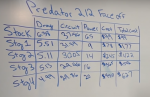
This is a chart of their drag race and lap times with a Predator 212 at different "stages". Notice the stage number on the far left column and the CLAIMED power on the 3rd column from the left. I believe that the only "stage" which actually increased HP was Stage 2. The predator will respond well to removing the governor, re-jetting the carburetor, using a higher flow air filter, and opening up the exhaust. The power claims for the rest of the stages (3-5) are complete and utter BS.

How are you only shaving off 0.19s on your lap times when you increased HP by 6 (Stage 4 vs Stage 2), while you reduced your lap time by 6.47s with a 2.5 HP increase (Stage 1 vs Stock)???

The drag race times provide even stronger evidence. Somehow, increasing HP by 2.5 in produces a 1.17 decrease in drag time (Stage 1 vs Stock) but raising HP by 11 only results in a 0.52 decrease in drag time (Stage 1 vs Stage 4)??? This is some serious BS here. Even if the gearing wasn't correct, it wouldn't explain anything considering that the Stage 1 engine cannot rev beyond 5,200 RPM while the Stage 2+ engines should be capable of at least 7,000 RPM. More RPM = More Wheel Speed regardless of what size sprocket was used.

The people who get these sponsorships from GoPowerSports (who also put their name on everything imaginable) are some of the dumbest people I've ever seen. If you're going to lie about HP numbers than at LEAST make your lap times/drag times reasonable. The two nitwits in the video couldn't figure this out 😂. (
)

I did go with the ratio rockers by the way. 1.3 intake, 1.1 exhaust. I will absolutely check valve train geometry and valve clearance before running the engine. The stock ports on the Predator 212 Non-Hemi (at least mine) are surprisingly clean and I'll only do a bit of very mild porting. Thanks for the recommending the videos, I'll be sure to watch them. OHV 4-stroke valve porting is a lot different from the 2-stroke jug porting I come from, lol.

On a side note, I pulled apart a old Predator 212 I got from a friend that had sucked metal bits into the intake and seized up the engine completely. Out of curiosity, I measured the deck clearance and head gasket thickness with a high-quality digital caliper. The piston was .025 in the hole (not surprising) but I measured the head gasket at 0.010. I measured it again and again, and even checked the bore of the cylinder with the caliper to be sure that it wasn't giving me false readings. Is this because it was already compressed? I thought the stock head gaskets were .040, not 0.010. I am sure that it wasn't ever modified in any way. This worries me because if the stock head gasket on the Non-Hemi Predator 212 I bought (still in box) is actually 0.010 then using a .016 copper head gasket would actually decrease compression ratio, right? Thanks!


Seems like the STOCK head gasket on a Non-Hemi Predator 212 is actually 0.010"? That's strange considering the thinnest copper high performance head gaskets are .016" or greater...
 

vpd66

Active member
Messages
198
Reaction score
57
Location
Wisconsin

Seems like the STOCK head gasket on a Non-Hemi Predator 212 is actually 0.010"? That's strange considering the thinnest copper high performance head gaskets are .016" or greater...

I haven't mearsured any stock head gaskets recently, but I know the ones I've took out of engines that were composite style gaskets were around .040. If its a solid copper or metal gasket it could be that thin. The .025 piston in the hole sound about right for the ones i've done. They even sell a billet rod that is .020 longer to get the piston closer to zero deck height. If that engine had the piston in the hole .025 and a .010 thick head gasket that would mean it had .035 clearance between the top of the piston and head. That is the very bottom (or tightest) clearance I would run. I like to shoot for .040-.035 range. This is a good reason to check where your engine is at before ordering any parts. I don't think these engines are very consistent in the parts and machine work they do at the factory. I think you will see quite a bit of difference in batches of these engines.
 
Top