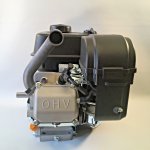
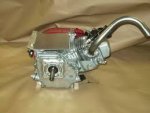
Hemi Build #3 -Boogie Woogie Woogie

Status
Not open for further replies.

bob58o

SuckSqueezeBangBlow
Messages
9,646
Reaction score
1,846
Location
Chicago-town USA
Disappointing as it is, the more time I spend trying to figure this out - the more I realize that upgrading the air filter / exhaust is probably as modified as I want when using this flywheel.

If keeping max RPMs around 5500 RPM, it is hard to justify upgrading the carb, valves, pushrods, cam....

A stock cam is going to make just about as much power as any other cam that doesn't extend the powerband to higher RPMs.

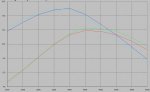
CL1 vs 280-0211.
I know the simulator is just a guess....
CL1 cam is the one that makes higher HP.
 

Attachments

  • CL1 vs 280-0211.jpg
    CL1 vs 280-0211.jpg
    109.1 KB · Views: 7

tinamcjittles

ello m8
Messages
391
Reaction score
0
Location
Allovau
Why is the power limited to 15hp for an engine this large?? The 110 shifter engine I have makes around 12hp stock and this 212 is hard pressed for 15?... They have a similar head design (air flows in one side and out the other), they both are OHV, both use the same size carbs.. The only difference is that on the 110, it has a CDI and variable spark timing. Even the bore stroke ratio are quite similar! Like the NR people said it seems like this engine should be in the 20s, right?
 

bob58o

SuckSqueezeBangBlow
Messages
9,646
Reaction score
1,846
Location
Chicago-town USA
Why is the power limited to 15hp for an engine this large?? The 110 shifter engine I have makes around 12hp stock and this 212 is hard pressed for 15?... They have a similar head design (air flows in one side and out the other), they both are OHV, both use the same size carbs.. The only difference is that on the 110, it has a CDI and variable spark timing. Even the bore stroke ratio are quite similar! Like the NR people said it seems like this engine should be in the 20s, right?

Power is not limited to 15 HP.
These engine can make 30 HP on the dyno.
If you are making 2 HP per cubic inch, you are doing very well.
Imagine a 700 HP - 350 cubic inch Naturally Aspirated small block (which is the equivalent to a 26 HP 212cc engine).

The problem is trying to make much power without extending the powerband to higher RPMs where the charging flywheel might come apart.

285 series can make 20+ HP. Duration is 250 degrees. Max RPM might be like 8000 or 8500 RPM.
280 series with only 220 duration will probably not make near as much HP as it is only designed for up to 5500 RPM.
 

bob58o

SuckSqueezeBangBlow
Messages
9,646
Reaction score
1,846
Location
Chicago-town USA
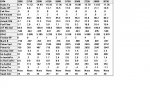
Here is the data the simulator gave me when I put my last engine together on it.
I used the 285-0211 cam.
I used higher flow numbers for the ported head.
I used a larger average port diameter.
I used bigger valves 28.5/25mm.
I used a 100 cfm carb.
I used 11 to 1 CR.
I used 100 octane gas.

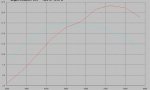
Peak HP is over 20, but also over 7k RPM.
Peak TQ is 17.5 LB-Ft, but not until 5k RPM.

Here is the Analysis the Program gave me for the 285-0211 engine on my current minibike...


Analysis Report for Mild Street Engine with Desired HP Peak at 7000 RPM

Peak Tq =17.4 @ 5000 RPM 1.34 Ft Lbs per CuIn
Peak HP =21.7 @ 7250 RPM 1.68 HP per CuIn

Maximum Tq/CuIn is 1.344 Ft Lbs/CuIn.
This is somewhat high, indicating good performance, but will
produce high cylinder pressures and temperatures.

High cylinder pressures require precautions to protect against
detonation, blown head gaskets, damaged engine components like
pistons, rings, exhaust rocker arms, bearings, etc.


Maximum Exhaust System Backpressure 'Exh Pres' is 0 PSI.
This is low for a street vehicle with a full exhaust
system. This is simulating either an extremely free flowing exhaust
system or open headers or open exhaust manifolds. This may be
illegally loud for street operation.

Typical ranges of Exhaust System Backpressure are listed on page
32 in the User's Manual. You can lower the Back pressure by
increasing Exh System CFM Rating in the Exhaust Specs menu.
Lowering the Exh System CFM Rating will simulate a quieter, more
restrictive exhaust system. Most dyno tests are done with open
headers, which are simulated by selecting the 'Open Headers' from
the Exh System Type combo box.


Maximum Fuel Flow 'Fuel Flow' is 10.4 lbs/hr GAS.
This is equal to 1.8 gallons per hour of fuel flow.
For an injected engine with one injector per cylinder, you will require
at least 10 lbs/hr injectors.

Fuel Flow will only change if air flow changes or if you inject
nitrous. The Engine Analyzer assumes 12.5:1 A/F for gasoline and
5:1 for alcohol (methanol) and 3:1 for 'Very Rich Alcohol' for all
conditions. You can not richen or lean out the fuel mixture.


Minimum A/F Mixture Quality 'A/F Mxtr Qlty' is 84 %.
This is somewhat low and represents a real power loss in your
desired operating range. This can be improved by reducing intake
runner sizes, carb size, going to fuel injection, heating the intake,
increasing compression ratio, going to a lower octane fuel (the
program assumes high octane fuel has lower Reid Vapor Pressure and
therefore does not atomize or mix as well), smaller plenum, etc.

Most of the above suggestions will hurt air flow and volumetric
efficiency, and therefore hurt performance. This is where you
will have to come up with the desired compromise of good air flow
and good A/F Mixture quality.


The Maximum Average Piston Speed 'Piston Spd' is 3157 ft/min
at the Performance Calculations Maximum RPM of 8750 RPM.
This is somewhat high (if you want to run this entire speed range),
requiring light, high strength reciprocating components.

A mild street engine should limit PSN SP to a range of 2500-3000 ft/min
with production quality rods. To run at 2750 ft/min or higher, you will
need 'better than production' reciprocating components (connecting rods
& bolts, pistons, etc.).

PSN SP (average piston speed in ft/min) and PSN GS (peak piston Gs)
are indicators of how severely you are stressing the engine's
rotating components. To lower PSN SP and PSN GS, you must shorten
the piston STROKE or design the engine for a lower RPM range.
See pages 53, 54 and 160 in the manual.

Maintaining low PSN SP and PSN GS are critical for 'keeping the engine
together'. OVER-REVVING PARTS BEYOND THEIR INTENDED LIMIT IS UNSAFE
FOR THE ENGINE, YOURSELF AND BYSTANDERS.


The Intake Runner Velocity 'Int AvgVel' is 320 ft/sec
at your 'Desired HP Peak RPM' 7000 RPM.
This is somewhat high and indicates you will need a larger Intake
Runner Diameter or larger Intake Port Diameter for less
restriction and stronger intake tuning.

For these engine specs, an 'Int AvgVel' of about 260 should work well.
If the 'Int AvgVel' is approximately 30-80 Ft/Sec higher than this,
you will likely improve torque below this RPM, but lose some HP.


The Inertia tuning of this intake is tuned to 6292 RPM,
which is close to your 'Desired HP Peak RPM' of 7000 RPM.
Since this RPM is about where the HP peak should occur, peak HP
should be good. If you specify longer and/or smaller diameter intake
runners, you will likely gain Peak Torque and lose some Peak HP.


At 1 different RPMs, Spark Advance 'Spark Adv' is retarded to avoid
detonation. Retarding Spark Adv does reduce performance, but allows this
engine to safely operate with this Octane fuel.

You can reduce the likelihood of detonation, by increasing Fuel
Octane or Dew Point (humidity), or reducing Intake Air Temp or
Cooland Temp in the Running Conditions menu, or reducing
Compression Ratio in the Head(s) Specs menu. Also, anything
which reduces performance, or shifts the performance curve to a
higher RPM range will also reduce the likelihood of detonation. By
reducing the likelihood of detonation, you avoid the necessity of
retarding Spark Adv.

Retarding Spark Adv from what the engine actually wants is not
necessarily a 'bad thing'. The best performance for a particular
RPM range and Fuel Octane may come with spark retarded from optimum.
Just be sure to retard spark in the actual engine to avoid detonation
which will cause engine damage.

Also, retarding spark increases exhaust temperatures, which can
damage exhaust valves, turbo turbines, etc.


The % Exhaust to Intake Flow Capacity 'Total Exh/Int %' is 92.4 %.
This is Very high, and indicates you could be opening the
exhaust valve too early or you could improve performance by improving
intake valve flow and intake cam profile. The most common 'rule of
thumb' is to design for around 75% EXH/INT flow capability.

To reduce Total Exh/Int % :
- Increase the Intake Valve Diameter and/or Valve Flow Efficiency
- Increase the Intake Duration, Intake Tappet Lift and/or Intake
Rocker Arm Ratio in the Cam/Valve Train menu
- Reduce the Exhaust Duration, Exhaust Tappet Lift and/or Exhaust
Rocker Arm Ratio in the Cam/Valve Train menu
You can reduce Total Exh/Int % by changing other specs, but that may
also reduce performance.


Estimated Idle Vacuum 'Est Idle Vac, ''Hg' is 8.5 ''Hg.
This is EXTREMELY low, and will likely NOT idle smoothly or provide
enough vacuum to run vacuum accessories for a mild street engine.

To increase idle vacuum, reduce cam overlap by specifying a lower
(possible negative) Intake Open @ .050 and/or Exhaust Close @ .050,
larger Centerlines or smaller Durations in the Cam/Valve Train menu.


IMPORTANT: The Optimize feature at the top of the Main Screen is
an excellent way to find combinations which work well together.
Click on 'Help' in the Optimize screen for tips on this feature.

End of Analysis Report
 

Attachments

  • 285-0211.jpg
    285-0211.jpg
    135.1 KB · Views: 4
  • 285-0211 curve.jpg
    285-0211 curve.jpg
    101.5 KB · Views: 4

bob58o

SuckSqueezeBangBlow
Messages
9,646
Reaction score
1,846
Location
Chicago-town USA
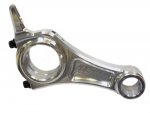
I bought a part.

ARC Billet Connecting Rod 3.328" (+0.020").
I'm guessing my piston sits 0.025" below the deck at TDC.
I'm hoping it actually sits 0.020" below the deck so this rod will bring me flush, but the first two Hemi's were right around 0.005" in the hole after the +0.020 Rod.

I didn't measure, but if I'm almost certain the 0.027" Gasket will be the one I end up using. By 0.027" gasket, I mean 3 stacked 0.009" gaskets. This will should give me over the minimum recommended 0.030" Piston to Head Clearance.

ARC
6256 Billet Rod, HF Predator +.020 3.328
http://www.arcracing.com/6256-billet-rod-hf-predator-020-3-328/
 

Attachments

  • 6254_001__48654.1415379599.500.659.jpg
    6254_001__48654.1415379599.500.659.jpg
    74.2 KB · Views: 1

bob58o

SuckSqueezeBangBlow
Messages
9,646
Reaction score
1,846
Location
Chicago-town USA
Ordered lots of more stuff...

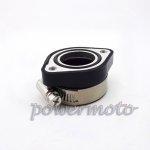
Inverted Manifold
https://gokartsusa.com/Mikuni-22-Inverted-Intake-Manifold.aspx

Boot Adapter
https://www.ebay.com/itm/28mm-Carb-...e=STRK:MEBIDX:IT&_trksid=p2060353.m2749.l2649

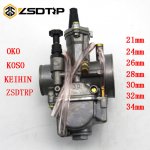
OKO 21mm Flat-slide carb
https://www.aliexpress.com/item/ZSD...8cc6491&transAbTest=ae803_5&priceBeautifyAB=0

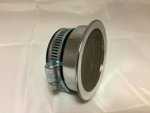
Metal Screen Air Filter (Velocity Stack-ish)
https://www.treatland.tv/OKO-air-filter-p/oko-air-filter-g1-48mm.htm

Pre-Filter
https://www.ebay.com/i/253364713286?chn=ps

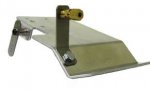
Top Plate
http://www.arcracing.com/dj-1145-economy-clone-gx200-top-plate/

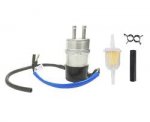
Electric Fuel Pump
https://www.ebay.com/itm/162860109348

Some other misc. stuff

NR says 160 range for VM22 jetting with this manifold.
Gokartusa says 170-190 for VM22 with this manifold.
Stock jetting is 105 for VM22, and something like 15 for the low IIRC.

Stock jetting for OKO 21 is 105 main, and 38 low.
The jet kit I have goes up to 140.
https://www.ebay.com/itm/10pcs-Carb...122798054934?_trksid=p2385738.m4383.l4275.c10
Including The Following Sizes: 100, 105, 108, 110, 115, 120, 125, 130, 135, 140
Includes the following size: #32 #35 #38 #40 #42 #45 #48 #50 #52 #55

I guess I'll try the 140 and hope the big low jet makes up for a smaller larger jet.
Otherwise I could drill the jet or try the to use the Power Jet to richen up WOT.
 

Attachments

  • filterwear.jpg
    filterwear.jpg
    117.8 KB · Views: 0
  • metal screen filter.jpg
    metal screen filter.jpg
    4.6 KB · Views: 44
  • carb boot.jpg
    carb boot.jpg
    40.2 KB · Views: 0
  • inverted manifold.jpg
    inverted manifold.jpg
    10.8 KB · Views: 43
  • carb.jpg
    carb.jpg
    113.2 KB · Views: 0
  • economy top plate.jpg
    economy top plate.jpg
    3.9 KB · Views: 43
  • pump.jpg
    pump.jpg
    3.6 KB · Views: 47

bob58o

SuckSqueezeBangBlow
Messages
9,646
Reaction score
1,846
Location
Chicago-town USA
Trying to figure out what kind of exhaust might work on a MB200-2.

I would like something that stays inside the frame, not a fan of burning my leg.
I would also like something that doesn't melt or require removing the plastic rear fender.

I'm OK with removing the rear fender, but there seems to be other obstacles too. Seems under the seat, there is a large frame post going straight up the back. The also seems to be a few cross bars. And the rack behind the seat.

I might be able to use something like this.
https://www.ebay.com/itm/High-Cente...cc-Exhaust-Trike-Mini-Bike-Kart-/192408143533

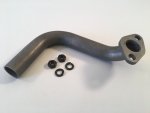
I could possibly cut this pipe shorter and add a 45 and might be able to point the pipe somewhere else.
http://www.nrracing.com/product-p/bends-1.000.htm

As is, it would probably be blowing straight at the frame post. I'm ok with that. it might save the fender from getting melted.

Or maybe this pipe could work if I removed one of the side plastics.
http://www.nrracing.com/product-p/rtt-asn.htm
 

Attachments

  • exhaust1.jpg
    exhaust1.jpg
    243.4 KB · Views: 2
  • exhaust3.jpg
    exhaust3.jpg
    107.7 KB · Views: 0
  • exhaust5.jpg
    exhaust5.jpg
    220 KB · Views: 1
  • Bexhaust.jpg
    Bexhaust.jpg
    7.2 KB · Views: 41
  • Bexhaust2.jpg
    Bexhaust2.jpg
    6.1 KB · Views: 43

bob58o

SuckSqueezeBangBlow
Messages
9,646
Reaction score
1,846
Location
Chicago-town USA
Got the good people at RobertsonsTorqueTubes.com looking into a pipe for the MB200-2.
They have one for the Warrior, but not for this yet. They haven't had one to measure (or even heard about these bikes) yet.

Here is the one for the Warrior.
https://www.robertsonstorquetubes.com/product-page/warrior-baja-honda-predator-212.
Stays inside the frame and under the seat. Offset to miss the center frame post under the seat.
 

bob58o

SuckSqueezeBangBlow
Messages
9,646
Reaction score
1,846
Location
Chicago-town USA
Tax Refund Time!!!

So I upgraded the Valve Train..
-SS Valves 27mm and 25mm with 5.5mm stems
-Middle Groove Keepers for 5.5mm valve stems
-Billet Aluminum Retainers for Stock Diameter Valve Springs
-CrMo Pushrods (5.44")
-Billet GX200 Lifters
-26lb Valve Springs
 

bob58o

SuckSqueezeBangBlow
Messages
9,646
Reaction score
1,846
Location
Chicago-town USA
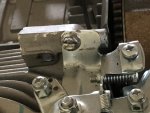
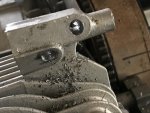
So this 8mm bolt holding the throttle plate on the engine can go take a long walk on a short pier.

WTF? Bolt Head is jacked. 8mm sockets are jacked. Wrenches do no good. I tried to slot the bolt head for a screwdriver and broke the electric die grinder.

Removing the throttle plate should not be this difficult or frustrating.

I need to get the bolt out because that bolt hole is used with the economy top plate.
 

bob58o

SuckSqueezeBangBlow
Messages
9,646
Reaction score
1,846
Location
Chicago-town USA
I thought for sure a 7.5mm socket hammered on and used with the impact wrench would do it.
NOPE!

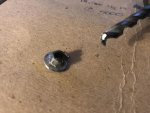
I just drilled it out.
Angle was off but I don’t care.
Couldn’t drill straight through because the throttle lever was in the way. Had to cock the drill and go in steeper. It’ll be fine.

Tapped hole is now a through hole.
 

Attachments

  • image.jpg
    image.jpg
    278.1 KB · Views: 1
  • 1959ACB2-F6CA-417C-8403-AB4CAA685E2D.jpg
    1959ACB2-F6CA-417C-8403-AB4CAA685E2D.jpg
    296.8 KB · Views: 1
  • E497960A-03D3-4F57-87BC-4BBB3E0EECD3.jpg
    E497960A-03D3-4F57-87BC-4BBB3E0EECD3.jpg
    166.8 KB · Views: 2

bob58o

SuckSqueezeBangBlow
Messages
9,646
Reaction score
1,846
Location
Chicago-town USA
Ding Dong, the wicked bolt is dead.
Oh happy day. I get pleasure from the simple things. Like removing a bolt and breaking a handful of cheap HF tools in the process.
https://www.youtube.com/watch?v=6zT8AyfsFmA

---------- Post added at 01:48 PM ---------- Previous post was at 01:33 PM ----------

Tapped hole that became a through hole will become a tapped hole once again.
The backside of that hole is not parallel to the front on the hole, so a nut won't work properly.

I drilled it out with a 1/4" bit, so I suppose I will run a 5/16" tap though that 0.25" hole. I think I have a few 5/16"-24 bolts laying around that should work fine.

EDIT
Didn't like the 5/16 so I ran a 3/8" coarse thread through it. Now I need to go get a new bolt.
 
Status
Not open for further replies.
Top