When does the spark plug spark?

Status
Not open for further replies.

bob58o

SuckSqueezeBangBlow
Messages
9,646
Reaction score
1,865
Location
Chicago-town USA
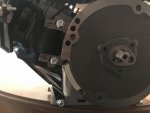
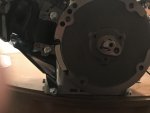
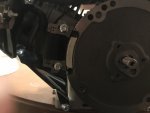
There is some crude method of determining ignition timing by using the legs of the coils and the edges of the magnet, along with a degree wheel.
I mentioned this in the lighting coil thread, but this is a more specific question and hoped it would get a better response if not buried in an old ongoing thread.

Anybody know what the positioning is.
For a Honda/Clone? For a Predator if different?

What edge of the magnet? What part of which coil leg?

Here’s a bunch of options.

I think it is 2nd column, 2nd or 3rd down. Anybody know?
 

Attachments

  • 7EE246E5-A7F1-4A0E-B253-088CFB5017B5.jpg
    7EE246E5-A7F1-4A0E-B253-088CFB5017B5.jpg
    236.7 KB · Views: 6
  • 7BA14BDF-D034-4F1D-B11D-9859CF769C26.jpg
    7BA14BDF-D034-4F1D-B11D-9859CF769C26.jpg
    155.3 KB · Views: 5
  • B23FBC69-C1E6-419B-9FE9-54059BD28CAB.jpg
    B23FBC69-C1E6-419B-9FE9-54059BD28CAB.jpg
    144.3 KB · Views: 5
  • 07FBFE97-FE86-4BBF-BE3A-D0DF5403C44C.jpg
    07FBFE97-FE86-4BBF-BE3A-D0DF5403C44C.jpg
    171.2 KB · Views: 5
  • 02E32D0D-CB36-4D3E-B60F-A3E63977302E.jpg
    02E32D0D-CB36-4D3E-B60F-A3E63977302E.jpg
    163 KB · Views: 5
  • 24204C31-BF51-41B2-AE52-85BD7DB3B701.jpg
    24204C31-BF51-41B2-AE52-85BD7DB3B701.jpg
    145.2 KB · Views: 5
  • 85F304A4-510C-4761-8C03-57BF7A21A2F0.jpg
    85F304A4-510C-4761-8C03-57BF7A21A2F0.jpg
    172.7 KB · Views: 4
  • 11A213A2-9207-46A3-8B8F-3554E1BAE875.jpg
    11A213A2-9207-46A3-8B8F-3554E1BAE875.jpg
    165.4 KB · Views: 10

Whitetrashrocker

Inmate #952016
Messages
5,202
Reaction score
4,695
Location
Southern New Mexico
When I put a adj coil bracket on my derp I found the side to side offset I had to use made the coil trip a little later than when it was perfectly alighned. So in this I would say it varies. The best would be to have a running engine and Mark the flywheel. Add a pointer and then use a light to see where the marks and pointer line up. Then attach the degree wheel and find out exactly.

---------- Post added at 06:10 PM ---------- Previous post was at 06:06 PM ----------

But I think 2nd collum 3rd down is the most correct.

My Briggs fires when the top edge of the coil lines up with the cut out of the FW for the magnet. Just a few degrees more than the 2nd collum 2nd pic.
 

itsid

Moderator
Staff member
Messages
11,563
Reaction score
257
Location
Ruhrpott [Germany]
impossible to tell!

here's why:

the sparkplug does NOT spark at the very same POSITION on each revolution,
it sparks at the very same TIME instead..
means the higher you rev the engine, the later [in terms of position] the actual plug will light up;
that's why you advance timing in order to rev the engine higher ;)

It's the trailing edge of the magnet that starts the process; [LAST PIC!]
that "no longer available" magnetic field causes the internally induced magnetic field to collapse and as a result fire a high voltage from the coil.
(it always takes the exact same amount of time for that to happen..assuming the field's strength is consistent)
then it travels through the wire boot and plug [again..given the impedance of the parts remains consistent that takes another fixed amount of time]
and then there will be fire :D

and the faster the flywheel turns, the further the magnet travelled past the ignition coil when the spark actually enlightens the combustion chamber ;)

I know I know we talk about splitseconds here... but keep in mind that usually an 8° advance is installed.. soooo 2000 rpms more can make about the same difference ;)

'sid


PS dang, I'm sure we had that conversation before...
 

bob58o

SuckSqueezeBangBlow
Messages
9,646
Reaction score
1,865
Location
Chicago-town USA
Not looking forward to buying a timing light, but I guess it is time I should.

Do I start the engine with a drill and check timing at operating speeds while it is running? Being careful not to lose a hand while drawing a reference mark.

Videos I see mostly have people turning the engine by something other than its own combustion. An electric motor, a drill,...

Makes more sense to test at higher RPMs.

I've seen one video where the engine was running, but it was shaking a bunch. Made it seem like the pointer he was using was vibrating like crazy while it was running.

I think he was trying to adjust the pointer to the the mark on the flywheel while it was running, where other people I have seen draw a reference mark, from the line the line on the flywheel.

Having never used a timing light, I don't know how fast the engine needs to spin. I assume it should be more than 500 RPMs. And I don't know how precisely the line shows up under the light. Does the line jump around? Do you have to guesstimate, or is it well defined?

If not running while running, I guess I can take the valves out or leave the head off and turn with a drill?

What's the best way to do this?
I have a cordless drill. That's about my only option to turn the engine.
 

Whitetrashrocker

Inmate #952016
Messages
5,202
Reaction score
4,695
Location
Southern New Mexico
Take the plug out. So no compression.

Make a pointer. I put mine off of a blower cover bolt. Use a price of stifff wire. I used baling wire. Line the magnet up by the coil. Then make a bunch of lines on either side of the pointer. Make them different lengths like on a tape measure. The spacing isn't important.
Then spin the engine with your electric drill.
I used a battery charger to power my timing light and the sparkplug wire to trigger it.
Watch where the pointer lines up with your marks.
Stop spinning the engine and then hand rotate to where the mark and pointer line up.
Look at the mag coil alighnment. That's where it triggers at that RPM.

Sid made a appointment I didn't get to about the speed. But I'm sure your looking for a starting point.
 

bob58o

SuckSqueezeBangBlow
Messages
9,646
Reaction score
1,865
Location
Chicago-town USA
PS dang, I'm sure we had that conversation before...

We have had that conversation. I've posted about the PVL ignition systems that don't retard and have posted how clone ignition systems will retard up to 8 degrees at 8k RPM (or parroted from ARC).

I always assumed that if they say an engine has 24 degrees BTDC ignition timing, then it is 24 before top dead center at idle speeds and retards from there. It would probably make more sense to describe the timing of a utility engine at the governed speed of 3600 RPM. I do know that the timing is not fixed. I DON'T know what RPM they are referring to when they say "Built in 32 degrees BTDC timing" on a flywheel. 2000 RPM? 3600 RPM?

What I'm getting at... At some fixed RPM, there should be a fixed relationship between the position of the magnet and the position of the coil.

It's the trailing edge of the magnet that starts the process; [LAST PIC!]

Are you sure about the last pic? It makes sense logically (magnet moves past coil, field collapses,...), but doesn't seem to agree with what I've come across. Maybe the trailing edge of the coil as it moves passed the first (lower) leg? The flywheel is spinning clockwise.

This guy has the engine running at speed. 2500RPM? 3000 RPM?
The timing mark, that I can see, would be the leading edge of the magnet when it is almost centered under the upper coil leg. Just a few degrees more than centered under the leg. He is shining the light at the leading edge of the magnet, but the trailing edge appears to be just passed the first (lower) leg.

If I am understanding you correctly (as far as the positioning of the magnet when the field starts to collapse), the magnet would be further along in its clockwise rotation at any RPM when compared to this video.

https://www.youtube.com/watch?v=U9uYQ9NNrZo

Here is ARC's how to set timing.
http://arcracing.blogspot.com/2003/05/setting-ignition-timing.html

They say, " Some folks will tell you about aligning the trailing edge of the magnet with the center of the little button just in front of the left leg of the coil, and for the most part, they are correct."

I guess this is at drill rotation speed?

---------- Post added at 10:44 PM ---------- Previous post was at 10:18 PM ----------

Then make a bunch of lines on either side of the pointer. Make them different lengths like on a tape measure. The spacing isn't important.

Watch where the pointer lines up with your marks.
Stop spinning the engine and then hand rotate to where the mark and pointer line up.

I assume I can do this with a line drawn on the flywheel while the engine is running on combustion. If I use a drill to start it. The premarked lines are a good idea.

If the engine is going to run at 3600 RPM, then I'd like to know the timing at 3,600 RPM too, right?
 

bob58o

SuckSqueezeBangBlow
Messages
9,646
Reaction score
1,865
Location
Chicago-town USA
For $40 I ordered some stuff I've been lacking.

Timing Light,
6" degree wheel,
M14 thread piston stop
 

Attachments

  • wheel.jpg
    wheel.jpg
    3.2 KB · Views: 50
  • tlight.jpg
    tlight.jpg
    4.8 KB · Views: 50
  • stop.jpg
    stop.jpg
    2.5 KB · Views: 50

itsid

Moderator
Staff member
Messages
11,563
Reaction score
257
Location
Ruhrpott [Germany]
What I'm getting at... At some fixed RPM, there should be a fixed relationship between the position of the magnet and the position of the coil.
there should be, but there will never be... it's about fixed,
but even minimal temperatur differences make miniscule differences in resistance, a temporary slight residue on the spark plug ..
and you end up with chaotic results.. predictable, but surely no precision
Are you sure about the last pic? It makes sense logically (magnet moves past coil, field collapses,...), but doesn't seem to agree with what I've come across. Maybe the trailing edge of the coil as it moves passed the first (lower) leg? The flywheel is spinning clockwise.
reasonably sure, yes!
again it's the magnetic field not the magnet.. I cannot tell at which point the field itself is weak enough to let the coilfield collapse,
even measuring it in a static manner would not tell you what exactly is going to happen, but simplified to static visual analogues... yes the last pic ;)

you can look at the magnet's field (with a magnetic field viewer [those green film cards]) to get an idea where the field weakens off.

But really, no matter how hard you try, no matter what tool you throw at it... you will NOT get a definite result.
parts heat up, parts vibrate, coil misses to charge up to full capacity for some reason, spark plug has a temporary fuel residue, and takes a slightly higher energy to ignite...
the causes for inconsistency are plenty.

it's "about'ish" the same.. but never exactly.
(just like you cannot produce the exact same dyno result twice)

Sport cars.. well 'sporty' car engines rather removed a centralized ignition coil in favour of single coils directly attached to the individual spark plugs in order to have more consistent results.
to more accurately adjust ignition timing.

a timing light (as we all have) is just another electronical part,
when it sees the spark in the wire, it has to send the signal through it's own wire, through a solidstate switch, trigger a capacitor to discharged with aforementioned angry pixies.. they then make the lightbulb flash..
frankly.. it's just another cause for misleading readings in the end.
And that's okay... as long as there is reasonable consistency,
you can work with that as well as with accurate and precise numbers/observations

But forget about the idea that what you are observing is what happens;
persistence of view kicks your behind (that's why you need a timing light in the first place) and even IF an electric signal could travel at lightspeed (it cannot, not even close) it'd still take time for that pixie to fly from one end of a copper wire to the other...

there's no way of telling really, not with standard equipment.
a dynamic setting (set the position under strobe with a running engine) is the best you can do,
and while I know it's close to impossible to do so on a small engine,
stroberun, reset, stroberun, reset.... rinse repeat...
is still going to get you much further than thinking about how you could work that out to a static marking on the flywheel.
Once you are set to a perfect spark timing, you can mark that coil and flywheel (in respect to the engine case)..

and as long as you do not remove one or the other it'll remain a valid marking.

Now, remove both, reinstall on a different engine and you will unlikely end up with a similar result (instead you'd have to reset dynamically again)

The actual spark should cause an explosion just after TDC,
burning rate of fuels etc... say we talk not earlier than 1° BTDC or so...
~30° at 3600rpms difference for just the pixies to fly through wires...
30° ... the magnet will not be near the coil at any rate

'sid
 

KartFab

Active member
Messages
3,381
Reaction score
60
Location
Dallas, TX
Piston stop is every bit as accurate as getting TDC with a dial gage with the head off.

Timing stock i have seen as low as 22.5 degrees and as high as 25 degrees (before top dead center).

Position the magnet directly under the coil, and then make a very thin mark on the flywheel, perpendicular to its rotation. I do this on the very top of the flywheel.

Next, turn it over. I use a wire wrapped around the plug, witht he plug out. Makes it easy to turn over with a drill. It is as accurate as doing it with the plug in from my experience.

The line will show up to your naked eve very clearly. Look at a spot on the block where you see that line flashing at each rotation, and mark the block. Keep in mind that the angle you look at the block will affect where you put the line. If you want to be super accurate, i guess you could make some sort of straight edge clamped to the block to fix your angle of view so it is more accurate.

Just my 2 cents.

Also, the timing light you got is a POS, 2.5 star rating on amazon. total crap. You could have spent the extra $15 on the INNOVA 3551 Inductive Timing Light and been just fine. Not to make you regret your choice, but just want to save you some headache, just read the amazon reviews https://www.amazon.com/Tooluxe-2072...8&qid=1515601175&sr=1-5&keywords=timing+light

Keep in mind that if you remove the ignition coil and replace it, it can affect yoru timing slightly as the coil may not sit in the exact spot when you reinstall it, even with the same gap. You can also advance and retard the timing slightly by playing wiht the coil gap. ARC racing talks about this too.
 

bob58o

SuckSqueezeBangBlow
Messages
9,646
Reaction score
1,865
Location
Chicago-town USA
Thanks for the quick response. If I can still cancel the order, I will get the INNOVA 3551 Inductive light.

The biggest complaints about the $18 light were..
A. Light is very dim. But the garage I use is very dark (windows covered).
B. Pickup is sensitive and picks up interference from other plugs' wire. But I only have one plug.

I was going to order the $1 protection plan eBay sells as an add-on, but after reading those reviews those Protection Plans are a SCAM. Don't waste your dollar.

If they don't cancel the order, hopefully the light will work well enough for my testing and setting.
I won't need it very often. A few times a year.
 

bob58o

SuckSqueezeBangBlow
Messages
9,646
Reaction score
1,865
Location
Chicago-town USA
I asked ARC about a flywheel with 32 degrees built-in.
I asked, "Since the timing will retard as RPMs increase, at what RPM does it fire at 32 BTDC? 500 RPM? 2000 RPM? 3600 RPM?"

The response was, "Timing doesn't start to retard til about 4k RPM."
On a separate occasion, they have stated ignitions can retard as much as 8* at 8000 RPM.

So it seems they are saying if Timing is set with a drill to 32 BTDC, Then the light might show something like this when running...

1500 RPM 32 BTDC
2000 RPM 32 BTDC
3000 RPM 32 BTDC
4000 RPM 31-32 BTDC
5000 RPM 30 BTDC
6000 RPM 28 BTDC
7000 RPM 26 BTDC
8000 RPM 24 BTDC
 

KartFab

Active member
Messages
3,381
Reaction score
60
Location
Dallas, TX
yeah, when i got mine on camera, it looks like complete garbage because of the frame rate. When it is seen with the naked eye, its static and precise.
 

itsid

Moderator
Staff member
Messages
11,563
Reaction score
257
Location
Ruhrpott [Germany]
non-phone cameras usually can be tweaked to a framerate that's not causing such nasty interference issues
(for a static rpm that is.. for a revving up engine you will always have issues at one point or another)

'sid
 
Status
Not open for further replies.
Top