TIG welding SS headers

Status
Not open for further replies.

redsox985

Active member
Messages
4,092
Reaction score
11
Location
PA
Hey all! So, this year for our racecar (check here for all sorts of shenanigans http://www.diygokarts.com/vb/showthread.php?t=15130), we're looking to go to single piece, CNC bent headers for a seamless exhaust, aside from collectors into the muffler. We may end up going down the route of welded stainless headers, and that's currently my challenge.

We have lots of pre-bent sections from which we can/will cut our headers, but welding SS is new to me. I believe it's 304 .035 tube. We have 308 filler rod and I was practicing on some scrap pieces of .028 the other day. It went pretty well with about a 30-40A max and ceriated 1/16" tungsten aside from the sugaring/oxidation on the back side.

Does anyone have experience with welding SS? We probably have enough argon to back purge it, but I've also seen those flux pastes for shielding. My main concern would be getting the paste to the joint and residual flux after the weld is finished. Since it's just the exhaust, junk flowing through it would simply fly out the back and not be an issue, but how much would remain inside the tube?

Are there other ways to shield the backside of the weld? I've seen fluxed TIG filler mentioned here and there? Suggestions/thoughts/etc? What about gas lenses for the torch... Necessary?
 

mckutzy

Well-known member
Messages
8,353
Reaction score
108
Location
bc, canada
You might be able to use less gas for back purge if you dam off a smaller section, so closer to the weld area where it wont burn. People typically use a piece of cardboard with a few holes in it and green tape( the gum won stick on the metal).

I think those fluxes can be washed out using a hose, after the metal is cool. Exhaust will blow out all the water after.

I have all been told use a gas lens if you can get it. it just covers more, that's if you have room for it in the joint.

Some Ideas. Im not really an expert in this department yet.
 

redsox985

Active member
Messages
4,092
Reaction score
11
Location
PA
The plug idea is a pretty good idea for using less gas. Granted they're only 1.375" tubes, IIRC, so fully purging them won't take a ton of gas. I'll have to look more into the fluxes, but I still don't know how easily we'll be able to apply them. I also have to do more research into gas lenses, because yesterday, I simply upped the flow rate to get more argon around the weld.
 

KartFab

Active member
Messages
3,381
Reaction score
56
Location
Dallas, TX
I have experience welding food grade stainless tubing and back purging. I have a dual flow meter, but you could just use another bottle of argon. Keep in mind argon is heavier than air so it will pool at the lower areas first. So what you do is just get some aluminum foil and poke a few holes in it with a toothpick for the dams, and wrap it around the tube for the purge line. You can use paper or whatever you want and painters tape too, but Aluminum foil works pretty well.

If you are welding a tube horizontally, poke a hole in the top portion of the foil for the dam(top of tube) so the bottom fills up with argon first, pushing the lighter air out of the top. Get the concept? I set my argon backpurge flow to like 40 cfh for 10 seconds, then back it off to 2 cfh just to maintain pressure within the tube.

Gas lenses are really nice, I use them most of the time because you can have a lower flow rate and get better coverage. If you crank up the argon too much w/o a gas lense, you can actually entrain atmosphere into the flow. Gas lenses aren't as susceptible to that, and you can get even a 1" stick out with your tungsten with no problem.

HOWEVER, for really hard to reach spots, I have a 20 series flex head torch that uses lava nozzles. They fit the standard (non gas) collets. They are really handy for getting a 30 degree inside joint.

And with welding stainless, its actually easier than normal carbon steel, just got to keep the amperage lower so you don't burn through. Hope that helps. I am by no means a pro, but have had to do a few stainless jobs here and there, and thought that might be helpful.
 

Tig

New member
Messages
95
Reaction score
0
Location
NC
That Kart is AWESOME...........

That's all I use, pre-bent tubing. Where do you get yours from?

As per heat range, play with your heat and judge by the color and heat soak. Your weld should never look dark or grey. It should have color to it, purples, blues, gold, silvers, pink are common colors.

I am more for using a purge than using flux. The amount of argon used is minimal and you will get excellent results. Not saying you wont get the same results using flux, I just prefer back purging. All of the flux will eventually burn away if you go that route.

I have several size rubber caps that I use for purging. I have used foil and usually fall back on it because its sometimes easier to use, depending on the situation.

Another way to back purge is use a fine sand and fill the tubing.

I also use 2% thoriated tungsten when welding SS.
Lenses are a must if welding SS, it's like a catalytic converter, instead of the gas flowing out in a straight stream, it slows the gas down and spreads the coverage evenly.
Lenses are nice when your welding in random locations where you have to stick your tunk out further than normal.


Go Sox ;)
 

redsox985

Active member
Messages
4,092
Reaction score
11
Location
PA
I have experience welding food grade stainless tubing and back purging. I have a dual flow meter, but you could just use another bottle of argon. Keep in mind argon is heavier than air so it will pool at the lower areas first. So what you do is just get some aluminum foil and poke a few holes in it with a toothpick for the dams, and wrap it around the tube for the purge line. You can use paper or whatever you want and painters tape too, but Aluminum foil works pretty well.

If you are welding a tube horizontally, poke a hole in the top portion of the foil for the dam(top of tube) so the bottom fills up with argon first, pushing the lighter air out of the top. Get the concept? I set my argon backpurge flow to like 40 cfh for 10 seconds, then back it off to 2 cfh just to maintain pressure within the tube.

Gas lenses are really nice, I use them most of the time because you can have a lower flow rate and get better coverage. If you crank up the argon too much w/o a gas lense, you can actually entrain atmosphere into the flow. Gas lenses aren't as susceptible to that, and you can get even a 1" stick out with your tungsten with no problem.

HOWEVER, for really hard to reach spots, I have a 20 series flex head torch that uses lava nozzles. They fit the standard (non gas) collets. They are really handy for getting a 30 degree inside joint.

And with welding stainless, its actually easier than normal carbon steel, just got to keep the amperage lower so you don't burn through. Hope that helps. I am by no means a pro, but have had to do a few stainless jobs here and there, and thought that might be helpful.

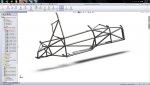
Thanks for all the info. I figured that we would need to get a lens to do it properly. We do have a flex torch, but getting different nozzles would be nice because we have some crazy angles to weld (see the screenshot). Those flow rates should help too, as I don't think anyone around has experience with welding stainless. Before, we've run either mild steel headers or had them made for us. While welding some scraps of stainless, I did notice that it needs lower power, but I was able to moderate it via pedal until I finished up.

That Kart is AWESOME...........

That's all I use, pre-bent tubing. Where do you get yours from?

As per heat range, play with your heat and judge by the color and heat soak. Your weld should never look dark or grey. It should have color to it, purples, blues, gold, silvers, pink are common colors.

I am more for using a purge than using flux. The amount of argon used is minimal and you will get excellent results. Not saying you wont get the same results using flux, I just prefer back purging. All of the flux will eventually burn away if you go that route.

I have several size rubber caps that I use for purging. I have used foil and usually fall back on it because its sometimes easier to use, depending on the situation.

Another way to back purge is use a fine sand and fill the tubing.

I also use 2% thoriated tungsten when welding SS.
Lenses are a must if welding SS, it's like a catalytic converter, instead of the gas flowing out in a straight stream, it slows the gas down and spreads the coverage evenly.
Lenses are nice when your welding in random locations where you have to stick your tunk out further than normal.


Go Sox ;)

Our kart is hardly a kart in terms of what I/many here have built. If you look through that thread, you'll see it's a car built by a bunch of college kids for an annual design competition. It's incredible to drive and so much fun to build from the ground up.

All of our tubing is from a company in Canada that used to be called Cartesian, but their website is no longer up and the boxes that actually arrived yesterday with the new chassis inside had a different company on the label, I'll get the name of them.

Is there any reason you prefer 2% Th tungsten over 2% Cer? I've always been wary of Th because thorium IS radioactive (it's an alpha emitter and alpha particles can/will be stopped by clothing etc., but if the dust from grinding is inhaled, alpha particles are the most damaging of radioactive particles).
 

Attachments

  • section view.jpg
    section view.jpg
    68.6 KB · Views: 6

Tig

New member
Messages
95
Reaction score
0
Location
NC
Our kart is hardly a kart in terms of what I/many here have built. If you look through that thread, you'll see it's a car built by a bunch of college kids for an annual design competition. It's incredible to drive and so much fun to build from the ground up.

All of our tubing is from a company in Canada that used to be called Cartesian, but their website is no longer up and the boxes that actually arrived yesterday with the new chassis inside had a different company on the label, I'll get the name of them.

Is there any reason you prefer 2% Th tungsten over 2% Cer? I've always been wary of Th because thorium IS radioactive (it's an alpha emitter and alpha particles can/will be stopped by clothing etc., but if the dust from grinding is inhaled, alpha particles are the most damaging of radioactive particles).

I have read up Formula cars, they are amazing. I give every one of those kids credit for getting involved in something like that. I also agree, they are nothing like any kart built on this site. They are truly works of art and engineering marvels.

That's ok, I was just curious. I get mine from several suppliers, more local.

I use 2% because I can use it and not have to change over to pure when welding aluminum. I have a ton of them. They are also available pre-ground.
 

redsox985

Active member
Messages
4,092
Reaction score
11
Location
PA
You use 2% Th for aluminum? I've always been told pure is the go-to for aluminum. Also, we got our chassis tubes made by VR3 Engineering.
 

Tig

New member
Messages
95
Reaction score
0
Location
NC
Yes, you can use 2% using an inverter. Inverter = Dynasty
Pure when using a transformer style machine. Transformer = Syncrowave/Dialarc

Thanks for the link. How does the material come to you?
Is it pretty clean or do you have to do a lot of prepping before welding?
 

machinist@large

Active member
Messages
2,865
Reaction score
32
Location
West Michigan, 49331
You use 2% Th for aluminum? I've always been told pure is the go-to for aluminum. Also, we got our chassis tubes made by VR3 Engineering.

Yes, you can use 2% using an inverter. Inverter = Dynasty
Pure when using a transformer style machine. Transformer = Syncrowave/Dialarc

Thanks for the link. How does the material come to you?
Is it pretty clean or do you have to do a lot of prepping before welding?

You can use 2% thoriated tungsten on aluminum; pure is recommended because it forms a better "ball" on the tip. The smooth tip makes for a smoother arc. 2% usually has a lumpy "ball" that seems to cause the arc to wander more; meaning more work for the weldor.

Tig, you can use both types on transformer type machines; so far in my career, I've never worked for a shop that had that new fangled stuff (inverters). And while you can add a torch to a Miller Dial Arc for doing scratch start tig, it's intended niche is strictly as a stick welding power source; I know, because I own one. The Syncrowave models are the unit's that have all the bells and whistles......
 

Tig

New member
Messages
95
Reaction score
0
Location
NC
You can use 2% thoriated tungsten on aluminum; pure is recommended because it forms a better "ball" on the tip. The smooth tip makes for a smoother arc. 2% usually has a lumpy "ball" that seems to cause the arc to wander more; meaning more work for the weldor.

Tig, you can use both types on transformer type machines; so far in my career, I've never worked for a shop that had that new fangled stuff (inverters). And while you can add a torch to a Miller Dial Arc for doing scratch start tig, it's intended niche is strictly as a stick welding power source; I know, because I own one. The Syncrowave models are the unit's that have all the bells and whistles......

Yes, pure has a better ball factor. I have not had much if any wandering when using it. Clean up is usually with a wire brush and I'm done. Depending on the finish the customer wants.

The dial arcs I've used were set up for tig. Neither were scratch start, they were wired for triggers. While its not something I'd recommend, it was how that company ran the shop and rigged the machines that way. Syncrowaves are for sure the dominating machine. Very few shops I have worked for had inverters. The shop I'm at now has inverters as well as syncrowaves and DC inverters. I think you'd have second thoughts about that new fangled stuff if you had an inverter at your disposal :)
 

redsox985

Active member
Messages
4,092
Reaction score
11
Location
PA
Yes, you can use 2% using an inverter. Inverter = Dynasty
Pure when using a transformer style machine. Transformer = Syncrowave/Dialarc

Thanks for the link. How does the material come to you?
Is it pretty clean or do you have to do a lot of prepping before welding?

Alright. We definitely have an older Miller machine, I think it's a Syncrowave 180. And the tubes from them have what I'd say is a normal, oiled stock finish. I'll try to get a picture tomrrow. For prep, I'd lightly hit the surface with some 120 grit or so, then wipe with acetone and go for it. Here's a picture from their site that shows how they tubes come out of the box.
 

Attachments

  • DSC_0022rec.jpg
    DSC_0022rec.jpg
    12.7 KB · Views: 10

Tig

New member
Messages
95
Reaction score
0
Location
NC
Alright. We definitely have an older Miller machine, I think it's a Syncrowave 180. And the tubes from them have what I'd say is a normal, oiled stock finish. I'll try to get a picture tomrrow. For prep, I'd lightly hit the surface with some 120 grit or so, then wipe with acetone and go for it. Here's a picture from their site that shows how they tubes come out of the box.


If I had the space an older syncrowave would be my machine of choice.
That is typical, I go through the same process to clean as well.
Wow, that is great. They do all the work? That's great.
How does it come to you, in kit form?
Thanks for the info
 

machinist@large

Active member
Messages
2,865
Reaction score
32
Location
West Michigan, 49331
Yes, pure has a better ball factor. I have not had much if any wandering when using it. Clean up is usually with a wire brush and I'm done. Depending on the finish the customer wants.

The dial arcs I've used were set up for tig. Neither were scratch start, they were wired for triggers. While its not something I'd recommend, it was how that company ran the shop and rigged the machines that way. Syncrowaves are for sure the dominating machine. Very few shops I have worked for had inverters. The shop I'm at now has inverters as well as syncrowaves and DC inverters. I think you'd have second thoughts about that new fangled stuff if you had an inverter at your disposal :)

It sounds like your past employer had the field kits for the dial arcs; spool gun kits are also available. Both types of kits do work, but from what I've been told by welding suppliers of many different brands, if you use it on a daily basis, you'll want to upgrade to a dedicated machine of the correct type for greater ease of use.

I've talked to several people who have tried out inverter type welders; some worked great, others were high priced boat anchors. I personally won't be in the market for anything for a while, but I seem to see a new trend from the OEM's to try to make the setup factor a lot easier. I'm inclined to wait a little longer, to see how this shakes out. The ability to "tune" any part of the welding process can be handy, but if you're trying to set up for a job that you haven't done before, that "tune ability" can actually be a liability. To have it simplified to just what matl., what thickness, what wire size, etc. sounds like a great idea if it works as advertized.

It'll be interesting to watch how this settles out....

:thumbsup: :cheers2: :popcorn: Pat
 

redsox985

Active member
Messages
4,092
Reaction score
11
Location
PA
If I had the space an older syncrowave would be my machine of choice.
That is typical, I go through the same process to clean as well.
Wow, that is great. They do all the work? That's great.
How does it come to you, in kit form?
Thanks for the info

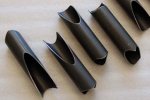
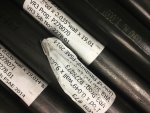
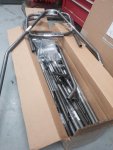
Each tube comes with a label corresponding to the line number from the BOM you sent with the job request. We do the model in SolidWorks, then go through and make all of the trims to the tubes in the order we want for sturctural purposes (secondary/tertiary tubes mouthed to primaries). You can probably pay a fee to have them do this for you if you don't have a preference, possibly. The tubes arrived in two cardboard boxes, with cling wrapped bundles of tubes (we have ~130 going into the chassis).

The first is an image our photo guy took to post online thanking them for the partial sponsorship, but it also shows how detailed the labeling is on each. The second is the box of most tubes, with the larger ones in the flat box that got cut off.

Item/BOM # provided
OD, thickness, node to node length in model (I believe)
Their info ???
Job #
Customer

They do awesome work and save us countless hours of grinding tubes. Their turn around time, from approved job, will blow you away. We had our tubes in hand, from Canda, in about 2 weeks.
 

Attachments

  • 1401188_485934441505118_2065312406_o.jpg
    1401188_485934441505118_2065312406_o.jpg
    101.9 KB · Views: 6
  • 2013-11-01 17.10.44.jpg
    2013-11-01 17.10.44.jpg
    80.5 KB · Views: 10

Tig

New member
Messages
95
Reaction score
0
Location
NC
It sounds like your past employer had the field kits for the dial arcs; spool gun kits are also available. Both types of kits do work, but from what I've been told by welding suppliers of many different brands, if you use it on a daily basis, you'll want to upgrade to a dedicated machine of the correct type for greater ease of use.

I've talked to several people who have tried out inverter type welders; some worked great, others were high priced boat anchors. I personally won't be in the market for anything for a while, but I seem to see a new trend from the OEM's to try to make the setup factor a lot easier. I'm inclined to wait a little longer, to see how this shakes out. The ability to "tune" any part of the welding process can be handy, but if you're trying to set up for a job that you haven't done before, that "tune ability" can actually be a liability. To have it simplified to just what matl., what thickness, what wire size, etc. sounds like a great idea if it works as advertized.

It'll be interesting to watch how this settles out....

:thumbsup: :cheers2: :popcorn: Pat

That is correct, they were all set up with the field kits.
The main reason for them using that set up is, it is a very inexpensive set up. That side of the shop will never upgrade, they are too cheap. The other side has (certified side) has nicer more modern machines (inverters and syncrowaves)


Its funny, I have had several conversations with some old timers who would rather stick weld than use an inverter, haha. The bells and whistles intimidate them.
I am not too fond of the machines that "tune" themselves, I don't need that. I'd rather dial it in myself than rely on a machine to do it. Waiting is a good idea, give it time to get some use and reviews from the pros as well as the hobbyist.

:cheers2:
 

Tig

New member
Messages
95
Reaction score
0
Location
NC
Each tube comes with a label corresponding to the line number from the BOM you sent with the job request. We do the model in SolidWorks, then go through and make all of the trims to the tubes in the order we want for sturctural purposes (secondary/tertiary tubes mouthed to primaries). You can probably pay a fee to have them do this for you if you don't have a preference, possibly. The tubes arrived in two cardboard boxes, with cling wrapped bundles of tubes (we have ~130 going into the chassis).

The first is an image our photo guy took to post online thanking them for the partial sponsorship, but it also shows how detailed the labeling is on each. The second is the box of most tubes, with the larger ones in the flat box that got cut off.

Item/BOM # provided
OD, thickness, node to node length in model (I believe)
Their info ???
Job #
Customer

They do awesome work and save us countless hours of grinding tubes. Their turn around time, from approved job, will blow you away. We had our tubes in hand, from Canda, in about 2 weeks.

That is great. They seem like a professional with wonderful customer service.
I had e-mailed them, they were prompt and very descriptive. I forwarded it to my buddy who is a designer and more into the numbers part of the business.
That is great how they detail every little part.
Thank you very much for the info, I appreciate it:thumbsup:
 
Status
Not open for further replies.
Top