speed calculator

Status
Not open for further replies.

87srvsnow

New member
Messages
102
Reaction score
0
Location
massachusetts
is the speed calculator accurate? right now, my tires are 13 inches my axle is a 60 tooth, and my clutch is a 12 tooth. i wasn't sure about what my engine was rated for in RPM's but i know it can do around 35 MPH so i filled in the blanks. i knew everything but RPM's so i just typed in randoms numbers until i got 35 MPH i found around 4500 RPM's. i am thinking about buying a 40 tooth axle sprocket, and the speed calculator says it will reach around 52 MPH, does this sound right?
 

87srvsnow

New member
Messages
102
Reaction score
0
Location
massachusetts
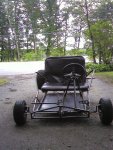
o and i thought since i got pics i might as well post them.
 

Attachments

  • go.jpg
    go.jpg
    175.4 KB · Views: 13
  • go2.jpg
    go2.jpg
    150.6 KB · Views: 23

Tommy Boy

Idiot
Messages
72
Reaction score
0
Location
Amidst the sand fleas west of Tulsa
At a guess, yeah.

The best way, instead of working backwards from an estimated speed is to simply research your powerplant. Once you do some digging to find the specs on your engine, then you can work out max speed at max RPM as well as an idea for speed upon engagement of your clutch, depending on what it's rated at. From the clutch engagement RPM, given maximum efficiency and those engine specs, you can get the torque as well which should shed some light on whether the faster gearing will still have the nuts to get you out of the hole.
 

87srvsnow

New member
Messages
102
Reaction score
0
Location
massachusetts
i am sorry but those last couple lines, i couldn't understand at all. haha. there was this little metal piece that i took off that was used to hold the throttle form engaging all the way. so it runs faster than it is supposed to i think.
 

Tommy Boy

Idiot
Messages
72
Reaction score
0
Location
Amidst the sand fleas west of Tulsa
You got some model numbers? Make and horsepower? The good ol' internet ought to get you at a minimum what that engine is RPM rated at and if you've made some changes to increase available RPM, simply listen to your engine. It takes familiarity and time, but if you know what a motor sounds like at idle and the corresponding RPM, at midrange (roughly 2000 RPM, no load), and at rated RPM, as the engine speeds up, your ear alone will be able to tell you about how many more RPM you're spinning. Is that how you're guessing 4500?

If my monkey brain can do it with a fire engine, surely you can do it with yours.
 

87srvsnow

New member
Messages
102
Reaction score
0
Location
massachusetts
well the way i am doing it is on the speed calculator page it is set up like this:

diameter Engine teeth on teeth on
in inches RPM axle clutch = MPH
________ ______ _______ _______ ____

i have diameter of the tire, teeth on axle, teeth on clutch, and MPH. so i can fill in this much:

diameter Engine teeth on teeth on
in inches RPM axle clutch = MPH
12______ ______ 60_____ 12_____ 35___


so all i needed to do was find the RPM which would equal it out to 35 MPH so first i tried 3600 [the number this site said most engines are rated for] but it came out to low, so i filled in numbers a little higher each time until i reached 35 MPH
 

Tommy Boy

Idiot
Messages
72
Reaction score
0
Location
Amidst the sand fleas west of Tulsa
There's a reason why I bring this up.

Your numbers are correct, but it's the given that a decrease in axle sprocket diameter will increase available RPM to the axle while decreasing torque. We now know that you're carrying a 13" tire on your cart and currently run approximately 35 MPH at 4500 max RPM. Let me throw some alternative options at you.

Keep your torque. Get bigger tires.

For example an 18" tire, commonly found on most midship mount riding mowers, given your current set up, will sling over 40 MPH at 3600 RPM, over 50 MPH at your existing 4500 RPM. All while staying with the higher torque of the bigger sprocket, plus adding the benefit of more rubber on the road for traction's sake and a wider pattern to hold turns better.

Point being, I don't know if decreasing the sprocket size will make your cart a dog out of the hole. I DO know that increasing tire diameter will keep it torquey and give you the increases in speed you're hunting for. If you go this route and still find it plenty powerful enough to break it loose and stay strong from the hole, THEN go with a 40t sprocket and get that much MORE fast.
 
Status
Not open for further replies.
Top