

65ShelbyClone
Active member
I bought a ~$36 billet connecting rod for a GX140 I'm playing with again and thought I would share some of my observations.
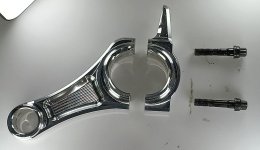
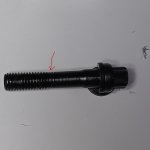
First and foremost, the bolts are trash and should be replaced. Lots of people break them and even RBG did. My hypothesis on why is that the threads were rolled right into the necked-down section of the bolt shank, making the minimum diameter even smaller and putting a bunch of stress risers in it. If you want to read about a neat engineering topic, look into notch strengthening. This bolt had it until they cut threads through part of it. You can't replace them with ARP bolts for an ARC rod either because these are metric. They're also M6x0.75x30mm, which is surprisingly hard to find locally and even on Amazon in a class 12.9 socket cap screw.
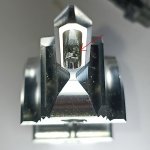
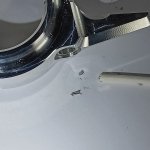
The dipper oil hole was also filled with metal chips/swarf/etc from the machining process. If someone misses this on assembly, that junk is either going to block the oil hole where the bolt intersects it or go into the bearing. On of the chips is there next to the bolt above, but this is how I found them:
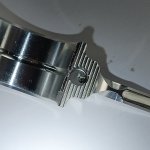
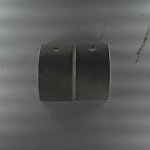
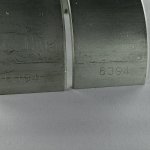
The bearings are also covered in swarf, but that's less concerning to me because it's soft and easily removed.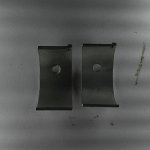
First and foremost, the bolts are trash and should be replaced. Lots of people break them and even RBG did. My hypothesis on why is that the threads were rolled right into the necked-down section of the bolt shank, making the minimum diameter even smaller and putting a bunch of stress risers in it. If you want to read about a neat engineering topic, look into notch strengthening. This bolt had it until they cut threads through part of it. You can't replace them with ARP bolts for an ARC rod either because these are metric. They're also M6x0.75x30mm, which is surprisingly hard to find locally and even on Amazon in a class 12.9 socket cap screw.
The dipper oil hole was also filled with metal chips/swarf/etc from the machining process. If someone misses this on assembly, that junk is either going to block the oil hole where the bolt intersects it or go into the bearing. On of the chips is there next to the bolt above, but this is how I found them:
The bearings are also covered in swarf, but that's less concerning to me because it's soft and easily removed.

