
You are using an out of date browser. It may not display this or other websites correctly.
You should upgrade or use an alternative browser.
You should upgrade or use an alternative browser.
No advantage to running premium gasoline in a stock engine
- Thread starter Oilpan4
- Start date

BaconBitRacing
Well-known member
As said, by many engine experts, many times, higher octane fuel doesn't give more power, it just lets you make more, by allowing more compression without pinging. If you look at the performance engine's of the late 60's and early 70's, they had huge compression ratios, because they had access to cheap high-octane fuel, not to mention it was leaded, but that's not important in this conversation.

Master Hack
Well-known member
Ummmm, what's a stock engine? That even sounds weird!
BaconBitRacing
Well-known member
Hey! You know what it is, you drove Franken Buggy for about 30 minutes with one, then Egor got fed up and here we are...Ummmm, what's a stock engine? That even sounds weird!
Yeah nothing is stock for me. Even my 208cc push mower has a go-kart pipe.Ummmm, what's a stock engine? That even sounds weird!
I guess my redmax weedeater engine is still stock.
Master Hack
Well-known member
No it wasn't truly stock, with mopar, ignition and hackmaster, intake system. yeah, it was still a dog!Hey! You know what it is, you drove Franken Buggy for about 30 minutes with one, then Egor got fed up and here we are..

Dominic Salvato
Member
- Messages
- 48
- Reaction score
- 55
Lead in gas is to cool the exhaust valves. 2strokes don't need lead. Unleaded works fine.

Whitetrashrocker
Inmate #952016
The lead was to form a cushion for the valve seats before they figured out a way to harden them.
Denny
Canned Monster
You’re both wrong. Lead was added to fuel for many different reasons. But each auto manufacturer had their own reasons for wanting it used. Ford for the octane (pre-ignition resistance) in the flat heads. The seats were already hard cast iron. Same holds true for Pontiac/Okland, Oldsmobile and Chrysler’s flat heads. The OHV engines had a different problems. With increased horsepower and rpm along with the extra heating of the exhaust valve dwell time of the valve on seat decreased rapidly. This meant less time for the valve to shed heat through the seat. Micro welding of the valve and seat would occur. The lead stopped all of that or at least slowed it down. In time metallurgy caught up, in the late 60s the lead was not necessary.
Whitetrashrocker
Inmate #952016
Yeah I forgot about the octane thing.
Funny thing is GA airplanes are still regulated to use low lead gas.
But the engines are also still 1940 technology.
They tried running car gas and it causes wierd issues. The ethanol causes havoc too.
Some are using mogas (motorgas) and or a 50/50 cargas/avgas.
I like the 100 octane in my high compression engines. But you have to run a tad hot or the lead won't clear out and makes funny deposits.
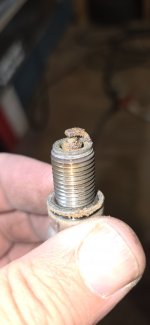
Funny thing is GA airplanes are still regulated to use low lead gas.
But the engines are also still 1940 technology.
They tried running car gas and it causes wierd issues. The ethanol causes havoc too.
Some are using mogas (motorgas) and or a 50/50 cargas/avgas.
I like the 100 octane in my high compression engines. But you have to run a tad hot or the lead won't clear out and makes funny deposits.