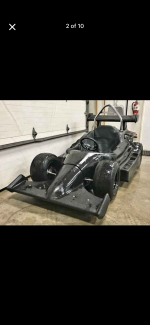
First job—and honestly one of the best memories growing up. I went to Gasoline Alley every birthday until it closed. The owner was an incredible guy who really focused on delivering a top-level racing experience for all skill levels. From what I remember, a lot of the business was driven by the international soccer events, but the karting side was always done right. The track was technical, the karts were clean and comfortable, and the arcade was solid. Skill-based prizes were kind of his thing long before places like Piccadilly, Circus Circus, or what became Chuck E. Cheese.
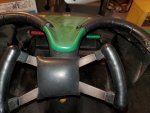
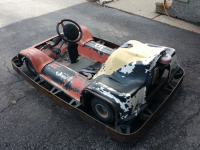
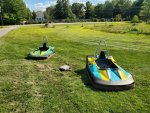
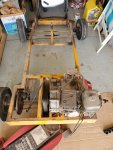
By the time I was 15, my dream job was to be a track supervisor. In reality, I was the kid working for the track supervisor—but I loved it. The karts you have were bought brand new around 1995. I wish I remembered the manufacturer, but I believe they were Formula K. They were built in two parts: a frame and a fiberglass shell. We called them Can-Ams.
They were extremely safe—honestly safe enough that helmets weren’t always required back then. They rarely tipped, and even the typical rear-end bumps at the end of a session never turned into “override” accidents where someone got hurt. They were very forgiving karts.
What made the place really special, though, was the progression system. After proving you could drive safely in the Can-Ams, you’d get a punch on a business card (it said “Gary’s Toys”). After ten punches, you could upgrade to faster karts.
That’s where the Cyclones came in. We took the older 1980s Can-Am chassis, upgraded them from 5hp Hondas to 9hp, and sold that experience as the Cyclone tier. They were an absolute blast—especially in the rain. And yes, we ran slicks in the rain. Some of my best memories are from those wet sessions.
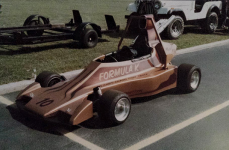
Then there were the Typhoons. Those were unique to Gasoline Alley, and I haven’t seen one since. Big, heavy Formula K-style karts with lawnmower tires shaved into slicks and a 15hp motor. You were basically sliding the entire time. If you spun out, your session was over. They demanded respect.
We also had midget cars—what we called mini sprints. These were 9hp engines on mini sprint frames, with large Typhoon rear tires and racing slicks up front. They rolled a lot and had no tire protection. Sunday mornings only, members-only sessions. Insurance definitely didn’t love those.
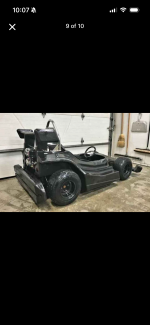
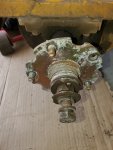
Toward the end, we were experimenting with the Andrei Super Kart, which is pretty similar to what you see today with indoor pro-karts—beefed-up chassis, stronger axles and spindles, and proper racing tires.
Now, about “stacking the karts”…
We had 34 Can-Ams, 12 Cyclones, 10 Typhoons, plus the midgets and Andreis. Every night, we had to store them all. The big Typhoons would get driven into the arcade and parked inside. The Cyclones stayed outside, chained through the bumpers for security.
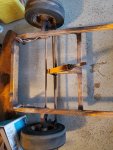
The garage itself was tiny—maybe 12x12—so they built a racking system to stack karts vertically. On busy days, all 34 Can-Ams would be running, which meant at closing time we were physically lifting these things up into racks.
Here’s where it got sketchy. The bumpers were attached to the fiberglass shell, not the frame. If the shell wasn’t bolted down properly, it could come loose. One day, someone had removed the shell bolts earlier to fix a flat, lifted it just enough to swap the tire—and forgot to bolt it back down.
That night, we tried stacking it. The shell shifted, and it took us a good 30 minutes to get everything lined back up and secured again.
I really miss that job. It was something special, and I’d love to build something like that again someday.

 20200731_165820.jpg4.4 MB · Views: 24
 20200903_123804.jpg1.9 MB · Views: 21
 20200903_123814.jpg1.8 MB · Views: 20
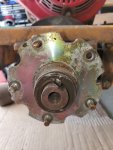 20200903_123820.jpg1.3 MB · Views: 19
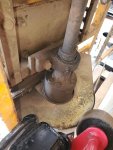 20200903_123831.jpg1.8 MB · Views: 19
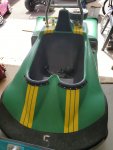 20200903_123916.jpg1.6 MB · Views: 21
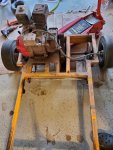 20200903_194422.jpg1.8 MB · Views: 21
 20200903_194433.jpg2.4 MB · Views: 21