Most power for the money?

gmotz

Member
Messages
39
Reaction score
45
Its really hard to say, i don't know the engines all that well so i'm not sure where else you might have caused damage. Typically you need assembly lube between any metal surfaces that are touching, the assembly lube gives you a few seconds of protection until the oil starts moving through the engine and lubricates everything.

If you have the warranty, and any concerns that you caused more damage, you might want to put it all back together and return it and start over. If you are this far into and don't want to go through the hassle, you can probably just take everything apart, clean and inspect it, and put it all back together. You can post pics for us and we'll give you a read, mostly you're looking for any lines, marking, discoloration, or signs that metal has transferred from one surface to the other.
 

gmotz

Member
Messages
39
Reaction score
45
There are like 5 million vids on youtube about step by step building a predator, i would go through a few of them... or maybe others on here have suggestions... and try to find someone who looks really professional and follow along.
 

madprofessor

"Loose Cannon Creations"
Messages
2,899
Reaction score
966
Location
Jacksonville, Florida
About that assembly lube, they specify "assembly" because that's the only thing and only time you use it for, when assembling parts that have been apart or are new. Most of what I've heard about its use was positive, and for good reason. Places that oil is slow to get into, like the rod/crank journal in a splash lube Predator (sound familiar?), can have a run-dry period on startup without the thick and sticky assembly lube slathered on during assembly.
Supposedly it eventually thins out and emulsifies into the oil as the engine runs over time. An early oil change to check for debris in the oil from new parts wearing in would get rid of most of it for good. I have heard some folks say they would only use it on cam lobes, lifters, wristpins, and rockers (best as I can recall).
Just passing on what I do know about it, which is less than what I don't know about it. Have never used it myself, have only soaked parts in break-in oil and/or poured that oil all over parts and exercised them thoroughly before assembly.
 

gmotz

Member
Messages
39
Reaction score
45
Yep just extra sticky oil to help on startup. People have been building engines forever without it but if you ever get a chance to look over the shoulder of a high performance pro engine builder, they seem to use a lot of it.
 

Denny

Canned Monster
Messages
11,846
Reaction score
8,314
Location
Mayberry, Indiana
Now get a new bearing inserts for the rod. Use assembly lube on the rod bearing and all contact points on the camshaft and automatic transmission fluid on the piston, rings and cylinder. Fill the engine with fresh 30wt oil and run it. Make sure the lifters spin freely in the bores before you put it back together. I know a lot of people on here love their favorite snake oils on here but most of the time they are detrimental to the actual break in process. You actually want the parts to wear into each other during break in. This way rings seal better, valves seal tighter and crankshafts spin a little freer. It helps open up the fit for more oil to get into.
I have rebuilt hundreds of engines and I will not venture away from this process. Nor will I engage in a debate about it.
 

madprofessor

"Loose Cannon Creations"
Messages
2,899
Reaction score
966
Location
Jacksonville, Florida
Note that Denny has advised in the past (and I now agree) that you take a brand new engine and run it box stock for a little bit before modifying it, to verify that nothing's wrong with it already. Then you tear it down, build it your way, and then do a full break-in cycle.
 

Kartin’ kid

Active member
Messages
221
Reaction score
90
Location
None of your business (Aptos CA.)
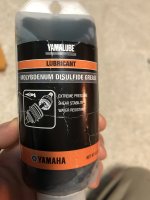
Will this stuff work as assembly lube? Don’t worry, I won’t use it if you guys don’t give it the go ahead. A family member had a lying around and someone suggested that I might be able to use it for that purpose
6E3C0CFC-4C88-4096-AC9E-A399681C0F47.jpeg
 

Denny

Canned Monster
Messages
11,846
Reaction score
8,314
Location
Mayberry, Indiana
No, that won’t work. It is a grease made for cv joints. GM EOS is my favorite also Permatex makes a great one also. What ever you use you want it to melt away or wash away quickly leaving room for the oil but have a superior crush strength to keep parts from galling. There is no one perfect oil or lube for this that’s why you use different lines on different parts of the engine. Just don’t use STP.
 

gmotz

Member
Messages
39
Reaction score
45
I posted an amazon link to the correct stuff, its like $6 at literally any auto parts store. A small tube can probably rebuild a hundred small engines, or 5 or 6 big V8's.
 

madprofessor

"Loose Cannon Creations"
Messages
2,899
Reaction score
966
Location
Jacksonville, Florida
Kidding about the STP lube, I actually do only use it to increase viscosity, but not any assembly lube they may have, don't even know if they do have any. The only Studey Trans Prod I use is "STP Oil Treatment", specifically. It's Motor Honey under a cheaper name, keeps my oil pressure up in my worn out Astro van after the oil warms up and thins out.
 

Kartin’ kid

Active member
Messages
221
Reaction score
90
Location
None of your business (Aptos CA.)
Now get a new bearing inserts for the rod. Use assembly lube on the rod bearing and all contact points on the camshaft and automatic transmission fluid on the piston, rings and cylinder. Fill the engine with fresh 30wt oil and run it. Make sure the lifters spin freely in the bores before you put it back together. I know a lot of people on here love their favorite snake oils on here but most of the time they are detrimental to the actual break in process. You actually want the parts to wear into each other during break in. This way rings seal better, valves seal tighter and crankshafts spin a little freer. It helps open up the fit for more oil to get into.
I have rebuilt hundreds of engines and I will not venture away from this process. Nor will I engage in a debate about it.
I’m starting to gather everything I need to restart the build. Assembly lube and new rod Bearings are on their way. Could you tell me more about why and how to use auto trans fluid?
 
Top