I was always taught dyno hp numbers are basicly bull. Just a number that can be manipulated. The real value of a dyno is as a tuning aid, like a oil pressure gauge, temp gauge, afr gauge, vacuum gauge. It is just another tool to measure engine performance and make sure the changes you make are heading in the correct direction. Final or additional tuning was done on the race track. with the cars we never worried about dyno numbers just time slip numbers. You can take one engine and run it on 10 different dynos and end up with 10 different sets of numbers.
Denny
I agree 100%.
Here is a direct quote from the dyno guy that is employed by one of (if not THE major manufacturers of small 4 stroke industrial engines)
"A dyno at a dealer or recreational level is a tool and as such repeatability is going to be all one should be after. When someone talks a tenth or two gain most of the time there is more error in the test standard and definitely more error in the correction factor software than allows for this level of accuracy."
But I also believe that there is a standard method that can be followed to fix this (but it aint gunna happen).
The problem is the vast majority of people buying parts and engines out there, including those in the karting scene, will buy based on hp numbers alone. The bigger the numbers, the bigger the sales. The companies where dynamometer operators have lawyers breathing down their necks will produce the "true" hp numbers. That doesn't exist in the karting world.
There are no consistent materials or methods or actual verification of calibration with inertia dynamometers in the karting scene. If there were and people were held accountable to those materials and methods, everybody's would read the same numbers.
There is a standard for engine horsepower rating that must be followed by engine manufacturers. The standard is SAE J1349 and is used for net and gross continuous horsepower ratings. Honda uses it, and briggs uses it. I know this because they state that they use it. Honda reports their NET hp numbers, and briggs reports their GROSS (no muffler and air box) hp numbers with all of their industrial 4 stroke engines.
http://www.honda-engines-eu.com/web/eec-public-site/consistent-method-of-rating-engine-power
Not sure about lifan and duromax, but i have a sneaky suspicion that they are not since their numbers skew high, and they dont have class action lawsuits to worry about. Briggs, honda, kawasaki, tecumseh all have settled class action lawsuits as late as October 2018 in court over this inflation of hp numbers.
So what happens when these companies actually follow the numbers? You can see results like this for STOCK engines:
Given: displacement and a 1 hp per 32.5cc produced, you can divide displacement by 32.5 to find a ball park figure for any small, bone stock, all original, industrial 4 stroke engine will make at 3600 rpm.
http://www3.telus.net/findNchoose/engine_cc_to_hp_calculator.html
212/32.5= 6.523 calculated (predator states 6.5)
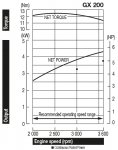
196/32.5=6.030 (honda gx200 states 5.5 but the power curve shows maybe 5.7-5.8ish hp)
389/32.5=11.96 hp (honda states 11.7)
420/32.5=12.92 (predator states 13 hp, and duromax states a whopping 16hp... yeah somethings not adding up here with duromax... a quick calculation here for duromax's MAX torque rating, you find that they actually fudged the numbers in the hp=rpm*tq/5252 and you see that duromax is basically saying that their max torque happens at 3600 rpm, which we all know is not how any small engine works. Max torque happens at 2200-2500ish rpm, so there is at least a feasible explanation as to why duromax is knee deep in BS, they cant or choose not to use a hp formula correctly by substituting 2500 rpm with 3600 rpm for a rather juicy (and completely false) hp number.)
So why does this matter? I have seen more than 1 or 2 people comparing the duromax 420cc to the predator 420cc and when you see about all else the same, one makes 13 hp and one makes 16 hp, well, are you going to blame the guy that thinks 3 more hp is the deciding factor here and buys the duromax? Spoiler alert, im fairly confident that the duromax wont make significantly more or less hp than the predator, and you have been duped into thinking it has. THIS is why I am frustrated.
Going back to the relationship between cc/32.5 might not be a linear relationship (e.g accurate at all cc ratings since there are so many other variables) but from my initial review of honda, predator, and briggs engines... the results are very clear. They all match pretty well. So now lets get on to modified engines:
Here is a number I trust for a 204cc 8.5:1 compression engine with a 22mm roundslide carb on 87 octane gas. Unsure of header or air filter, but it is according to SAE correction: just under 8 hp at 5000 rpm... see attached screen grab of page 6 here:
https://www.briggsandstratton.com/content/dam/briggsandstratton/na/en_us/Files/pdps/ms5701.pdf
So lets just stop right here and think for a minute. briggs animal makes just under 8 hp with a nice carb on pump gas and 29 DBTDC with PVL ignition. Also makes just about 10 ft lb torque MAX. okay... so how do we get inertia dynos running a predator 212 spitting out 14 ft lbs and 9.2-10 hp with a carb that flows less, inferior timing, and about the same displacement/cam profile? THIS is what i am getting at here with the HUGE discrepancy. You cant just take a stock predator 212, change out the jets and whamo it makes insane 54% jump in hp magically. An old engine builder once said, remember the days when the 8.1-8.8 hp briggs flathead stockers claimed 11-12hp? Now we have the 11 hp OHV stockers claiming 15-16hp (sarcasm).
new LO206 204cc engines with 29 DBTDC, .255 cam, 8.5:1 compression and 87 octane gas, and you get 8.8 hp
http://www.briggsracing.com/racing-engines/206
bump the compression to 9.5:1, 91 octane fuel, .308 cam, and you get 11.5hp (world formula)
http://www.briggsracing.com/racing-engines/world-formula
So why is it that the honda gx200 doesn't say 6.5hp anymore? Because it doesnt make 6.5 hp, and it never has (even though it may have said that on a different dyno that cannot actually conform to SAE J1349). It actually might make between 5.5-5.8 net horsepower in the real world per SAE J1349 methods for net horsepower. Take off the muffler and airbox and you do see a jump in hp.
UPDATE:
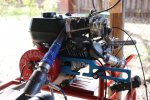
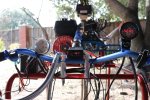
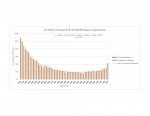
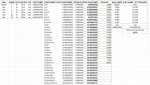
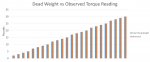
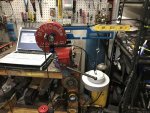
I was able to determine the optimal engine inertia compensation of a box stock 196cc engine. Things are looking good right now as far as repeatability. That was one of the major concerns i had, and still have for this water brake. But I believe I will be able to verify torque to raw torque with the weights (calibration for accuracy) as well as pre/post viariance in zero due to strain gauge torque drift. Best practices for this is to zero before a pull, but I want to take it a step further and zero before pull, then verify torque reading immediately after pull to see if any drift (even .01ft/lbs) occured, and potentially discard that reading until i can have a pre run zero and a post run still read zero (this is to account for the significant con of a strain gauge in temperature change, this is already compensated for by zeroing out before the run, i just want to make sure it still reads zero immediately after the run). This is in addition to keeping the instruments on for 30 minutes prior to making a pull
https://www.dynomitedynamometer.com/dyno-tech-talk/repeatability.htm as well as maintaining head temperature the same and sweeping in the same up/down direction and at about the same rate.
Still will have to think about hp measurements under low rpm (lugging) and high rpm (inconsistent unloading of water as max rpm is approached). I believe this is a limitation of the water brake as far as repeatability goes, or operator error (could just be my dumb self not being able to be smooth with the water loading valve).
So my questions before buying an inertia dyno are as follows:
- Can you replicate the hp/torque curve of the same engine on a water brake?
- Can you replicate the hp/torque curve of your "average engine builder's dyno run" on a water brake without fudging the numbers?
- Are we comparing apples to oranges already? Probably.
- Will I be able to determine repeatability of inertia vs brake dyno (YES! I will even be able to do it at each rpm step in 100 rpm increments as well as overall repeatability)
Final statement till next update. probably going to be apples to oranges when comparing "brake hp" to "inertia hp".But I'm getting the numbers just to show this point, and im going to show both of the numbers, even though in an idealistic world they should be the same. The real world is not kind and real world I don't think they will match. I dont even know if im smart enough to know why, especially when you have professionals that do this for a living saying that "there is more error in the test standard and definitely more error in the correction factor software than allows for this level of accuracy" But accuracy is the holy grail here and we are going to get as close as possible while using holy hand grenades to break through myths, and calculating the airspeed velocity of unladen sparrows. Will anybody make it out without a mere flesh would? Only time will tell.