

You are using an out of date browser. It may not display this or other websites correctly.
You should upgrade or use an alternative browser.
You should upgrade or use an alternative browser.
Hemi Build #3 -Boogie Woogie Woogie
- Thread starter bob58o
- Start date
- Status
- Not open for further replies.

bob58o
SuckSqueezeBangBlow
For all the work you're putting into cam research and niche intake/exhaust valve timing info... Could easily make something like this and have the best possible characteristics in every RPM range..
That’s pretty cool. Now if we can vary the Compression Ratio like the video posted before, vary Valve timing, vary spark timing, and vary A/F ratio. We might not need to make any choices, no compromises- perfect at every RPM.
bob58o
SuckSqueezeBangBlow
My message to Dynocams before pulling the trigger on an NR cam.
Who wudda thunk I'd hit the max characters allowed?
I am trying to decide between a couple different cam options. Thinking about the NR280-0211(2000-5500). 280 lift, 220 duration, 102 ATDC InCentLine, 111 LSA. This cam should start making decent torque at low (2000) RPM, have a broad TQ curve, and have a wide(ish) powerband (extends out to 5500 RPM). If I wanted to use a Torque Converter with a higher stall speed, is there a camshaft option that will make higher average power over a smaller RPM range. 4-6k RPM. CL1 with 1.2's, maybe advanced a few deg
Who wudda thunk I'd hit the max characters allowed?
I am trying to decide between a couple different cam options. Thinking about the NR280-0211(2000-5500). 280 lift, 220 duration, 102 ATDC InCentLine, 111 LSA. This cam should start making decent torque at low (2000) RPM, have a broad TQ curve, and have a wide(ish) powerband (extends out to 5500 RPM). If I wanted to use a Torque Converter with a higher stall speed, is there a camshaft option that will make higher average power over a smaller RPM range. 4-6k RPM. CL1 with 1.2's, maybe advanced a few deg
bob58o
SuckSqueezeBangBlow
I love Engine Masters...
In this episode, they go over some of the cam specs.
First cam tested...
224 degree 0.050" duration.
Same as CL1
https://www.youtube.com/watch?v=9LTDHiUftlU
In this episode, they go over some of the cam specs.
First cam tested...
224 degree 0.050" duration.
Same as CL1
https://www.youtube.com/watch?v=9LTDHiUftlU
tinamcjittles
ello m8
That show is amazing, everything they do is interesting and they all have so much experience with engines it's crazy.. I loved the episode where they took a sledgehammer to the headers and saw a performance increase. lolol makes me laugh everytime..
Looks like the power on that cam starts to drop off right after 6200 RPM too, perfect!
Looks like the power on that cam starts to drop off right after 6200 RPM too, perfect!
bob58o
SuckSqueezeBangBlow
Head Games
The other episode I was going to share was where they put cylinder heads with different size ports and valves on the same engine with same cam.
One head with small valves and small ports, One head with bigger valves and bigger ports, one head with a still bigger intake valve (which required the use of a smaller exhaust valve) and bigger ports.
They are attempting to prove or disprove the idea that bigger heads (bigger ports and valves) kill low end power. They mention "Part Throttle" but only speculate as to how each head might behave.
Very interesting stuff. Not exactly conclusive results.
Moral of this whole story up to this point.... There are a lot of gernal ideas, but nobody knows for sure what the TQ/HP curves of a thrown together engine will look like, until the thing is put together and tested on a dyno.
https://www.youtube.com/watch?v=p1w8OU_8-JM
https://www.youtube.com/watch?v=mFQG6OOQmh8
The other episode I was going to share was where they put cylinder heads with different size ports and valves on the same engine with same cam.
One head with small valves and small ports, One head with bigger valves and bigger ports, one head with a still bigger intake valve (which required the use of a smaller exhaust valve) and bigger ports.
They are attempting to prove or disprove the idea that bigger heads (bigger ports and valves) kill low end power. They mention "Part Throttle" but only speculate as to how each head might behave.
Very interesting stuff. Not exactly conclusive results.
Moral of this whole story up to this point.... There are a lot of gernal ideas, but nobody knows for sure what the TQ/HP curves of a thrown together engine will look like, until the thing is put together and tested on a dyno.
https://www.youtube.com/watch?v=p1w8OU_8-JM
https://www.youtube.com/watch?v=mFQG6OOQmh8
bob58o
SuckSqueezeBangBlow
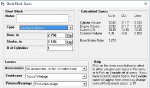
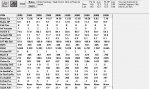
Short Block Specs:
1 Cylinder
2.756" Bore
2.165" Stroke
No Accessories (no fan, no water pump)
Typical Windage
Production Design Piston and Bearings
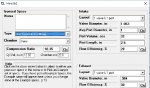
Head Specs:
Hemi Chamber
10.35 Compression Ratio
1.063" Intake Valve
1" Average Port Diameter
Port Volume 32cc's
2.5" Port Length
28% Intake Flow Efficiency
0.984" Exhaust Valve Diamete
30% Exhaust Flow Efficiency
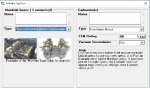
Intake:
Typical Short Individual Runner (Motorcycle)
88 cfm Carb
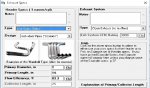
Exhaust:
Individual "Zoomie" Pipe
1" Diameter
14" Long
83.3% Flow Efficiency
No Muffler
Camshaft:
Push Rod with Rocker Arm
Aggr Solid Flat Lifters
111 LSA
102 ICL
220 degree 0.050" Duration
0.280" lift
0.004" Valve Lash
1.0 : 1 Rocker Arm
120 ECL
220 degree 0.050" Duration
0.280" lift
0.004" Valve Lash
1.0 : 1 Rocker Arm
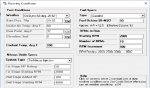
Running Conditions:
93 Octane Fuel
200* F Coolant
1 Cylinder
2.756" Bore
2.165" Stroke
No Accessories (no fan, no water pump)
Typical Windage
Production Design Piston and Bearings
Head Specs:
Hemi Chamber
10.35 Compression Ratio
1.063" Intake Valve
1" Average Port Diameter
Port Volume 32cc's
2.5" Port Length
28% Intake Flow Efficiency
0.984" Exhaust Valve Diamete
30% Exhaust Flow Efficiency
Intake:
Typical Short Individual Runner (Motorcycle)
88 cfm Carb
Exhaust:
Individual "Zoomie" Pipe
1" Diameter
14" Long
83.3% Flow Efficiency
No Muffler
Camshaft:
Push Rod with Rocker Arm
Aggr Solid Flat Lifters
111 LSA
102 ICL
220 degree 0.050" Duration
0.280" lift
0.004" Valve Lash
1.0 : 1 Rocker Arm
120 ECL
220 degree 0.050" Duration
0.280" lift
0.004" Valve Lash
1.0 : 1 Rocker Arm
Running Conditions:
93 Octane Fuel
200* F Coolant
Attachments
-
 212cc Predator Short Block.jpg122.7 KB · Views: 4
 -
 212cc Hemi Predator Head.jpg125.4 KB · Views: 4
 -
 22mm Slide Carb Short Motorcylce Manifold.jpg110.1 KB · Views: 4
 -
 Individual Pipe.jpg123.2 KB · Views: 5
 -
 280-0211 cam.jpg146.4 KB · Views: 4
 -
 Hemi Head 220-0211.jpg135.4 KB · Views: 6
 -
 Hemi Head 220-0211 data.jpg153.5 KB · Views: 5
 -
 93octane running conditions.jpg124.1 KB · Views: 5
bob58o
SuckSqueezeBangBlow
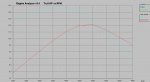
Analysis Report for Mild Street Engine with Desired HP Peak at 5000 RPM
Peak Tq =14.7 @ 3500 RPM 1.14 Ft Lbs per CuIn
Peak HP =12. @ 4500 RPM .93 HP per CuIn
Maximum Tq/CuIn is 1.139 Ft Lbs/CuIn.
This is somewhat high, indicating good performance, but will
produce high cylinder pressures and temperatures.
High cylinder pressures require precautions to protect against
detonation, blown head gaskets, damaged engine components like
pistons, rings, exhaust rocker arms, bearings, etc.
Maximum Exhaust System Backpressure 'Exh Pres' is 0 PSI.
This is low for a street vehicle with a full exhaust
system. This is simulating either an extremely free flowing exhaust
system or open headers or open exhaust manifolds. This may be
illegally loud for street operation.
Typical ranges of Exhaust System Backpressure are listed on page
32 in the User's Manual. You can lower the Back pressure by
increasing Exh System CFM Rating in the Exhaust Specs menu.
Lowering the Exh System CFM Rating will simulate a quieter, more
restrictive exhaust system. Most dyno tests are done with open
headers, which are simulated by selecting the 'Open Headers' from
the Exh System Type combo box.
Maximum Fuel Flow 'Fuel Flow' is 6.1 lbs/hr GAS.
This is equal to 1.0 gallons per hour of fuel flow.
For an injected engine with one injector per cylinder, you will require
at least 6 lbs/hr injectors.
Fuel Flow will only change if air flow changes or if you inject
nitrous. The Engine Analyzer assumes 12.5:1 A/F for gasoline and
5:1 for alcohol (methanol) and 3:1 for 'Very Rich Alcohol' for all
conditions. You can not richen or lean out the fuel mixture.
The Intake Valve Mach # 'MACH #' is .612
at your 'Desired HP Peak RPM' of 5000 RPM.
This is somewhat high and indicates you will need more Intake Valve
Diameter, Valve Flow Efficiency or more intake cam profile
(larger Intake Duration, Tappet Lift or Rocker Arm Ratio).
MACH # is the BEST INDICATOR of the usable RPM range of this
engine with the current cam & head specs. Air flow and performance
drop rapidly (the engine 'runs out of breath') when the MACH # goes
over approximately .55 for low RPM engines or .45 for high RPM
engines.
MACH # is explained on page 53 in the User's Manual. You can
lower the MACH # by specifying larger Valve Diameter or Valve Flow
Efficiency in the Head Specs menu or larger Intake Duration, Tappet
Lift or Rocker Ratio in the Cam/Valve Train menu. MACH # is
also affected by Intake Port Diameter, Intake Manifold Runner Diameter
and Runner Flow Efficiency in the Intake System menu, but to a lesser
extent.
The Inertia tuning of this intake is tuned to 5702 RPM,
which is close to your 'Desired HP Peak RPM' of 5000 RPM.
Since this RPM is about where the HP peak should occur, peak HP
should be good. If you specify longer and/or smaller diameter intake
runners, you will likely gain Peak Torque and lose some Peak HP.
At 3 different RPMs, Spark Advance 'Spark Adv' is retarded to avoid
detonation. Retarding Spark Adv does reduce performance, but allows this
engine to safely operate with this Octane fuel.
You can reduce the likelihood of detonation, by increasing Fuel
Octane or Dew Point (humidity), or reducing Intake Air Temp or
Cooland Temp in the Running Conditions menu, or reducing
Compression Ratio in the Head(s) Specs menu. Also, anything
which reduces performance, or shifts the performance curve to a
higher RPM range will also reduce the likelihood of detonation. By
reducing the likelihood of detonation, you avoid the necessity of
retarding Spark Adv.
Retarding Spark Adv from what the engine actually wants is not
necessarily a 'bad thing'. The best performance for a particular
RPM range and Fuel Octane may come with spark retarded from optimum.
Just be sure to retard spark in the actual engine to avoid detonation
which will cause engine damage.
Also, retarding spark increases exhaust temperatures, which can
damage exhaust valves, turbo turbines, etc.
The % Exhaust to Intake Flow Capacity 'Total Exh/Int %' is 92.1 %.
This is Very high, and indicates you could be opening the
exhaust valve too early or you could improve performance by improving
intake valve flow and intake cam profile. The most common 'rule of
thumb' is to design for around 75% EXH/INT flow capability.
To reduce Total Exh/Int % :
- Increase the Intake Valve Diameter and/or Valve Flow Efficiency
- Increase the Intake Duration, Intake Tappet Lift and/or Intake
Rocker Arm Ratio in the Cam/Valve Train menu
- Reduce the Exhaust Duration, Exhaust Tappet Lift and/or Exhaust
Rocker Arm Ratio in the Cam/Valve Train menu
You can reduce Total Exh/Int % by changing other specs, but that may
also reduce performance.
IMPORTANT: The Optimize feature at the top of the Main Screen is
an excellent way to find combinations which work well together.
Click on 'Help' in the Optimize screen for tips on this feature.
End of Analysis Report
bob58o
SuckSqueezeBangBlow
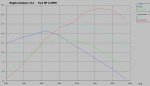
This is an overlay of the last engine I put together, and the engine I am planning on putting together. It makes me sad.
Interesting Enough,
The Simulator gives what the description for the 285 series says it should which is...
"This cams likes big carbs and big ports. Will easily make 20 hp when used with correct combination. Best with 24 mm Mikuni, big valves, and high compression. Honda blocks must be clearanced to install.
Camshaft, 285-0211: 7000 RPM."
Interesting Enough,
The Simulator gives what the description for the 285 series says it should which is...
"This cams likes big carbs and big ports. Will easily make 20 hp when used with correct combination. Best with 24 mm Mikuni, big valves, and high compression. Honda blocks must be clearanced to install.
Camshaft, 285-0211: 7000 RPM."
Attachments
-
 280 series vs 285 series.jpg128.4 KB · Views: 11
bob58o
SuckSqueezeBangBlow
After playing around with the simulator for a bit, it seems like if I want a lot of HP at 5.5k RPM, I need an engine that that makes make TQ around 4k RPM and peak HP around 7.5k RPM
An engine that makes peak HP at 5.5k RPM might only make 13 HP at 5.5k RPM.
An engine that makes 20 HP at 7.5k RPM might make 16 HP at 5.5k RPM.
One downside of the simulator (for my use) is that is optimizes timing for each RPM. Assuming I optimize timing for 5.5k RPM.... As RPM increases, spark timing retards, the power should fall off quicker than in these simulations.
Starting thinking about a Higher RPM cam with an RPM limiting coil like the 6100 RPM RPM coil for a Briggs LO206 engine. Don't know if I can put a Briggs Coil on a Predator Block with a Kohler Flywheel?
Or another option might be a higher RPM cam with a bored out stock appearing carb with and an adjusted governor to give me around 5.5 or 6k RPM. Not sure to what RPM these governors can be adjusted?
An engine that makes peak HP at 5.5k RPM might only make 13 HP at 5.5k RPM.
An engine that makes 20 HP at 7.5k RPM might make 16 HP at 5.5k RPM.
One downside of the simulator (for my use) is that is optimizes timing for each RPM. Assuming I optimize timing for 5.5k RPM.... As RPM increases, spark timing retards, the power should fall off quicker than in these simulations.
Starting thinking about a Higher RPM cam with an RPM limiting coil like the 6100 RPM RPM coil for a Briggs LO206 engine. Don't know if I can put a Briggs Coil on a Predator Block with a Kohler Flywheel?
Or another option might be a higher RPM cam with a bored out stock appearing carb with and an adjusted governor to give me around 5.5 or 6k RPM. Not sure to what RPM these governors can be adjusted?

Whitetrashrocker
Inmate #952016
The UT2 coils and flywheel are 180 out from normal, what I've run across.
bob58o
SuckSqueezeBangBlow
What about a Honda UT2 coil? I've been wondering if a non UT2 flywheel would work. Lapped, keyless or recut keyway?
You could always throw a pile of cash at an MSD and alternative trigger solution.
Well it seems like the Briggs PVL Coils need PVL flywheels and UT2 Coils need UT2 flywheels. I didn't dig too deep into this.
---------- Post added at 12:13 AM ---------- Previous post was at 12:09 AM ----------
The UT2 coils and flywheel are 180 out from normal, what I've run across.
I'll just turn the engine upside down .

bob58o
SuckSqueezeBangBlow
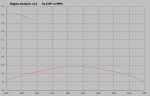
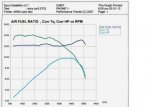
So I always like to go back to the ONE dyno chart I have access to from a Stage 1 Predator 212.
From Sneaks' article "Hotroddin' the Predator".
https://www.kartpartsdepot.com/product_p/001.htm
After Filter, Exhaust, and Jetting he dynos a Gen I Predator with 25/24mm valves.
I used 24 cfm for the stock carb.
I used 8.5 Static CR
I used a 1" x 12" Exhaust Pipe.
I used 0.785" for average port diameter (program seems to operate better when I use throat diameter).
I used CL1 cam specs.
I tried to match everything as closely as I can. Some flow % numbers I can use what limited data I have. The program also gives suggestions like (35% for production heads, 40% for aftermarket heads, 50% for race heads,...)
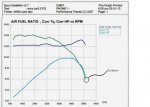
In order to get the simulator to agree with the dyno graph, I had to use 34 flow efficiency % for the intake and 37 flow efficiency % for the exhaust. These numbers are similar to poor production heads (according to the program) not too far from the flow efficiency % numbers given when I enter the the .250" lift flow data I seen from a "similar" head.
On the actual dyno testing, he runs into valve float.
On the simulator, the spark is optimized at higher rpms.
Both means the simulator will show more power at higher RPMs.
From 3600 to 5000 RPM, the two are very similar.
From Sneaks' article "Hotroddin' the Predator".
https://www.kartpartsdepot.com/product_p/001.htm
After Filter, Exhaust, and Jetting he dynos a Gen I Predator with 25/24mm valves.
I used 24 cfm for the stock carb.
I used 8.5 Static CR
I used a 1" x 12" Exhaust Pipe.
I used 0.785" for average port diameter (program seems to operate better when I use throat diameter).
I used CL1 cam specs.
I tried to match everything as closely as I can. Some flow % numbers I can use what limited data I have. The program also gives suggestions like (35% for production heads, 40% for aftermarket heads, 50% for race heads,...)
In order to get the simulator to agree with the dyno graph, I had to use 34 flow efficiency % for the intake and 37 flow efficiency % for the exhaust. These numbers are similar to poor production heads (according to the program) not too far from the flow efficiency % numbers given when I enter the the .250" lift flow data I seen from a "similar" head.
On the actual dyno testing, he runs into valve float.
On the simulator, the spark is optimized at higher rpms.
Both means the simulator will show more power at higher RPMs.
From 3600 to 5000 RPM, the two are very similar.
Attachments
-
 Predator212 CL1.jpg121.6 KB · Views: 6
 -
 Stage1 Predator 212.jpg74 KB · Views: 4

ezcome-ezgo
G'me sumthin to write on
My simulator edited this graph.
Attachments
-
 Stage1 Predator 212.jpg65.3 KB · Views: 5
bob58o
SuckSqueezeBangBlow
The "Go Boom" point you circled is interesting cause I was also thinking about using weaker valve springs then recommended for a certain camshaft to limit RPMs. If a 7000 RPM cam might might want 26lb springs, maybe I can try 22 lb springs and float the valves earlier? Maybe I drop a valve and it goes boom?
---------- Post added at 02:13 PM ---------- Previous post was at 01:17 PM ----------
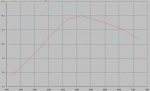
Looking at the ISKY 220 duration 300 lift 110 LSA....
If installed straight up....
The simulator shows peak HP at 5000 RPM
AND over 15 HP Peak.
Peak TQ is at 4200 RPM.
It is still making good HP at higher RPMs so I'm guessing this would spin to a decent RPM.
If using a 38T Rear Sprocket and 19" Tires.
A TC with 8T sprocket and 7" Driven Unit.
As long as I can tune the TC to shift before it revs too high, 5500 RPM would be like 58mph.
I'm thinking ~4000 RPM engagement and ~5000 RPM shift would be good. Not sure I can tune for that. Or if the wheel is slipping, maybe it doesn't shift and I over rev the engine.
Still Trying to work out how the TC might behave/shift.
---------- Post added at 02:13 PM ---------- Previous post was at 01:17 PM ----------
Looking at the ISKY 220 duration 300 lift 110 LSA....
If installed straight up....
The simulator shows peak HP at 5000 RPM
AND over 15 HP Peak.
Peak TQ is at 4200 RPM.
It is still making good HP at higher RPMs so I'm guessing this would spin to a decent RPM.
If using a 38T Rear Sprocket and 19" Tires.
A TC with 8T sprocket and 7" Driven Unit.
As long as I can tune the TC to shift before it revs too high, 5500 RPM would be like 58mph.
I'm thinking ~4000 RPM engagement and ~5000 RPM shift would be good. Not sure I can tune for that. Or if the wheel is slipping, maybe it doesn't shift and I over rev the engine.
Still Trying to work out how the TC might behave/shift.
Attachments
-
 ISKY 300-1010.jpg98.9 KB · Views: 2
bob58o
SuckSqueezeBangBlow
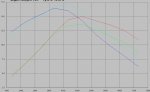
This shows the ISKY 300-1010 (300 lift, 225 duration, 110 ICL, 110 LSA)
vs
NR 280-0211 (280 lift, 220 duration, 102 ICL, 111 LSA)
vs
NR 280-0211 (280 lift, 220 duration, 102 ICL, 111 LSA)
Attachments
-
 300-1010 vs 280-0211.jpg114.5 KB · Views: 4
ezcome-ezgo
G'me sumthin to write on
I have a theory! The theoretical is BS.
bob58o
SuckSqueezeBangBlow
I have a theory! The theoretical is BS.
This is true. Theoretical is BS.
BUT Physics is learned through a series of approximations, BS, and lies.
- Status
- Not open for further replies.