• OFF TOPIC fun forum - NO politics - NO religion - NO jerks. It's not complicated. Thanks!

fireplace insert question

Status
Not open for further replies.

supermanotorious

Winchmaster 5000
Messages
2,088
Reaction score
103
Location
New River, AZ
I know, I know, I live in sweltering Phoenix, AZ, but it does get pretty chilly at night in the brief winter months and I am fortunate to have a real fireplace in my home. But we all know the classic fireplace is a poor and inefficient source of heat. I do cut and stack a lot of fire wood in the summers for someone who lives here and I recently learned about inserts.

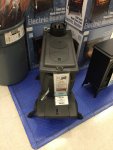
The cost is really too high to justify for my location but I noticed the stove Harbor Freight sells.

My question, would it make sense? would it be safe?, if I placed the stove in my fireplace to the point the chimney(s) aligned so smoke exited the home but we benefit from the efficiency of a stove?

http://www.harborfreight.com/cast-iron-boxwood-heater-stove-32058.html#pr-header-back-to-top-link
 

n3480h

New member
Messages
286
Reaction score
2
Location
NW Iowa
I've been doing a lot of research into wood burners, because I want to heat a shed with wood. From what I have found recently, and from previous experience heating a home with wood, I may have some answers for you. First, that particular unit gets very poor reviews on other sites. "Too small, hard to regulate the burn, have to load it every 3-4 hours, cracked cast iron, have to also buy firebrick for the bottom and sides (reducing its capacity further).". . . and so on. Second, you cannot safely avoid installing a chimney liner or triple wall flue, or at least tying into an existing triple wall flue. Just setting it inside your fireplace and hoping the smoke and sparks will always continue upward. . . well, they won't always do that. You will be risking a house fire. Third, if you don't already have one, you will need to add a spark arrestor at the top of your chimney no matter which wood burner (or coal) you choose. Fourth, burn ONLY very dry wood, nothing green or even slightly damp.

Woodburners are great, with many benefits. But I'd recommend a better unit. You might also pick up an extra GOOD fire extinguisher, and some of the chemical fire suppressant sticks sold by any place that is serious about selling woodburners or fireplaces. Long ago I had a very hot fire in a woodburner and wound up with a stack fire. It was like a self-feeding ram jet, roaring like a jet engine, with a flue that was RED hot all the way to the top and what looked like an afterburner flame rising to 20 feet above the stack. Saved the house, but the flue had to be replaced - along with my underwear.
 

supermanotorious

Winchmaster 5000
Messages
2,088
Reaction score
103
Location
New River, AZ
I have been enjoying fireplaces since I was a child, I primarily burn oak, mesquite, and eucalyptus which is all well cured of course so I would appreciate it if you expand on your 'second" point. And yes my chimney has a spark arrestor. Are you saying a liner must be installed to use the stove? Thank you for responding either way.

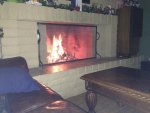
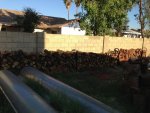
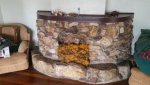
Here are some pictures of the stove, my fireplace, and my wood stock pile. I did fabricate my screen and we only burn pine in our 2 outdoor chimneys.
 

Attachments

  • 011.jpg
    011.jpg
    88.8 KB · Views: 7
  • 013.jpg
    013.jpg
    93.7 KB · Views: 8
  • 001.jpg
    001.jpg
    120.8 KB · Views: 10

Badot

New member
Messages
677
Reaction score
2
Could be wrong about the person, but I'm wanting to say T-Man had one of those to heat his shop and seemed to like it.

I don't really have experience with them but aside from needing to run an exhaust you'll also want to close up the rest of the chimney around it so the heat doesn't just rise up and out of your house. Either way, you're still losing a lot of heat since you don't have the exhaust piping through the house with the air exchanging around it.

EDIT: to expand the point of a 'liner' -- a large fire makes enough heat that the density change in the air makes it consistently go out the chimney without much real risk of backflow into your house. If your chimney is too big, any little draft from outside, or even the cooling of the exhaust as it rises could let the carbon monoxide and other fun stuff go straight back into your house.
 

n3480h

New member
Messages
286
Reaction score
2
Location
NW Iowa
Certainly did not mean to insult you, just wanted to raise awareness of what can go wrong. I think you could use the little stove safely as long as its stack was physically coupled to the existing flue with an approved fireproof fluepipe or other proven device. I've no idea what your local codes might require, or what your insurance would require.

Again, I apologize if I have offended you.
 

Poboy kartman

Senior Moments Member
Messages
12,461
Reaction score
69
Location
White Settlement Texas
I would say you could almost get away with #3...and I would definitely think no problem with #1 or2....double wall pipe is not a bad idea....and not really sure what the issue here is....
I'll admit....I don't know a lot about fireplaces...but the horror story described was a creosote fire....and the only issue I can see with that is possibly #2 ....concentrating the flame higher up the chimey to ignite said creosote....

I regularly start creosote fires in my smoker and charcoal grill...(I do a lot of off heat grilling....and they are something to behold.....I think they burn around 2000°......but...it takes a lot to get them started....so I can't see where a short double walle flue pipe on the stove...angled with 2 45° couplings to center it in the chimney....and the part coming out of the stove set to where you can close the flue damper against it from the main chimney.....(to mnimize CO backflow possibilities.....doesn't have to seal completely...IMHO.).....(make sense?).....I can't conceive of it being any more dangerous.....or problematic than a wood fire in same fireplace....

Just my two cents.....
 

Half-breeder

"Edit" button removed
Messages
1,686
Reaction score
9
Id make one... all an insert is to me, is a few sealed pipes that get heated (via coals/fire), and the air inside said pipes gets pumped out using either blown though or extracted air, via a fan (usually variable). Filling the pipes insides w/ more metal will produce a 'longer'/warmer heat source, due to more heat surface to feed from. Ive seen designs where the inside was filled w/ layers of nuts tacked together. As the air moved through the pipe it was drawn through the nut holes. Several layers were installed to fuel the air flow from cooling much from the furnace area to the blowout port.
 

supermanotorious

Winchmaster 5000
Messages
2,088
Reaction score
103
Location
New River, AZ
This ARTICLE has the following to mention, at this point I'll look at installing a liner

The Problem
Many smoke chambers and chimneys ARE TOO BIG to properly vent an insert stove. A typical masonry chimney designed to vent an open fire place, has a 12 by 12-inch tile liner (144 square inches). The average insert stove requires an 8-inch round chimney, or about 51 square inches. This helps speed the much smaller volume of flue gases up and out of the chimney before they have a chance to cool down and cause trouble.
 

firemanjim

Just kartin' around....
Messages
5,247
Reaction score
87
Location
Houston Texas
Thank you for doing some research, and not becoming a statistic..... :thumbsup:
Back in Missouri, we used a wood stove, like the harbor freight pos, (i mean piece) to heat our 2 story house. It might have been a hair bigger than the one posted, but not much. It was an antique wood stove from the early 1930's, and made to last.... My dad could not pick it up alone, and he was a lineman......
Anyway, the stove was downstairs in our game room and sat in the corner on a 5" thick rock subfloor, made from rock/boulders that came out of our creek. The corner walls where re insulated and fire proofed. The chimney/flue was a double piped unit that went up about 5-6' then made a 45* to the wall. It went out the wall and vented about 10" from the exterior wall, with an upright pipe going up another 2'.... This stove kept the up stairs HOT and downstairs perfect...... We had a small fan, behind the stove, to push the heat though out the house.....
Now, my neighbors, had a fire place that was only for looks.... NO type of heat exchange, no way to actually get any warmth from it unless sitting right in front of it.... This guy made a wood stove type deal (like the hf stove) to go into his fireplace. He double piped the chimney all the way up the center of his original chimney. He added vent fans to draw out heat from around the stove, and it actually kept his house warm..... This guy was a diy type guy..... I don't know exactly what he did, but I know you can do it cause he did... And he wasn't exactly the smartest dude.... Blew a hole in his roof, cleaning a shot gun...... :smiley_omg:
 

fowler

New member
Messages
5,463
Reaction score
18
Location
Bullsbrook West Aus
I would also like to do this

Even though I live in a part of australua that proberbly drops below freezing one night every 3 years

But it does get cold in winter
Even though its already been mentioned
I have heard u must extend your chimny right up the current one


Im just limited my space
A very old very large fireplace
But designed as to be the most efficiant for the time
With a small opening in the front

It was proberbly ok when the area was all forrest and farm land and they could put in wood as they cleaned the land
But now the city has reached out this far
And u have to either buy wood or travel quite a way to cut it
 

Badot

New member
Messages
677
Reaction score
2
I'd just like to add, unless your chimney runs up the middle of the house and you cap it off at the very top (with your stove exhaust out the top) you're still losing a lot of heat that could otherwise be had in the house by running your exhaust pipe up through your interior. Granted, it's still vastly more efficient than a fireplace.
 

supermanotorious

Winchmaster 5000
Messages
2,088
Reaction score
103
Location
New River, AZ
After doing even more research I think I'd like to weld my own stove. The benefits are many, custom fit to my fireplace, increased efficency through thicker material, etc. I need to do more research though to find out how to control air "in" and that sort of thing. I can see me making this out of 1/2" steel, welding angle iron to the sides to act as handles for me and friends to lift into place initially then they would act has heat sinks. I could make a side fan that blows air around the back of the stove and back into the room.

City code can kiss my *** (I burn on "no burn" days, I did not get a permit to install my 220V hot tub, or to run 110V to my shed, and wont to install the new band saw under the 220V config). Now that doesn't mean I'm willing to put my family at risk and that's why I'm doing the research before getting down to business.

And you've touched on a major point why I'm doing this. The city of Phoenix does not rely on wood fuels at all. But we have trees, storms, and landscapers like anywhere else. Wood is free and abundant here. It's not uncommon to frequently see piles of wood in front of homes during bulk trash week, or to see piles near the street after a major wind storm (which have been plenty this year). Why do you think my 3 racks stay full? Not to mention, one local tree removal service, always cuts the trees to firewood length and gives it away for free on Craigslist! They have a large lot which would otherwise cost them dump fees to keep clear. Their ad pops up frequently throughout the year.

So- endless free energy- yes please!


UPDATE: with all this talk about wood- I just ordered this bad boy! http://www.homedepot.com/p/Fiskars-...r-Splitting-Axe-78846935/202681680?quantity=1
 

firemanjim

Just kartin' around....
Messages
5,247
Reaction score
87
Location
Houston Texas
I carried the X17 with me on structure fires and large brush fires..... That is a great design and work really good. Mine would still be in usable condition, but was dropped during a primary search, and found during salvage/overhaul...... It turned into a 8"+ hatchet......handle melted...... BUT it WAS in a 900+* fire....... So I'd say it's a good brand.....
Gerber makes some very nice toys too.....
 

firemanjim

Just kartin' around....
Messages
5,247
Reaction score
87
Location
Houston Texas
Got a question......
Been cold this week so I've been keeping the fireplace going, pretty much just for looks.... BUT.....
It got me to thinking about this thread, and thinking of how I could actually get some household heat from this "fireplace".
The fireplace we had in Missouri, had a fan forced heat exchange that blew out heated air through vents on both sides of the mantle and both sides of the base. Worked pretty good, to heat that large open living/entertaining room.
Why can't we (those of us that don't have a heat exchange ) make our own simple system? I mean, take some 5" or 6" round chimney pipe and run it around the upper perimeter of the fireplace. Both ends being on the outside of the fire place,like a big U..... Put a fan on one side, blowing through the pipe, pushing heated air out the other end..... Crude, ugly, maybe, but should be very effective, depending on the amount of air blown through it. 200-300cfm's, with an adjustable speed would be ideal, I believe.
If we end up having a long cold winter, I just might try this, unless someone sees anything wrong with it.......
 

Poboy kartman

Senior Moments Member
Messages
12,461
Reaction score
69
Location
White Settlement Texas
Got a question......
Been cold this week so I've been keeping the fireplace going, pretty much just for looks.... BUT.....
It got me to thinking about this thread, and thinking of how I could actually get some household heat from this "fireplace".
The fireplace we had in Missouri, had a fan forced heat exchange that blew out heated air through vents on both sides of the mantle and both sides of the base. Worked pretty good, to heat that large open living/entertaining room.
Why can't we (those of us that don't have a heat exchange ) make our own simple system? I mean, take some 5" or 6" round chimney pipe and run it around the upper perimeter of the fireplace. Both ends being on the outside of the fire place,like a big U..... Put a fan on one side, blowing through the pipe, pushing heated air out the other end..... Crude, ugly, maybe, but should be very effective, depending on the amount of air blown through it. 200-300cfm's, with an adjustable speed would be ideal, I believe.
If we end up having a long cold winter, I just might try this, unless someone sees anything wrong with it.......

Yes.....this being a forum that is super safety conscious....and being a forum to begin with...we have to cover the bases.....(however unlikely)

So let's cover them....IF...a hole were to develop in that pipe....you could fill your house with CO....or suck a spark in and blow it into the room.....earning the all-time fireman Darwin award....

So....taking precautions for those unlikely events.....sounds like a really good idea......

And the right fan....(attic vent maybe? ) and careful installation could eliminate the ugly factor as well.....

Go for it.....and if I hear of a catastrophic house fire down Houston way.....I'll try hard not to giggle....JK.....
 

Badot

New member
Messages
677
Reaction score
2
Not sure what kind of setup you have, but I can't imagine running pipes would help much without bedding them into the fireplace material with something reasonably conductive. Even then, a 5" pipe won't move much heat between its walls and whatever's in it. Think car radiators: tons of contact between the radiator itself and the water, and then tons of contact between the outside air and the radiator... all for about a 2" pipe.
 
Status
Not open for further replies.
Top