The shocks in the picture are fully supported on the frame not the suspension. The push rods are half supported on the suspension and half on the frame, and push on the coilovers. They are not unsprung weight. But ohwell.
If the shocks were "fully supported by the frame" then they wouldn't move with the suspension. They wouldn't do anything.
Seriously, think about it for a bit.
ANYTHING WHICH MOVES WITH THE SUSPENSION IS UNSPRUNG WEIGHT Does the shock move? Yes (half of it, anyway). Does the pushrod move? Yes. Does the bell crank move? Yes. The hub? The wishbones? Wheels and discs, etc? Yep, all unsprung weight.
I should clarify that it IS possible to reduce unsprung weight this way if your shock is very heavy at one end. If a normal setup would mean the heavy end has to go on the swingarm, and a pushrod setup means the heavy end is mounted to the chassis, then that could reduce unsprung weight.
I can give an example. If you have a pushrod system, with a shock that weighs 500kg, do you think it would cycle very well? The shock has a huge amount of mass which needs to be moved for the suspension to go up and down even though it's actuating through a pushrod. It's all unsprung weight.
I think the reason most people get confused is that the actual weight force (due to gravity) of the shock is (mostly) supported by the frame. Perhaps a better term for unsprung weight is unsprung mass. Either way, they both mean the mass which has to be accelerated for the suspension to move.
I hope this clears things up.

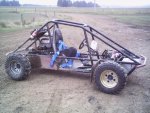 my2.jpg113 KB · Views: 132
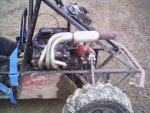 my 1.jpg120.2 KB · Views: 130


