
Hi all,
I am unsure if this is the best place to discuss this topic, but this forum seems semi-appropriate so I'll give it a shot.
I am currently in the process of designing a battery-powered yard wagon to be used for hauling loads around a homeowner's property. The goal of this wagon is to replace a gas-powered lawn tractor (mower) + small trailer combo which is presently being employed. This lawn tractor is not used for mowing at all, meaning it is simply adapted as an engine for towing the small trailer.
I see two main negatives for this current setup:
The wagon currently being used is the following: Yard Cart. The size and weight capacity of this wagon is good, so I would like the new self-powered version to mimic it in that regard.
The graphics below are some basic mockups of what what I am envisioning the final product will resemble.
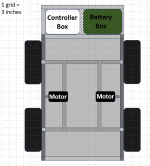
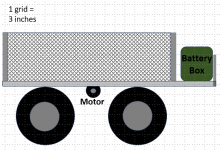
The frame will be made from square tube. Sitting on top of the frame is the haul bed and the electrical components up front. I anticipate having a battery box with (3) 12V sealed lead acid batteries (wired in series) and a controller box containing this card: Motor Controller. This controller will be used to drive two 36V electric motors of the following type: Electric Motor. These motors are geared down to maximize torque and lessen the speed (the wagon should never have to travel faster than a brisk walk, IMO).
When it comes to steering, it seems the easiest approach is to adopt a differential drive (skid steer) configuration. This requires each engine to drive each side of the cart independently.
Another decision to make the build easier is to have the wagon controlled by an RC remote, rather than designing/building a set of hands-on controls for the operator. I am sure there will be some benefits in being able to move the cart at a distance as well.
These are the high-level design choices I have made thus far. Further details will be added as I progress through the build process. BTW, some of my implementation will be based upon a set of videos I stumbled across on Youtube: https://www.youtube.com/@giterbilt5146/videos. This gentleman upgraded his push lawn mower to be remote-controlled and his discussions of electrical components and their arrangement seems very relevant to aspects of my project.
If folks have any questions or suggestions, please do not hesitate to post them!
I am unsure if this is the best place to discuss this topic, but this forum seems semi-appropriate so I'll give it a shot.
I am currently in the process of designing a battery-powered yard wagon to be used for hauling loads around a homeowner's property. The goal of this wagon is to replace a gas-powered lawn tractor (mower) + small trailer combo which is presently being employed. This lawn tractor is not used for mowing at all, meaning it is simply adapted as an engine for towing the small trailer.
I see two main negatives for this current setup:
- Lawn Tractor + Trailer combo occupies a large amount of space when stored
- Using the trailer oftentimes requires a decent number of tractor "start-stop" cycles (fill the wagon, crank tractor, move short distance, turn tractor off, unload wagon, crank tractor, move short distance, turn tractor off, repeat), which seems hard on the engine at times
The wagon currently being used is the following: Yard Cart. The size and weight capacity of this wagon is good, so I would like the new self-powered version to mimic it in that regard.
The graphics below are some basic mockups of what what I am envisioning the final product will resemble.
The frame will be made from square tube. Sitting on top of the frame is the haul bed and the electrical components up front. I anticipate having a battery box with (3) 12V sealed lead acid batteries (wired in series) and a controller box containing this card: Motor Controller. This controller will be used to drive two 36V electric motors of the following type: Electric Motor. These motors are geared down to maximize torque and lessen the speed (the wagon should never have to travel faster than a brisk walk, IMO).
When it comes to steering, it seems the easiest approach is to adopt a differential drive (skid steer) configuration. This requires each engine to drive each side of the cart independently.
Another decision to make the build easier is to have the wagon controlled by an RC remote, rather than designing/building a set of hands-on controls for the operator. I am sure there will be some benefits in being able to move the cart at a distance as well.
These are the high-level design choices I have made thus far. Further details will be added as I progress through the build process. BTW, some of my implementation will be based upon a set of videos I stumbled across on Youtube: https://www.youtube.com/@giterbilt5146/videos. This gentleman upgraded his push lawn mower to be remote-controlled and his discussions of electrical components and their arrangement seems very relevant to aspects of my project.
If folks have any questions or suggestions, please do not hesitate to post them!
