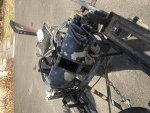
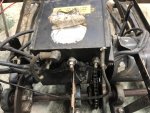
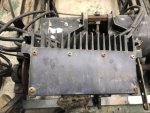
Anyone ever hear about a frazer-nash gokart

Status
Not open for further replies.

itsid

Moderator
Staff member
Messages
11,563
Reaction score
245
Location
Ruhrpott [Germany]
well that is one weird way of fixing rotation errors..

I mean sure it works, but it's like going out the front door and in through the backdoor
just to get from the living room to the kitchen ;)

We discussed rotation and orientation flags elsewhere at large

TOP edge of the phone to the LEFT will get you rightside up landscape pictures
in almost all cases (I heard of one counter example so far.. still think he messed up left and right ;))
That affects the EXIF orientation flag (which need to be correct in order to show rightside up)
[rotation lock on most phones can mess that up]

rotation (an angular value) is set by the image manipulator on the phone..
which unfortunately is ignored by several websites...
even worse: some stupid phones are known to set both which in some cases can add up to even stranger results

So.. try to avoid rotating the images with the phones "picture editor"
they suck on android as much as on ios (they're fine for nothing but phone to phone communication like whatsapp and such)

NOW.. what facebook does is load the image, set the orientation correctly, then apply the rotation (if any) and delete all metadata from the image [all additional exif are removed]

Anyways..
Exif data can be removed from th image ON THE DEVICE (using the hallway to get to the kitchen)
EXIF Eraser is such app for android
metadata Remover is such for ios
[both untested by myself]

There are certainly more such apps for both android and ios,
those names have just popped up a few times in that regard..

'sid

PS if you're uploading from your computer irfan view can erase and even edit exif meta data for free.. but usually the OS embedded image-preview can reset orientation quicker and w/o any additional tools ;)
 

Quinc

Member
Messages
236
Reaction score
1


Score of a lifetime! Cant wait to see a video of it in action!
 

voided

parking lot pimp
Messages
297
Reaction score
0
Location
CT
Testing didn’t goes as planned... 72v and all I get is a click.. gonna test the motors, and once I know those are good, I’ll retest before the speed controller. Need to see where power is going / not going.
 

itsid

Moderator
Staff member
Messages
11,563
Reaction score
245
Location
Ruhrpott [Germany]
Interesting.. that click is (usually) the contactor, switching the wires active..
the powerlines are usually directly connected to the motor terminals
(since nothing else needs the high current)

So test the following: have it click and check the terminals on the contactor
if you have a tiny voltage across those (the output) everthing appears to be working

except the (god I hate that thing) Potbox throttle.

The problem with the potbox throttle is this:
it's counterintuitive and has (luckily!) a failproof mode.

So you NEED a serious resistance for the motor to run at all
(the higher the resistance the faster the motor spins)
too much resistance or worse too little and the controlelr will shut the motor down.
(throttle disconnected -> OFF; Throttle Poti shorted out -> OFF)
Safety relevant but a PITA to test..
since there are several different versions around

Some need 1kOhms to 5kOhms, some 500Ohms to 1kOhms and I bet there are several different others as well.

yours appears to be a Curtis PB6 style potbox (0-5kOhms)
chances are it's either defective (test it with your multimeter)
or the wrong one for the Controller :(

So get a 0-10kOhm Potentiometer (12v 1 Watt should do)
adjust it to ~2kOhms and see if the controller recognizes it..
if so work your way back in 500 Ohm steps until it doesn't,
if not forward until it does..
(controller tests ONLY at startup... so you need to switch it on and off for each try!)

Once you got the lower limit, you can test for the upper limit..
set the lower limit, turn the controller on, and slowly increase the throttle
(jacked up rears!!)
until it suddenly shuts down the motors,
turn off the controller w/o moving the makeshift throttle poti
and then check for it's resistance (I'd say it'd be twice the starting value or there abouts)

With those two values find a matching potbox (be aware they're expensive!)

IMHO: if it's a three lead throttle connector, check what voltage you read between the pins
(identify ground first, check the other two against ground.. remember the higher one)

chances are you can install a HallEffect throttle instead (most modern day controllers allow for both styles)
much cheaper, as reliable and best: not as finicky to find the correct one :D

a two lead throttle and you're stuck with the potbox I'm afraid...

Noow.. what if there's NO power on the contactor?
Well.. it clicks.. so there must be!
if there isn't there's a broken wire hiding somewhere!
and the only ones you need to check are the ones from the batpack to the contactor :D
(easy huh?)

'sid
 

voided

parking lot pimp
Messages
297
Reaction score
0
Location
CT
Man sid... I really appreciate that.. I’m more of an engine man and this electric side of things is 3 years new to me... the last 3 years have been very easy.. this is the perfect way for me to test step by step.. thankfully I am somewhat comfortable with a multimeter ..

Thank you for your time..
 

voided

parking lot pimp
Messages
297
Reaction score
0
Location
CT
Ok so I’m trying to take Sid’s post one step at a time.. knowing That I’m working with good motors..

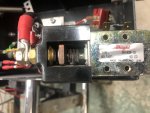
There are Two wires (red and blue) on the top of the contactor and the two large leads at the bottom with some other small wires ..

With power and throttle I get voltage across the small red /blue leads. On the large leads With one probe to the battery ground and the other on the lead I get 75% voltage at rest and 100% voltage once there is throttle.

Now to read and re-read the whole pot box testing and try it out.

This pot box has 2 wires. Green and yellow.. the green goes back to what looks like a small adjustment potentiometer then out to the controller. ( what I’m understanding is, I have to measure the resistance across these two wires. So cut test and put back together)

Also inside the box coming from the controller is blue wire, goes to a microswitch next to the throttle arm in the pot box, then out to a upper lead on the contactor

And a red that goes to a inline fuse (it’s good) , contactor, on/off switch, and one large lead. All of these are alpha numbered and all different but only looks for the reasoning of where it’s supposed to be.
 

Attachments

  • 593E5D8B-048C-4DD5-9593-3751FD3CEE21.jpg
    593E5D8B-048C-4DD5-9593-3751FD3CEE21.jpg
    358.6 KB · Views: 10

itsid

Moderator
Staff member
Messages
11,563
Reaction score
245
Location
Ruhrpott [Germany]
before anything else:
check the OUTPUT of the contactors
(there should be two I assume on a two motor kart that powerfull... *shrugs*)

We already verified the input reacting (the clicking sound ;))
So it's the motor side we're interested in most

A continuity check on the lower two leads is all it needs (no continuity before, super low resistance [in the 0.0x Ohms area ideally] after the click)
the higher the resistance the more heat it creates and the sooner it'll seize or corrode away.

You can also check for voltage if a voltmeter is all you have,
just check that you get full battery voltage ON BOTH large wires.

it's a electromagnetically engaged off/on switch (NO style [as in normally open])
it does not connect both ends on a two lead motor, just one (usually the power terminal)

It reads like you do not get voltage on both, so the contactor is toast and needs to be replaced or refurbished (if it's user maintainable that is)

as long as that thing isn't working, there is no way the motor would ever turn
so for now don't mess with the potbox and it's assets..
chances are you're lucky and it's dialed in just right, no need to upset it just now IYAM.
Another potentiometer as an adjustable preresistor?
not bad of an idea if the original potbox style is no longer available ;)


'sid
 

voided

parking lot pimp
Messages
297
Reaction score
0
Location
CT
First off, let me say thank you sid.. I’m slowly understanding what your talking about, but a gas engine speaks to me so easily compared to this electrical foreign language...

The lower side of the contactor is moving. I have visual of it moving, once I removed the on/off switch to get access..

Testing voltage . Negative to battery. Positive to contactor ... positive side of contactor goes to the battery. I get 72v’s there.. other side that goes to the speed controller I get 67.1 without the throttle activated/ and 72v when it is activated .

There is some type of resister between the two leads that’s giving me that voltage drop when throttle isn’t applied..
 

Attachments

  • D06CDB8E-5BB6-4505-A423-43373C7D917B.jpg
    D06CDB8E-5BB6-4505-A423-43373C7D917B.jpg
    294.4 KB · Views: 3

voided

parking lot pimp
Messages
297
Reaction score
0
Location
CT
Found a 4 pin connector. 2 pins are the pot box..

Tested continuity there. Resting is 1.88 and full throttle is 0.00 and every throttle position in between is as it should be.


This brings me to believe the speed controller maybe bad.. But what do I really know about electric? (Not much)
 

itsid

Moderator
Staff member
Messages
11,563
Reaction score
245
Location
Ruhrpott [Germany]
either you are not understanding or I am not...

certainly some miscommunication :D

Anyways..

the contactor must NOT deliver power to the controller!
So either way.. that's fishy..
reading 67V w/o throttle going to the controller.
chances are it's the other way around the controller pulls the lead high (with whatever potential it has on the non powered lead)
and that gives you a false reading...
I have a suspicion that the voltage raise could be caused by the throttle pos instead of the contactor.
nevermind, details..
DISCONNECT the controller side of the contactor power line (thick wiring)

disconnect battery line as well if you like
CHECK CONTINUITY ONLY!
the main switch should trigger the shown points to make contact..
if so.. awesome, that parts working properly!

reconnect and ignore for now :D

1.88 what? kOhms?? dead flies in the zapper? curious minds need to know ;)

Since I cannot be with you in the garage and the pics are not exactly telling when it comes to wiring at all
(very few is shown and if most is covered)

I would need you to draw me a simple crude diagram..
draw a few boxes, label them (controller, potbox, motor, battery, contactor... and whatever else you have in switches and dodats)
and draw lines between them for every wire you have..

it doesn't need to be perfect it doesn't need to be showing much of the terminal situation just yet (if it does, even better),
just so that you can recognize the wire yourself looking back at the diagram.

That way I can talk you through each wire of interest more easily,
maybe find something that I don't quite understand and we can figure out what each wire does together.

and hopefully finding the issue.

Please be extremely careful,
I remember a guy with a non functional controller
(well in fact he just didn't know what wire does what and when putting battery level power to a random wire he blew a capacitor)
and as I talked him through the pcb layout to fix the blown 23cent cap
he got impatient and again applied full battery voltage to all the controllers wires,
eventually shorting the main bus and frying all the internals :(

I have a suspicion that your controller is expensive to replace, so
never put power to an unknown wire, take care.. please ;)

And that's exactly why such wiring diagram comes in handy..

'sid
 

voided

parking lot pimp
Messages
297
Reaction score
0
Location
CT
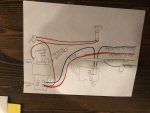
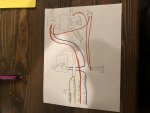
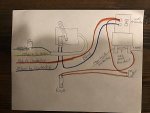
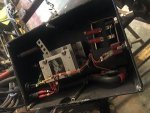
I didn’t have red so I used orange.. this is all the connections inside the case that holds the pot box, contactor, fuse, switch, and whatever is inline of the potbox ( looks like an adjustment screw type switch)


Hopefully one of these pictures are right side up...:censored:
 

Attachments

  • 41BB866F-3E1E-4AA5-9742-68EA81436599.jpg
    41BB866F-3E1E-4AA5-9742-68EA81436599.jpg
    221.9 KB · Views: 8
  • 7283A869-06BA-4BA5-AEF4-035D03E30AC2.jpg
    7283A869-06BA-4BA5-AEF4-035D03E30AC2.jpg
    228 KB · Views: 4
  • 16F1F9C9-AB11-4F96-9F75-03FC93E05FB9.jpg
    16F1F9C9-AB11-4F96-9F75-03FC93E05FB9.jpg
    228.1 KB · Views: 2

Functional Artist

Well-known member
Messages
5,400
Reaction score
2,907
Location
Toledo, Ohio
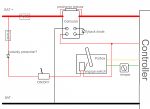
It looks to be set up like some older electric forklifts &/or golf carts.
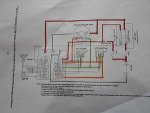
(& similar to the Kelly controller on my El Moto see diagram below) :thumbsup:

It looks like your main positive (+) power cable comes from the battery pack (+) to the right terminal of the contactor & when contacted the positive (+) current flows thru the cable connected to the left of side of the contactor on to the controller. :2guns:

The small red wire connected to the right terminal of the contactor is where the "small" power positive (+) comes from. (basically, right from the battery pack)

This "small" power (+) goes thru a fuse (good idea since its a power supply coming right off of the battery pack) to your On/Off switch then to the positive (+) coil of the contactor & goes on to the controller too.
(this supplies the (switched) positive (+) to the contactor & controller)

The blue wire seem to be the negative (-) the contactor.
(this supplies the (switched) negative (-) to the contactor)
It goes thru the micro switch as to activate the contactor (which then supplies power to the controller) only when the throttle is applied.

The contactor should NOT connect & supply power to the controller unless/until the micro switch is activated.

The green & yellow wires look to be your throttle signal wires.

The W22 connected across the main terminals is a precharge resistor.
(it supplies a small amount of voltage to "precharge" the capacitators in the controller to help protect them from the huge inrush of current when the contactor is first switched on)

The other is (should be) a diode
(Sid can explain the purpose of that one a bit more)

Hope this helps :cheers2:
 

Attachments

  • attachment.jpg
    attachment.jpg
    11.6 KB · Views: 31

itsid

Moderator
Staff member
Messages
11,563
Reaction score
245
Location
Ruhrpott [Germany]
I didn’t have red so I used orange.. this is all the connections inside the case that holds the pot box, contactor, fuse, switch, and whatever is inline of the potbox ( looks like an adjustment screw type switch)...
:thumbsup:
one thing though.. that small black silver striped thingamabob soldered to the contactor is not a resistor, it's a diode (flyback protection I'd say).
220 precharge resistor on the power side (strange value but okay)

Can you add the Controller and motor to the schematics,
I assume four large terminals on the controller (B (+ and -) and either A or M (+ and -))
and three or four small terminals for the potbox.

The motor I can't judge, appears to be a two terminal one..
but by the size I suspected a stator winding so more likely three or four terminals *shrugs*
maybe there's a bridge wire or it's internally bridged.

Anyways, back to the wiring schmeatic:

I don't like the contactor not being grounded tbh
from the black side of the above mentioned diode (blue wire),
there should be a similarly gauged wire going to ground
(ideally directly to the battery.. but chassis ground works too)
and INSTEAD of the blue wire from the controller that is..
since frankly I'm unsure what the controller has to do on that side of the contactor control

since that's the next thing I do not particularly like..
the on off switch IMHO belongs to be wired to the engage switch
(with positive voltage, not ground) (and ONLY to that mind you)

jeez, mind twisting...
hang on, I'll draw a quick and crude diagram...

[EDIT]
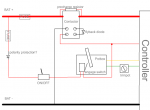
Okay.. uhm this is what I think it should look like..
inside_box.png
(added another fuse and polarity protection diode for good measures)

BUT: IDK what controller you are using, maybe it indeed must provide ground to the potbox,
it's just not what I'm used to see ;)

'sid
 

voided

parking lot pimp
Messages
297
Reaction score
0
Location
CT
Will take another look at it later.. see if somehow I can get into the speed controller..

The ports on the speed controller are

3 power connections .. ground to left motor / positive from contactor to both motors/ ground for right motor..

Harness wire with plug to control box as stated about with the red/blue/green/yellow..


******This is how it looks without removal..
 

itsid

Moderator
Staff member
Messages
11,563
Reaction score
245
Location
Ruhrpott [Germany]
no need to get into the controller IMHO..
but if you can find a label on it (any label really)
that might help us understand how it works.
with a number we could try to find a manual or schmeatic or
a similar controller.
with proper terminal labels we can work from that ..etc.
is it M- or A- on the ground motor wiring terminals?
is it B+ or M(A)+ on the positive terminal?

And where is the Battery ground connected to the controller ??
(the controller itself needs a similarly beefy battery ground [or at least I think so])

And the harness .. did it have a plug or again terminals on the controller?

let's be least invasive until we hit a dead end that way..
we want it to work not accidentally ruin it completely (say by breaking something trying to crack open the controller ;))

'sid

[EDIT]

Oh good..
I wasn't hallucinating things...
that wiring setup (from a curtis 1205 controller)
matches my diagram
http://www.bohlinger.biz/wp-content/uploads/2014/10/BASIC-SERIES-CONTROLLER-WIRING.pdf

it still doesn't say anything about if it's correct for your controller of course,
but it's at least not completely off :D
(Oh not flyback but coil suppression they call it.. *take note to self*)

and just because the 1205 was brought back to mind (72V 275A continuous):
https://www.nocoev.com/product/curtis/manual/1204m1205m_n.pdf
(the manual)

Again, that is not your controller, and these should only give you a rough idea about what's what and such, in case you want to know or need an alternative controller (I hope not!).

'sid
 

Functional Artist

Well-known member
Messages
5,400
Reaction score
2,907
Location
Toledo, Ohio
With all due respect, I don't mean to disagree pal, but your diagram doesn't seem to represent the way this set up is designed.

The positive (small red wire) to the contactor coil supplies "small" power to the contactor & also to the speed controller.

The negative (small blue wire) to the contactor coil supplies the ground. The controller gets its ground (-) thru the negative battery cable.

So when the small switch is switched on the controllers "logic" is activated. (this means that the controller is "on") & the contactor has power thru the positive connection.
...but, it does NOT have a negative (-) or ground completing the circuit until the throttle is activated, which then engages the micro switch which then, completes the circuit, activating the contactor & sending "big" power the motor(s)

* From my understanding most electric propulsion systems should NOT be grounded to the chassis of the vehicle.
...this helps keep these high voltages isolated.

* these seem to be (4) pole motors. In the first pic of post #16 (see left motor) you can see (2) battery cables going to the motor & a third cable connection too (for the "jumper" cable :cheers2:
 

Attachments

  • attachment 3.jpg
    attachment 3.jpg
    11.1 KB · Views: 24
  • attachment 5.jpg
    attachment 5.jpg
    15.4 KB · Views: 24
  • attachment 6.png
    attachment 6.png
    29.9 KB · Views: 23
  • attachment 2.jpg
    attachment 2.jpg
    19.2 KB · Views: 23

voided

parking lot pimp
Messages
297
Reaction score
0
Location
CT
After cutting 100+ zip ties, removing a chain shield and a few other plates/panels.. I’ve found a 4th lead at the speed controller for the negative that goes directly to a large battery disconnect then to the battery.

Sticker on speed controller states

Twin motor controller Frazer-Nash
Model# a1/0101/3197
Ser# 000002
Max 72v
Manufactured 1997
Mod state 1

Looked back over the wiring from the diagram after cutting all the zip ties and it’s exactly how it’s drawn...

Take note, I removed the rusted screw to get inside there. So I doubt anyone was in there before me..

There are also screws on the motor controller so I can get in there if needed.

The green/yellow/red/blue to the controller from the control box has a 4 pin connector.


They are 4 pole motors. Left motor is wired differently than the right motor.
 

Attachments

  • BDF2BF4D-6EAC-4F76-BBA9-AFE8ADE63800.jpg
    BDF2BF4D-6EAC-4F76-BBA9-AFE8ADE63800.jpg
    355.4 KB · Views: 3
  • A3C76ADB-5453-4775-8423-7158B8B94748.jpg
    A3C76ADB-5453-4775-8423-7158B8B94748.jpg
    382.4 KB · Views: 5
  • 4551FB9E-CB7D-4624-A0BA-A3ECD6F558D3.jpg
    4551FB9E-CB7D-4624-A0BA-A3ECD6F558D3.jpg
    297.7 KB · Views: 3

Functional Artist

Well-known member
Messages
5,400
Reaction score
2,907
Location
Toledo, Ohio
After cutting 100+ zip ties, removing a chain shield and a few other plates/panels.. I’ve found a 4th lead at the speed controller for the negative that goes directly to a large battery disconnect then to the battery.

Sticker on speed controller states

Twin motor controller Frazer-Nash
Model# a1/0101/3197
Ser# 000002
Max 72v
Manufactured 1997
Mod state 1

Looked back over the wiring from the diagram after cutting all the zip ties and it’s exactly how it’s drawn...

Take note, I removed the rusted screw to get inside there. So I doubt anyone was in there before me..

There are also screws on the motor controller so I can get in there if needed.

The green/yellow/red/blue to the controller from the control box has a 4 pin connector.


They are 4 pole motors. Left motor is wired differently than the right motor.

Sorry, I wasn't clearer :thumbsup:
...your diagram looks correct :cheers2:

Sid's diagram is the one that doesn't seem to match this situation :ack2:

Here is some interesting info (in the Cursts manual Sid linked :cheers2:

"Some potboxes have a built-in microswitch, eliminating the need to install
a separate pedal-actuated microswitch. It is important that a pedal microswitch
be included in the circuit as shown in Figures 4 and 5 to allow the microcontroller
a few milliseconds to boot up, run diagnostics and safety checks, and
then be ready in standby before receiving the throttle signal.


After the potbox has been mounted, operation of the pot can be tested
by measuring the resistance between the two wires with an ohmmeter. With
the pedal not applied, the resistance should be less than 50 ohms. As the pedal
is applied, the resistance should rise smoothly until it reaches a value between
4500 and 5500 ohms. Values below 4500 ohms may cause a reduction in
efficiency and top speed; however, you still can get top speed by lowering the
Throttle Max setting. Values above 7500 ohms indicate a defective potbox, and
will cause controller shutdown.


INSTALLATION CHECKOUT
Carefully complete the following checkout procedure before operating the vehicle.

A. Connect the battery. Use a voltmeter to verify that the proper voltage and
polarity appears at the battery B+ and B- terminals.
B. Check the voltage at the controller B+ and B- busbars. If your system
has a precharge resistor in parallel with the main contactor, you should see
approximately 90% of the full battery voltage. If your system does not have
a resistor, temporarily connect one (100 to 200 ohms, 5 watts, or a 100 watt
light bulb). The voltage at the controller should rise to approximately 90% of
the full battery voltage.
C. If “A” and “B” do not check out, troubleshoot the wiring connections. Do
not turn on the keyswitch until the trouble is corrected and “A” and “B”
check out.


There are no user serviceable parts in Curtis 1204M/05M/09M/21M controllers.
No attempt should be made to open, repair, or otherwise modify the
controller. Doing so may damage the controller and will void the warranty.
It is recommended that the controller and connections be kept clean and
dry and that the controller’s fault history file be checked and cleared periodically."
 
Last edited by a moderator:

itsid

Moderator
Staff member
Messages
11,563
Reaction score
245
Location
Ruhrpott [Germany]
With all due respect, I don't mean to disagree pal, but your diagram doesn't seem to represent the way this set up is designed.
...
Kevin if you're not reading what I said earlier in this post,
I cannot help you with that.

I know how it IS set up (voided provided a schematic himself)
that one's easy enough to follow to not need any update(or clean up) on my behalf.

I wondered why it it setup that way and provided a schematic how I THINK it SHOULD be setup instead.

Again, with all due respect.. your comment is pointless
[I almost said voided *giggle*]

After cutting 100+ zip ties, removing a chain shield and a few other plates/panels.. I’ve found a 4th lead at the speed controller for the negative that goes directly to a large battery disconnect then to the battery.
...
Looked back over the wiring from the diagram after cutting all the zip ties and it’s exactly how it’s drawn...
.....
They are 4 pole motors. Left motor is wired differently than the right motor.

great to know, makes me more confident knowing we talk series wound sepEx motors :D
the missing battery conenction's there too.. :thumbsup:

Oh and again: I never doubted your diagram; otherwise I'd said so.
What I did say is that it's wired differently to all [~similar?] speed controllers I've seen so far
and drew the differences out for you to follow..

Allow me to quote myself:
:thumbsup:
one thing though.. that small black silver striped thingamabob soldered to the contactor is not a resistor, it's a diode (flyback protection I'd say).
if your diagram would've been incorrect IMO I'd said so roundabout here
....
Anyways, back to the wiring schmeatic:

I don't like the contactor not being grounded tbh
from the black side of the above mentioned diode (blue wire),
there should be a similarly gauged wire going to ground
(ideally directly to the battery.. but chassis ground works too)
and INSTEAD of the blue wire from the controller that is..
since frankly I'm unsure what the controller has to do on that side of the contactor control

since that's the next thing I do not particularly like..
the on off switch IMHO belongs to be wired to the engage switch
(with positive voltage, not ground) (and ONLY to that mind you)


jeez, mind twisting...
hang on, I'll draw a quick and crude diagram
...
and these changes I've drawn in the diagram for you to better understand what I am talking about..
and to be extra cautious I added the following

BUT: IDK what controller you are using, maybe it indeed must provide ground to the potbox,
it's just not what I'm used to see ;)

'sid

See? It's not even too ambivalent ;)

'sid

[EDIT]
poked the internet a bit..
very little info on the kart :(
http://web.archive.org/web/19970215100418/http://www.frazer-nash.com/kart.htm
http://web.archive.org/web/20060220071416/http://www.frazer-nash.com/
but if you follow the site more closely (and their links)..
you'll find that the exact same kart was sold in malaysia under their POEM brand
(it's in the pdf you can download there)
Anyways.. again no additional info

But I found a 1992 filed patent from Frazer-Nash
https://patents.google.com/patent/WO1993005977A1/en?assignee=Frazer-Nash&oq=Frazer-Nash&page=1
that explains their "electronic differential" approach (at least the 1992 one ;))
a bit tough to read and hard to follow [you will neeed the pdf because of the image references and such to even have a chance]
 

voided

parking lot pimp
Messages
297
Reaction score
0
Location
CT
No worries I understood..

Thank you both for trying to get to the bottom of this.. I don’t know anyone local that could even dig into this thing further than what you’s had me do to figure it out.
 
Status
Not open for further replies.
Top