Predator 212 gov delete support mods

Hellion

Murderator
Messages
9,072
Reaction score
4,063
I think you can be fine and dandy with a stock, ungoverned engine relying on valve float to be your rev limiter, but care must be taken to not allow “physics” to bypass these safeguards. Or as Doc Sprocket said:

I bolded a portion for emphasis.
7). IF you are running an otherwise stock, ungoverned engine, is it advisable to avoid excessively free-revving the engine. Use proper gear ratios to keep a bit of a load on the engine at full speed, wide open throttle. Don't try to rev the crap out of the engine with the clutch, chain, or belt off. A load on the engine helps keep harmful vibrations (harmonics) in check. If you have an insanely long, steep downhill stretch in your riding route, back off the throttle going down it. If you hear the valves floating or the engine starting to over-rev, apply some braking force. Coasting too fast can force the engine to spin even faster than valve flutter can prevent.

Otherwise, the tendency is to GAS IT and use that gravity to your advantage.


Ls1Garage

New member
Messages
11
Reaction score
2
I think you can be fine and dandy with a stock, ungoverned engine relying on valve float to be your rev limiter, but care must be taken to not allow “physics” to bypass these safeguards. Or as Doc Sprocket said:

I bolded a portion for emphasis.
The only reason I would do valve springs is because I won’t get valve float at the rpm range I would run and it would hold up to the abuse better I would still be running it before valve float because not much more after that the flywheel will probably explode but I want to get a different coil with a rev limiter so I was asking should I go were it gets valve float or before.
 

Edwin Spangler

Well-known member
Messages
1,007
Reaction score
999
If there was a rpm you had to name or the general ball park what max rpm should this be ran at without turning into metal confetti, also I’m knowledgeable in what engine parts are what I usually work on cars and rebuild those motor I don’t trust Ai with my question I want real people with real answers like you gave me.
I regularly hit 6500 with it but same as with the 420, I have a shield blocking it from removing parts of me. 65 is all Id really trust it for. I can rev a bit higher but if I didnt have the shield in place, idk if I would trust spinning chinese metal even that high. Heres more, the "stock" flywheel this engine (212) came with revs to 6k but apparently its upgraded in some way. I cant see it.

Are you aware of the ARC flywheels? Those are rated to 10k I think. Best quality you can get.
 

Ls1Garage

New member
Messages
11
Reaction score
2
I regularly hit 6500 with it but same as with the 420, I have a shield blocking it from removing parts of me. 65 is all Id really trust it for. I can rev a bit higher but if I didnt have the shield in place, idk if I would trust spinning chinese metal even that high. Heres more, the "stock" flywheel this engine (212) came with revs to 6k but apparently its upgraded in some way. I cant see it.

Are you aware of the ARC flywheels? Those are rated to 10k I think. Best quality you can get.
Yeah that’s what I was thinking around 6000-6500 with the stock cam im not trying to do anything crazy. also I checked out Arc racing they got some good quality parts just not in the budget that I’m building in.
 

Whitetrashrocker

Inmate #952016
Messages
5,002
Reaction score
4,370
Location
Southern New Mexico
Why are you so stuck on just changing the springs?

That's not a linear first step in engine performance building.

Stiffer springs on an otherwise stock engine are only going to add resistance to the valvetrain, inducing drag and lowering performance. The reason for stiff springs is a side effect of much faster RPM and greater cam profiles to follow.

I've seen and read about WAY MORE rod failures than I have flywheels that grenade.

These are industrial engines made to run at a constant RPM at like 3500 all day. They have low compression, barely adequate oiling systems, and poor airflow.

From what I've seen, a billet rod is a must. They have better oiling and a real bearing surface.

The best HP gain per dollar is going to be airflow. An engine is just an air pump. Make it more efficient. A slide carb, open exhaust, and some easy port matching will bring free ponies.

Head work like port cleaning and deck milling will bring a few more.

This is just labor-intensive but costs me nothing as I have the ability to do it myself.

A stock cam in my opinion is the best for low-end performance. Its lobe separation angle provides the smoothest idle.
Bigger cams work better at the higher RPMs, but the trade-off is from the low end.

Some ratio rockers would be a small upgrade, making the valves think the cam is bigger. They would provide a little more duration and lift.
Even then, without a large cam, I think the stock springs will suffice.

You came here asking for advice from humans and not AI. We have all basically said the same thing, yet you're still determined to change springs. In the end, it's your engine, and do what you will.

As I've asked before, what's the end goal? Is this a drag motor? Race kart? Yard kart for the kids to bomb around in?

I run stock cam and flywheels in my engines that get held at WOT for hours. Billet rod and head work is all I do because I'm a cheap 🫏. I have yet to blow one up.
 

Hellion

Murderator
Messages
9,072
Reaction score
4,063
...or buy a motorcycle

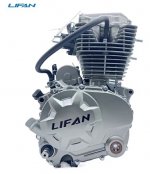
Motorcycle *engine. Make a shifter kart (or minibike). Probably makes way more sense to abandon the industrial engine and get an equivalent, staying in the theme here, Chinese made Honda knock-off (Lifan, Loncin) that will rev much higher, make more power, plus you get the built-in (unitized construction) 5-speed gearbox.

Image 200.jpeg
 
Top