
You are using an out of date browser. It may not display this or other websites correctly.
You should upgrade or use an alternative browser.
You should upgrade or use an alternative browser.
Fuel
- Thread starter propain37
- Start date
- Status
- Not open for further replies.

anickode
Active member
Regular unleaded pump gas is fine. 87 octane.
Ethanol free if you want to be real proper about it... But newer engines are designed to handle a small amount of ethanol better than they used to be.
In all likelihood, if you do find ethanol free gas, you won't find it below 90 octane.
Ethanol free if you want to be real proper about it... But newer engines are designed to handle a small amount of ethanol better than they used to be.
In all likelihood, if you do find ethanol free gas, you won't find it below 90 octane.

Kartorbust
Inmate #627
If you do run 87 octane with 10% ethanol, I'd highly recommend that you mix some Seafoam or some fuel additive to help fend off tarnishing of the carburetor. Ethanol attracts moisture and it tends to gum up carbs even if they are made to run it safely.

Whitetrashrocker
Inmate #952016
Regular unleaded pump gas is fine. 87 octane.
Ethanol free if you want to be real proper about it... But newer engines are designed to handle a small amount of ethanol better than they used to be.
In all likelihood, if you do find ethanol free gas, you won't find it below 90 octane.
Odd.
The ethanol free around here is 87 octane.
Kartorbust
Inmate #627
It could be a regional thing. By my dad's in Minnesota 89 and 91 are offered as non-oxygenated (ethanol free), here in Nebraska it could be 87, 89, or 91.Odd.
The ethanol free around here is 87 octane.
anickode
Active member
It could be a regional thing. By my dad's in Minnesota 89 and 91 are offered as non-oxygenated (ethanol free), here in Nebraska it could be 87, 89, or 91.
And here in Michigan, stations with ethanol-free gas are few and far between. At least by me anyway. Pretty much get your choice of Sunoco 90, 100, or 110.

65ShelbyClone
Active member
And here in CA, all on-highway gasoline has to be oxygenated with 10% ethanol by law.
http://lmgtfy.com/?q=honda+gx160+owners+manual
If you're going to put additives in the gas, get one that actually does something useful like Sta-Bil. Not Lucas, not Marvel Mystery Oil, not STP, and certainly not Sea Foam.
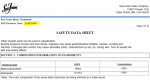
Sea Foam is nothing but oil, naptha, and rubbing alcohol. That's straight from their original safety datasheet. They got sneaky on the newer one and now call the oil/naptha a "hydrocarbon blend" and "trade secret."
You really don't need any additives unless the engine is going to be stored for months with fuel in it. In that case a fuel preservative and draining the carb before storage will go a long way.
For a stock GX160, what fuel should I use? What octane rating?
http://lmgtfy.com/?q=honda+gx160+owners+manual
If you're going to put additives in the gas, get one that actually does something useful like Sta-Bil. Not Lucas, not Marvel Mystery Oil, not STP, and certainly not Sea Foam.
Sea Foam is nothing but oil, naptha, and rubbing alcohol. That's straight from their original safety datasheet. They got sneaky on the newer one and now call the oil/naptha a "hydrocarbon blend" and "trade secret."
You really don't need any additives unless the engine is going to be stored for months with fuel in it. In that case a fuel preservative and draining the carb before storage will go a long way.
Attachments
-
 SF_new.PNG50.7 KB · Views: 2
-
 SF_old.PNG83.2 KB · Views: 3
Kartorbust
Inmate #627
Non-oxygenated is usually considered for motorcycles, boats, classic cars, small gas engines. Of course being that it's the People's Republic of California we're talking about here...I have no idea if their laws pretain to those classifications or not.And here in CA, all on-highway gasoline has to be oxygenated with 10% ethanol by law.
http://lmgtfy.com/?q=honda+gx160+owners+manual
If you're going to put additives in the gas, get one that actually does something useful like Sta-Bil. Not Lucas, not Marvel Mystery Oil, not STP, and certainly not Sea Foam.
Sea Foam is nothing but oil, naptha, and rubbing alcohol. That's straight from their original safety datasheet. They got sneaky on the newer one and now call the oil/naptha a "hydrocarbon blend" and "trade secret."
You really don't need any additives unless the engine is going to be stored for months with fuel in it. In that case a fuel preservative and draining the carb before storage will go a long way.
65ShelbyClone
Active member
If the gasoline is for a vehicle that will be operated on (CA) public roads, it has to be E10. No exceptions. Even the 100 octane pump gas has to be. At the same time, if the fuel is not legal for road use, then it can't be dispensed out of a pump that fits in a regular filler neck.
All I can do is try to laugh and plan my escape.
All I can do is try to laugh and plan my escape.
- Status
- Not open for further replies.