What gas?

Status
Not open for further replies.

Panhead5496

New member
Messages
908
Reaction score
6
Location
Athens, Georgia
So I took the family golf cart to the mechanic (long story why it was there lol)

We were talking about it and he said I should always use non ethanol gas in small engines.

I always have used 93 in my Baja and go cart.

What is everyone's thoughts on the gas I should be using?

Pros/cons to them?

:popcorn:
 

Panhead5496

New member
Messages
908
Reaction score
6
Location
Athens, Georgia
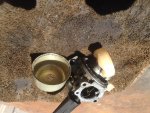
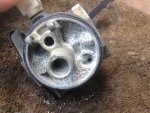
Ethanol eats metal. Stay away from it if you can. And for low compression/hp engines use a low octane gas.
High octane will actually cause loss of hp.

Well that's good to know!! But I think he meant get non ethanol gas...I believe some gas stations around here have a special pump for it.

Really? I never would have guessed that. So just get the lowest grade gas you can from the gas station? Interesting.

Check out pure-gas.org , also Briggs sells small bottles of ethanol free fuel. I just buy regular gas and always add in fuel stabalizer.

That's a good idea. What kind of stabilizer do you use?? Just pour some in the gas can? (obviously however much per gallon)
 

Texan

Senor Member
Messages
461
Reaction score
11
Location
Deep In The Heart of Texas
I use Sta-Bil, get it from Wal-Mart (best price). The bottle is small and says it treats 40 or 50 gallons, cant remember exactly, so it lasts quite a while, for me at least. Sometimes I will even add a small amount directly to the engine gas tank. I've been using it on my riding lawn mower (Briggs v-twin 20hp) since I got it new which was about 8 years ago and haven't any fuel delivery or carb problems.
 

Scout

Nutjob
Messages
575
Reaction score
21
Location
Indiana
I quit using Sta-bil. Gas isn't going to gum up or varnish over winter. I've never had issues parking my motorcycles for six months or so over the winter. Either drain the gas and run the dry, or fill the tank to the brim to keep out moisture and prevent rust.
 

Hellion

Moderator
Messages
8,880
Reaction score
3,888
Just to enhance a consensus of opinion, yes, ethanol is bad for small carbureted engines. Alcohol/ethanol draws in moisture--it's hygroscopic (absorbing or attracting moisture from the air) which is bad news for all the corrosive materials inside the engine not to mention that alcohol eats away at fuel lines and other materials. Ethanol gasoline degrades over time and eventually turns urine-yellow with a sickly sweet odor and furthermore loses its combustibility.

...Either drain the gas and run the dry, or fill the tank to the brim to keep out moisture and prevent rust.

Nice sentiment but most people aren't going to do as you suggest because that's common sense plus people are lazy.

I do recommend 87 octane 100% gasoline for our engines, if you can get it. I just bought two grades yesterday in 87 and 93 for the dirt bike (high compression ratio).
 

Bbqjoe

Banned
Messages
3,455
Reaction score
67
Location
Location, Location
Just a quick synopsis on octane. (As far as I understand it)
First, as we know, gasoline is flammable.
Diesel not so much.

The reason diesel combusts, is when it enters the cylinder, the piston comes up, creating a massively large amount of compression. This pressure creates a lot of heat which in turn causes the fuel to explode and burn.

In your basic engine, a similar reaction occurs, but using a much lower level of compression. Nonetheless, it's still a lot of pressure, but not enough to cause spontaneous combustion. That is why we use a spark to cause ignition to the fuel air combination.

If you were to expose gasoline to those extreme pressures that diesel sees, it would have a tendency to ignite without a spark, especially if the engine cylinder was quite hot.

87 octane is considered more flammable then the currently available 91-93 octanes.
Other place such as Europe, can sometimes see as high as 98 octane.

Now if you had a high end engine, possibly in the racing class, with a very high compression ratio, you might end up with 87 octane igniting somewhat earlier before the spark was sent.

It can even ignite before the piston reaches top dead center, which would then cause the energy released to try and push the piston back down, while it was still coming up.
This is very hard on the engines internals, and produces a sound known as knocking or pinging, also creating a massive loss of power.

Of course what we want is our fuel to ignite right at TDC, or just a hair after that, while the piston is free to continue its downward motion.

In higher octane, the fuel, for lack of a better term, has a burn retardant in it, so it won't so easily ignite by itself in a high compression engine.

That is all higher octane does. It doesn't contain any higher energy that that of regular gas, it just burns a little slower, and is harder to ignite.
There is no benefit to putting higher octane in an engine that does not require it.

But if we could get the cattle feed out of our gas, we would see greater energy released from our fuel, and probably even better milage.
 

Hellion

Moderator
Messages
8,880
Reaction score
3,888
Yup, best layman's terms explanation I've read in a long time.

Corn is heavily subsidized by the Feral Gub'mint so we get either high fructose corn syrup or ethanol I guess. We need more whiskey makers!
 

Panhead5496

New member
Messages
908
Reaction score
6
Location
Athens, Georgia
Wow Joe I'm impressed! Very good info there. I appreciate it.

And to everyone else thanks for the info. Guess I'll be going back to the lower grade gas. Y'all saved me a few dollars with slightly cheaper gas :D

Oh and about the fuel stabilizer, I don't really ever go more than a week or so without going for a ride, so I probably don't really need it.
 

SLJ2137694

New member
Messages
7
Reaction score
0
Location
Tacoma WA
Just a quick synopsis on octane. (As far as I understand it)
First, as we know, gasoline is flammable.
Diesel not so much.

The reason diesel combusts, is when it enters the cylinder, the piston comes up, creating a massively large amount of compression. This pressure creates a lot of heat which in turn causes the fuel to explode and burn.

In your basic engine, a similar reaction occurs, but using a much lower level of compression. Nonetheless, it's still a lot of pressure, but not enough to cause spontaneous combustion. That is why we use a spark to cause ignition to the fuel air combination.

If you were to expose gasoline to those extreme pressures that diesel sees, it would have a tendency to ignite without a spark, especially if the engine cylinder was quite hot.

87 octane is considered more flammable then the currently available 91-93 octanes.
Other place such as Europe, can sometimes see as high as 98 octane.

Now if you had a high end engine, possibly in the racing class, with a very high compression ratio, you might end up with 87 octane igniting somewhat earlier before the spark was sent.

It can even ignite before the piston reaches top dead center, which would then cause the energy released to try and push the piston back down, while it was still coming up.
This is very hard on the engines internals, and produces a sound known as knocking or pinging, also creating a massive loss of power.

Of course what we want is our fuel to ignite right at TDC, or just a hair after that, while the piston is free to continue its downward motion.

In higher octane, the fuel, for lack of a better term, has a burn retardant in it, so it won't so easily ignite by itself in a high compression engine.

That is all higher octane does. It doesn't contain any higher energy that that of regular gas, it just burns a little slower, and is harder to ignite.
There is no benefit to putting higher octane in an engine that does not require it.

But if we could get the cattle feed out of our gas, we would see greater energy released from our fuel, and probably even better milage.

Good info. Actually the spark ignites the fuel several degrees before TDC.
 

Whitetrashrocker

Inmate #952016
Messages
4,881
Reaction score
4,143
Location
Southern New Mexico
And it takes a little time to get burning and make maximum pressure. Hence the advance timing.

A faster spinning engine needs more advance to get the flame to do it's thing at the right time.
 

ekywildcat

New member
Messages
33
Reaction score
0
Location
Eastern Kentucky
Great post Joe. As far as the Sta-bil, not a fan. I'm sure it's fine to run in your engine, but my garden tiller sits all winter, always started right up in the spring. Except a couple years ago I decided to go hi-tech and put Sta-bil in over the winter. Wouldn't hit a lick until I cleaned the carb. Coincidence? Could be, but I'll never use again.
 

obone

New member
Messages
12
Reaction score
1
Location
Marion, OH
I've had the same issue with the newer fuel with ethanol in it. My engine has a mechanical fuel pump mounted to the side. It uses a rubber diaphragm to pump the gas to the carburetor. The rubber will get pin holes in it from the ethanol. Which leads to gas in the oil. Buna-N Nitrile rubber is used a lot now (will not dissolve).
 
Status
Not open for further replies.
Top