• OFF TOPIC fun forum - NO politics - NO religion - NO jerks. It's not complicated. Thanks!

Math problem...

Status
Not open for further replies.

bob58o

SuckSqueezeBangBlow
Messages
9,646
Reaction score
1,857
Location
Chicago-town USA
I love this math problem!!!

I want to hear your answers and explanations Don't give it away if you have heard it before. 'Sid, don't give it away yet.
No google help.

Assume people want a car, not a goat. Some may prefer the goat, but in this case the car is the desired prize.


Suppose you're on a game show, and you're given the choice of three doors: Behind one door is a car; behind the others, goats. You pick a door, say No. 1, and the host, who knows what's behind the doors, opens another door, say No. 3, which has a goat. He then says to you, "Do you want to switch to door No. 2 or stay with No. 1?"


What should you do???????? Should you switch? Is the host trying to pursued you? Does it matter?
 

bob58o

SuckSqueezeBangBlow
Messages
9,646
Reaction score
1,857
Location
Chicago-town USA
you should switch.

Why? After he shows you a goat in door three, it's 50/50, right?
Two doors, One car, one goat.

Flip a coin? or not that simple?

---------- Post added at 04:41 PM ---------- Previous post was at 04:33 PM ----------

I can't wait.
Got to go to work soon.
So here it is. Sorry if anybody wanted to post before this...:cheers2:


Monty Hall problem
From Wikipedia, the free encyclopedia

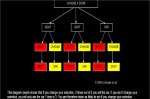
In search of a new car, the player picks a door, say 1. The game host then opens one of the other doors, say 3, to reveal a goat and offers to let the player pick door 2 instead of door 1.

The Monty Hall problem is a brain teaser, in the form of a probability puzzle (Gruber, Krauss and others), loosely based on the American television game show Let's Make a Deal and named after its original host, Monty Hall. The problem was originally posed in a letter by Steve Selvin to the American Statistician in 1975 (Selvin 1975a), (Selvin 1975b). It became famous as a question from a reader's letter quoted in Marilyn vos Savant's "Ask Marilyn" column in Parade magazine in 1990 (vos Savant 1990a):

Suppose you're on a game show, and you're given the choice of three doors: Behind one door is a car; behind the others, goats. You pick a door, say No. 1, and the host, who knows what's behind the doors, opens another door, say No. 3, which has a goat. He then says to you, "Do you want to pick door No. 2?" Is it to your advantage to switch your choice?

Vos Savant's response was that the contestant should switch to the other door (vos Savant 1990a). Under the standard assumptions, contestants who switch have a
2/3 chance of winning the car, while contestants who stick to their initial choice have only a 1/3 chance.

The given probabilities depend on specific assumptions about how the host and contestant choose their doors. A key insight is that, under these standard conditions, there is more information about doors 2 and 3 that was not available at the beginning of the game, when the door 1 was chosen by the player: the host's deliberate action adds value to the door he did not choose to eliminate, but not to the one chosen by the contestant originally. Another insight is that switching doors is a different action than choosing between the two remaining doors at random, as the first action uses the previous information and the latter does not. Other possible behaviors than the one described can reveal different additional information, or none at all, and yield different probabilities.

Many readers of vos Savant's column refused to believe switching is beneficial despite her explanation. After the problem appeared in Parade, approximately 10,000 readers, including nearly 1,000 with PhDs, wrote to the magazine, most of them claiming vos Savant was wrong (Tierney 1991). Even when given explanations, simulations, and formal mathematical proofs, many people still do not accept that switching is the best strategy (vos Savant 1991a). Paul Erdős, one of the most prolific mathematicians in history, remained unconvinced until he was shown a computer simulation confirming the predicted result (Vazsonyi 1999).

The problem is a paradox of the veridical type, because the correct result (you should switch doors) is so counterintuitive it can seem absurd, but is nevertheless demonstrably true. The Monty Hall problem is mathematically closely related to the earlier Three Prisoners problem and to the much older Bertrand's box paradox.
 

chancer

ɔ ɥ ɐ u ɔ ǝ ɹ
Messages
9,358
Reaction score
93
Location
COMFORT, TEXAS
Thank you
". Under the standard assumptions, contestants who switch have a
2/3 chance of winning the car, while contestants who stick to their initial choice have only a 1/3 chance."

This ^ is why I said switch!
Ever play Black Jack?
 

itsid

Moderator
Staff member
Messages
11,563
Reaction score
247
Location
Ruhrpott [Germany]
...
What should you do???????? Should you switch? Is the host trying to pursued you? Does it matter?

the so called "monty hall" problem is somewhat famous in theoretical math..
let's just say I've heard it of course.
And I have the perfect "intuitive proof" for the correct solution as well :D
(since it feels counter intuitive in this particular example)

Let's step up the numbers..

pick ANY card of a 52 card deck..
NOW I get the remaining 51 cards (and can look at them.. you cannot look at yours)

NOW what's your chance to have the ace of spades?
see?
per round I show you one of my cards (not the ace of spades in case I have it)
after 50 rounds..
tell me.. would you want my card (switch) or yours (stay) to have the ace of spades in the end?

And yes apart from different numbers it's still the very same problem ;)


'sid
 

Bbqjoe

Banned
Messages
3,455
Reaction score
67
Location
Location, Location
I like my chances of holding the Ace! LOL

It is not Pam, but some may be cheered up nonetheless.

Welcome to the land of the band!
 

pRoFiT

Can't buy it?, build it!
Messages
1,151
Reaction score
63
Location
California
the ace is an easier pick. because if you always show me the card that is not ace. then i can switch every round i guarantee the ace will be there till the end. in the end it is still a 50/50 chance though.

i guess maybe the 3 doors question is you have 1/3 to start then 1/2 if next. If the game show was going to show you if you lost then yah switch. but if you have picked the correct one or not and they show one that is a goat then you should end up with a 50/50 chance.

i guess if 1/3 to start and you pick one that rules out one bad goat even if you picked a goat. so always switch.

would this apply to say Deal or no Deal? switch at the end?
 

itsid

Moderator
Staff member
Messages
11,563
Reaction score
247
Location
Ruhrpott [Germany]
the ace is an easier pick. because if you always show me the card that is not ace. then i can switch every round i guarantee the ace will be there till the end. in the end it is still a 50/50 chance though.
.....

NOPE it's NOT a 50/50 chance it's still 51:1 in my favour!

just because you know the majority of my cards... makes them still my cards!

there is NO benefit in knowing them the only benefit you can have is swapping to the larger stack.

even if I donot show you any of my cards that doesn't change the dealt deck, does it?
so who's pack you pick? mine with 51 cards, or your's with just one.

if I show five, ten or twenty cards.. that does not change wich cards I hold...
you mistake the gathered information to be beneficial while it's only there to confuse you into thinking you have a 50:50 chance;
while in fact you are not even close to that good a chance ;)

'sid
 

pRoFiT

Can't buy it?, build it!
Messages
1,151
Reaction score
63
Location
California
Better then 50/50 don't swap until last two then swap. 52/1 odds. If I pick ace to start then I lose. Otherwise I win
 
Status
Not open for further replies.
Top