Starter Motor / Solenoid / Relay

bob58o

SuckSqueezeBangBlow
Messages
9,646
Reaction score
1,857
Location
Chicago-town USA
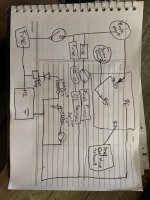
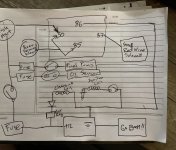
I still don’t know if I have it wired correctly. It’s a jumbled mess of crimp splices and wire twisties. I don’t think it should require a 30 amp fuse, so I think I still have it wrong. It’s a 40A relay, but I don’t think it requires 40A in the wire.

Im going to rewire it to make it cleaner with shorter 10 gauge wire (instead of extra long 12 gauge I’m using now) and also order some more fuses.

It functions with an 30A fuse and I haven’t started a fire or melted anything.

I added the diode (1N5408) before the DC-DC voltage regulator and a 3A fuse after the regulator before the positive battery terminal.

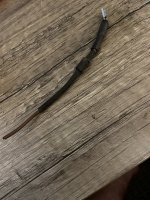
IIRC the diode that I had was in this wire (which I found after ordering some more).
 

Attachments

  • image.jpg
    image.jpg
    2.6 MB · Views: 2

Rat

Well-known member
Messages
1,750
Reaction score
1,298
Location
SW Virginia
Starters deploy such a massive current draw that they require a substantial fuse to not blow, and I've had them blow the relay instead by using a 50A fuse so I won't use a relay now and could probably run a 30A without issue.

You are going better off without the relay because you are over complicating the system, and once you do get a heavy enough fuse to not burn it pretty solid chance the relay is gonna fry instead.

+12v from battery or a primary toggle directly off the battery terminal if you concerned with potential parasitic draw, to the open solenoid lug

Small red should be the +12v trigger wire and ran to a key switch or push button start momentary switch.

Typically all grounds lead to the chassis as does the battery neg terminal.

I prefer sticking to K.I.S.S. logistics
Keep It Stupid Simple
 

Denny

Canned Monster
Messages
11,967
Reaction score
8,472
Location
Mayberry, Indiana
Bob, I think you’re trying to run the juice for the starter through that relay or fuse. It won’t work. That is what the solenoid is for, higher current loads. One of the large lugs to the starter, one directly to battery, small to switched power and either the case or negative terminal to ground.
 
Top