Honda G200 5hp Question

Status
Not open for further replies.

4stroker

New member
Messages
8
Reaction score
0
Hi guys, cool forum!

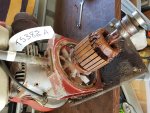
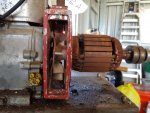
I picked up an old generator for free, so I can use the Honda G200 engine from it for my young fella's first go kart. The engine runs beautifully!

Question is, how do I get the old generator shaft off of the engine's output shaft? I cannot see how it is attached.

Is there an allen key bolt or something holding it on? The shaft is hollow all the way through but I don't have an allen key long enough to try.

Pics attached.

Thanks for any help/advice.

Mark.
 

Attachments

  • 20181124_103832.jpg
    20181124_103832.jpg
    427.6 KB · Views: 8
  • 20181124_103924.jpg
    20181124_103924.jpg
    334.2 KB · Views: 7
  • 20181124_103926.jpg
    20181124_103926.jpg
    284 KB · Views: 6
  • 20181124_103929.jpg
    20181124_103929.jpg
    335.8 KB · Views: 6
  • 20181124_104650.jpg
    20181124_104650.jpg
    261.5 KB · Views: 8

Kartorbust

Inmate #627
Messages
4,600
Reaction score
1,094
Location
Utica, NE
It could be a tapered shaft on it so its possibly pressed in. But that engine is at least 1970s in age. Never seen an old Honda flat head design, only knew of their over head valve and cam. If it is a tapered shaft you may have to locate a keyed straight shaft for that engine and swap them out.
 

65ShelbyClone

Active member
Messages
714
Reaction score
236
Location
SoCal
They made the G200 at least into the 1980s.

It's probably stuck on a taper. There was a big long bolt going down through the shaft center that was removed already, correct?
 

4stroker

New member
Messages
8
Reaction score
0
Thanks for the replies guys.

They made the G200 at least into the 1980s.

It's probably stuck on a taper. There was a big long bolt going down through the shaft center that was removed already, correct?

There very well could have been, but it was half pulled apart when I got it.
 

itsid

Moderator
Staff member
Messages
11,563
Reaction score
259
Location
Ruhrpott [Germany]
As above!

very likely a tapered shaft, impossible to find (decently priced) clutches for such,
a new crank is cheaper.

If as Shelby said you already removed a long bolt from the rotor attachment, then the next step would be a gear puller (of very adult size I'm afraid)

If you don't have such gear puleler (or none of big enough reach)
then you can lightly tap the end of the rotor shaft with a mallet
(LIGHTLY!!) and soak everything inboard the fan in penetrating oil,
a squirt inside the rotor shaft doesn't hurt either.

patience, some light tapping, more patience and eventually you'll be able to wiggle it off the crankshaft.

the only other option would be a threaded shaft (IDK if suh ever got used on a generator..)
that'd be a real pain to get off.. same rules (penetrating oil, patience and light tapping)
but instead of wiggling it off you had to thread it off to do so you must block the piston
check if you see a telling toolmark on the fan that's often a good indicator

'sid

PS Protipp, the 5hp G200 can be upgraded to a transistorized ignition, that gives you additional 10% of power without 'any' real modification to the engine
 

bigrigbri

New member
Messages
39
Reaction score
0
Location
Derbyshire UK
I have a Honda G300 in my folks garage that I rescued from the old girl next door showing it in the skip from her late husbands estate.
Old coil n points system but now fettled goes first pull.
Would like to strip it and get it running with a modified carb, exhaust , porting tuning.
It though has a parallel output shaft.
Would be nice to see the G200 running so persevere.
 

4stroker

New member
Messages
8
Reaction score
0
Thanks everyone.

The engine runs beautifully, starts first pull, so definitely want to use it unless modifying the output shaft (if required) costs me more than using something else altogether.

I just messaged the previous owner and he confirmed that it had a long bolt through the centre that he has already removed, so I will start trying to pull it off now!

I've also got a G300 to upgrade to later on... It needs a recoil starter though, anyone got a link to a decent one?

Thanks again, Mark
 

itsid

Moderator
Staff member
Messages
11,563
Reaction score
259
Location
Ruhrpott [Germany]
just because it might come in handy at one point in time..

here's the service manual for a G200

'sid
 

Attachments

  • G200-service_manual.pdf
    2.9 MB · Views: 17

mckutzy

Well-known member
Messages
8,353
Reaction score
113
Location
bc, canada
If you can make an adapter and thread the end... You can use a grease gun to hydraulically seperate the armature off the shaft. Should just pop right off this way...
 

4stroker

New member
Messages
8
Reaction score
0
just because it might come in handy at one point in time..

here's the service manual for a G200

'sid

Thanks alot!

---------- Post added at 11:00 AM ---------- Previous post was at 10:59 AM ----------

As above!


PS Protipp, the 5hp G200 can be upgraded to a transistorized ignition, that gives you additional 10% of power without 'any' real modification to the engine

by transistorized do you mean CDI?

I read somewhere that later model G200's had CDI ignition as opposed to points; im yet to get into this one yet and figure out what it is/has.
 

itsid

Moderator
Staff member
Messages
11,563
Reaction score
259
Location
Ruhrpott [Germany]
....
by transistorized do you mean CDI?

I read somewhere that later model G200's had CDI ignition as opposed to points; im yet to get into this one yet and figure out what it is/has.

NO I mean transistors..

CDI are BOTH!

CDI means capacitor discharge ignition, both styles use a capacitor discharge to initiate the field collapse of the ignition coil.

What I'm talking about is the trigger mechanism of said capacitor discharge..
Old G200 use contact breaker points that when apart fire the capacitor discharge.
The newer (5.5hp) versions use a thyristor (a transistor type) to fire the capacitive discharge
also known as pointless ignition ;)

Then there's magneto ignition (IDI: Inductive discharge ignition)
on GX200s
which use the very same magnet/coil pack that charges the ignition coil to trigger the discharge on inductive change;
and a 'modern' variant of it that is also called CDI ..
which takes that iductive signal into a brainbox to decide if that capacitor gets discharged or not, which in turn fires the coil(and thus sparks the plug) or not ;)
(commonly refered to as rev limiting coils on GXes)

But I understand your confusion...
people call those tiny black bricks most know from their scooter engine
CDI;
and they are right.. but it's just ONE of many variants
in fact those tiny things are much more
since they're also a governor or rather rev limiter,
some can even reduce engine power if so required.

But you don't find any of those on an old single cylinder engine like yours,
but yours is still a CDI, a specific subset of CDI (a contact breaker points ignition or in case it already is a 5.5hp variant a transistor ignition ;))

I hope I could add to that confusion with my techno babble ;)

'sid
 

anickode

Active member
Messages
2,296
Reaction score
77
Location
S.E. Michigan
If you can make an adapter and thread the end... You can use a grease gun to hydraulically seperate the armature off the shaft. Should just pop right off this way...

X2

I've done several this way. I don't even bother with an adapter on junk generators. I just drill the end out and tap it for 1/8" NPT and thread a zerk in there. Attach grease gun, and pump till you can't pump no mo'. If it hasn't come off yet, give it a little love tap with a hammer, and she'll pop right off.

Just be careful. The grease also compresses the small volume of air contained inside the hollow bore, so when it pops off, it can occasionally send a blast of grease flying. Throw a shop rag or old towel over it to contain any potential mess. Safety glasses should be worn. Then again, you should have em on anyway when working on stuff like this.
 

65ShelbyClone

Active member
Messages
714
Reaction score
236
Location
SoCal
There is a similar technique where you tamp the cavity with damp paper using a close-fitting rod. Usually it's used on bearings that aren't accessible from the back when a bearing puller isn't available. Keep in mind that the crankshaft bearings will bear the brunt of this hammering and it's possible to brinell them.
 
Status
Not open for further replies.
Top