EC Carbs follow up to RBG latest vid, WC223 vs Tilly 212E

BrownStainRacing

Well-known member
Messages
1,367
Reaction score
1,486
I found it interesting that they clearly say the "Ducar 212 is the better deal" because of the pvl flywheel and better carb that it comes with. And "it's almost unfair to compare a Ducar 212 to a Tilly 212e".

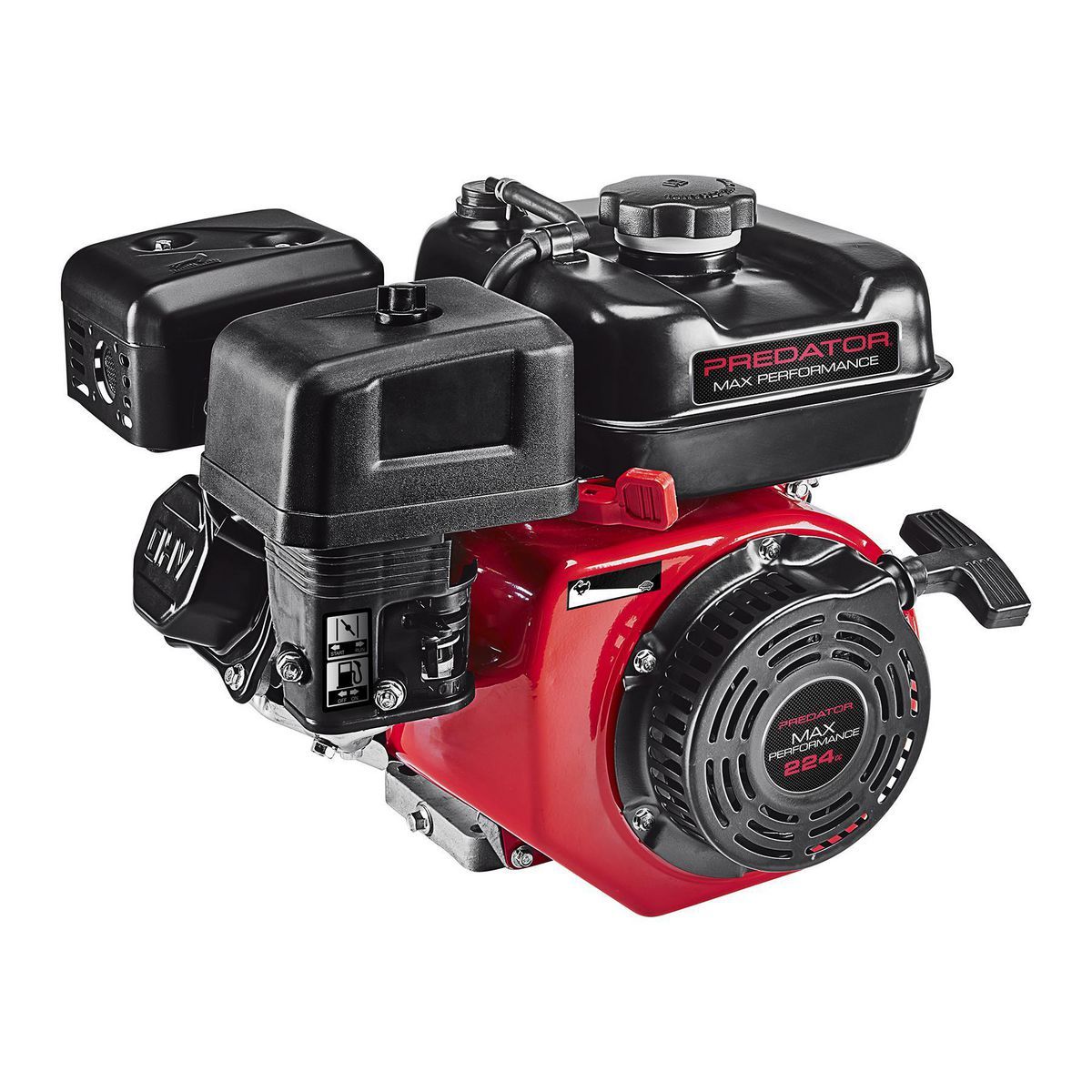
They dont mention the Ducar 224. Why not??? Maybe it would be "almost unfair" too, since it comes outta the box without a governor, and needs a flywheel.

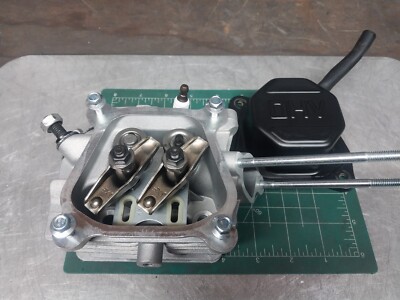
I have been inside 3 predator 224 engines, and they ALL 3 had 27/25mm valves. None had the 25/24mm valves. Did I get lucky???

@panchothedog , what size valves did your pred 224 have in the head???

But it's still a good read. Alot of info about

Gear reductions
Torque multiplier
Why TORQUE is MORE important then HP.
Bigger cc engines have a wider powerband.

These are things that make SOME karts and mini bikes out perform much higher cost builds that people have invested way too much money in, and not enough brains.

 
Last edited:

Rat

Well-known member
Messages
1,750
Reaction score
1,298
Location
SW Virginia
I found it interesting that they clearly say the "Ducar 212 is the better deal" because of the pvl flywheel and better carb that it comes with. And "it's almost unfair to compare a Ducar 212 to a Tilly 212e".

They dont mention the Ducar 224. Why not??? Maybe it would be "almost unfair" too, since it comes outta the box without a governor, and needs a flywheel.

I have been inside 3 predator 224 engines, and they ALL 3 had 27/25mm valves. None had the 25/24mm valves. Did I get lucky???

@panchothedog , what size valves did your pred 224 have in the head???

But it's still a good read. Alot of info about

Gear reductions
Torque multiplier
Why TORQUE is MORE important then HP.
Bigger cc engines have a wider powerband.

These are things that make SOME karts and mini bikes out perform much higher cost builds that people have invested way too much money in, and not enough brains.

I'm not Pancho, but my 208 (LCT-Husqavarna) has 27/25 stock.
The Hemi I have is an oddball early one that has more in common with a Predator 212 wedge than the current line of Predator 212Hemis and has 27/25 ports as well with the one significant difference being my 208 has shorter heavier rods with 5.5 stems where the 212H has thinner linger rods with 5mm stems.

I know nothing about the 212's history beyond I resurrected it from sitting with a crankcase full of more water than oil, only shelf it until I cook up something no doubt stupid to bolt it onto.
 

BrownStainRacing

Well-known member
Messages
1,367
Reaction score
1,486
I'm not Pancho, but my 208 (LCT-Husqavarna) has 27/25 stock.
The Hemi I have is an oddball early one that has more in common with a Predator 212 wedge than the current line of Predator 212Hemis and has 27/25 ports as well with the one significant difference being my 208 has shorter heavier rods with 5.5 stems where the 212H has thinner linger rods with 5mm stems.

I know nothing about the 212's history beyond I resurrected it from sitting with a crankcase full of more water than oil, only shelf it until I cook up something no doubt stupid to bolt it onto.
@RLS_Underground
Thx.
I was looking for any one that found the smaller 25/24mm valves in the predator 224.

@panchothedog is the only one, I know of on the forum, that's taking the pred 224 apart.

Even if it did have the smaller valves, it would have more fuel signal, more velocity in the intake runner, move the air/fuel mix faster, because of the smaller valve seats.

Torq would come in sooner, but run outta breather sooner also. It would still breath fine til around 4900 rpm, which is GREAT for a stock governor go kart or mini bike engine.

The follow up is comparing stock NIB engines anyway.

I jus think it's wrong and misleading, to say the pred 224 is restricted with the small valves, when it comes with the bigger valves.

Maybe it was misprinted, mis spoken, or something of that nature.

Every where ive looked, says 27/25mm.


Last edited:

Rat

Well-known member
Messages
1,750
Reaction score
1,298
Location
SW Virginia
Yeah that's the thing about porting, most just can't seem to comprehend that bigger is not always better.

Bigger valves may have the capacity to flow more by volume, but they flow LESS in velocity; anyone who truly knows how to tune an engine worth a damn knows both are important but without velocity volume is irrelevant.

It's velocity that pulls fuel from the carb not volume.
 
Last edited:

Rat

Well-known member
Messages
1,750
Reaction score
1,298
Location
SW Virginia
There is no such thing as vacuum. Only the absence of pressure.
You and I may understand that as per Bernoulli's principle, but the common hairless ape with a fistful of tools does not, and thus one must be fluent in idiot, jackassinese, and fuktard to spare the feelings of the great hairless apes for they are indignant creatures.
 
Last edited:

panchothedog

Well-known member
Messages
2,940
Reaction score
3,988
BSR Just now saw this thread. The 224 that I recently finished up with had
27 int. & 25 ehx. valves. What was different ( and to my benefit ) is they had the larger 5.5 mm stems. The last 2 or 3 212 predators that I have built all had valve stems of 5 mm. I guess the reason I say to my benefit is because I had a pair of 27-25 5.5 stainless steel valves sitting on the shelf. I always feel more comfortable with the stainless whenever stiffer springs are used.
 

Willie1

Active member
Messages
589
Reaction score
152
Location
Newport, Mi
You and I may understand that as per Bernoulli's principle, but the common hairless ape with a fistful of tools does not, and thus one must be fluent in idiot, jackassinese, and fuktard to spare the feelings of the great hairless apes for they are indignant creatures.
I would agree to that in instances that the column of air is open to atmosphere, such as open throttle, open intake valve, piston on downstroke - the air in the cylinder and intake still usually sees a restriction from the carb venturi and this lower air pressure than atmospheric pressure is measured (incorrectly) as a vacuum.
BUT . . .
In instances where air can't flow freely into an area, like in a mechanically evacuated system, I would think it would be possible to get to a vacuum condition.
In other words - I think Bernoulli's Principle is accurate in a NATURAL state where the air pressure - or perceived lack of it - is measured "incorrectly" with atmospheric pressure being called 0. While I admit I'm "follicle challenged with simian qualities"
I think that a true vacuum could be mechanically induced. Admittedly, I'm not an engineer, and I'm not interested in wasting time researching or debating this opinion.

After all that typing I have a strange craving for bananas.
 

BrownStainRacing

Well-known member
Messages
1,367
Reaction score
1,486
I would agree to that in instances that the column of air is open to atmosphere, such as open throttle, open intake valve, piston on downstroke - the air in the cylinder and intake still usually sees a restriction from the carb venturi and this lower air pressure than atmospheric pressure is measured (incorrectly) as a vacuum.
BUT . . .
In instances where air can't flow freely into an area, like in a mechanically evacuated system, I would think it would be possible to get to a vacuum condition.
In other words - I think Bernoulli's Principle is accurate in a NATURAL state where the air pressure - or perceived lack of it - is measured "incorrectly" with atmospheric pressure being called 0. While I admit I'm "follicle challenged with simian qualities"
I think that a true vacuum could be mechanically induced. Admittedly, I'm not an engineer, and I'm not interested in wasting time researching or debating this opinion.

After all that typing I have a strange craving for bananas.

😆 🤣 😂 😹 😆

Bananas 🍌, thats funny 😁 😂 😀

I jus opened 1 as I was reading this.
 

Willie1

Active member
Messages
589
Reaction score
152
Location
Newport, Mi
Never seen them with a larger intake seat than exhaust seat... seems like someone screwed up on that one to me
HUH? So you think the exhaust should be LARGER than the intake?

Listing for a 225RS head on G/P/S website. Every other head listed follows this intake/exhaust sizing pattern.
  • 27mm intake valve (5mm stem)
  • 25mm exhaust valve (5mm stem)
  • 2 valve seals
  • 26lb valve springs
  • guide plate, rockers, and adjusting nuts all included.
 
Last edited:

BrownStainRacing

Well-known member
Messages
1,367
Reaction score
1,486
BSR Just now saw this thread. The 224 that I recently finished up with had
27 int. & 25 ehx. valves. What was different ( and to my benefit ) is they had the larger 5.5 mm stems. The last 2 or 3 212 predators that I have built all had valve stems of 5 mm. I guess the reason I say to my benefit is because I had a pair of 27-25 5.5 stainless steel valves sitting on the shelf. I always feel more comfortable with the stainless whenever stiffer springs are used.
Thx.
That jus confirms that article is wrong about the "predator 224 having small valves" bs.

As for the 5mm valve stems, all the pred 212 non hemi versions, at least in the last 5-6 yrs, came with the 5mm stems with split keepers.

It's a good head, and much better with very light port work.

The chamber is a lil big, 21-22cc, but a longer rod, hemi ft piston and thin head gasket will up the CR to around 9.5:1.

That's a nice bump from the stock 7.7:1 they come outta the box with.

We used 2 of those heads when we tested a bunch of different cams.

1 set for 26# and less springs.
The other was set up for 32# and 36# springs, longer valves, and the spring pockets opened up.

They both worked really well for our testing.

Thx again for the reply, 👍
 
Last edited:

Willie1

Active member
Messages
589
Reaction score
152
Location
Newport, Mi
Idk about the 224 specifically but the 212Hemi I have sitting is 27-E/25-I, and so is my 208.
Due to general flow dynamics alone one would expect the exhaust valve to be larger than the intake to efficiently evacuate the spent gasses, after all the carb can only toss as much in the cylinder as its capacity and negative pressure created allows. Even the currently useless Briggs 13ci flatty I have has a larger exhaust port than intake.

So the real question is why in blue hell does the 224 have the valve seat sizes flipped? It seems counter producting to making more power to me, but Im no mechanical engineer, I simple know how things have been done since Buick crafted the first production OHV cylinder heads in history.
From Wikipedia: "Buick's first generation of V8 was offered from 1953 through 1956. It was an OHV pushrod engine like the then-new Oldsmobile "Rocket" V8. While it was officially called by Buick the "Fireball V8"[1] it became known as the "Nailhead" by enthusiasts for the unusual vertical alignment of its small-sized valves, features that were the result of putting both intake and exhaust valves on the intake manifold side of the "pent-roof combustion chamber" used in this engine series. (Originally, it was known to hot rodders as the “nail valve” because the valves had long stems and small heads which made them look like nails.)[2] To offset the smaller-sized valves (1.75 in (44 mm) for the intake and 1.25 in (32 mm) for the exhaust) and restrictive port diameters, the Nailhead V8 family used a camshaft with greater lift and duration."
Now there was this, but it was enthusiasts modifying engines, not Buick production changes. Again, from Wiki.
"In an effort to overcome the restrictive exhaust-port design of the Nailhead, Buick drag racing enthusiasts in the 1960s adapted superchargers with a custom camshaft to feed intake air in through the exhaust ports; the larger intake ports became the exhaust outlets.". So I'm not sure why you think it's common to run smaller intake than exhaust valves, and this rebukes your comment about the Buicks valve sizes.
This is a typical textbook explanation. "The intake valve is generally the larger valve as the intake air is forced into the cylinder by ambient air pressure alone -around 14 psi. The exhaust valve can fit in a smaller area as the exhaust gas is forced out by combustion pressure (around 50–100 times atmospheric pressure)." Google it.
So, I'm not sure how why you have engines with the valve orientation that you mention, but I can tell you from my experience that I have never seen a successful naturally aspirated production engine with smaller intake than exhaust valves.
I kinda remember flathead Fords running the same size valves, but they had a very odd setup with 4 direct intake ports and 3 exhaust ports that went through the block to exit on the outside.


I don't know what else to say about this.
 
Last edited:

Rat

Well-known member
Messages
1,750
Reaction score
1,298
Location
SW Virginia
I gotta stop posting after 10... half asleep makes for really embarrassing oversight.
 
Top