Cooling a My1020 Motor

Status
Not open for further replies.

MrGentry

Member
Messages
98
Reaction score
1
I am a pre-engineering teacher at a high school. Last year my class created an electric go-kart using a 48 volt my1020 motor set up. The kart ran fine with a top speed of 20 mph, but after about 10 miles of continuous riding the motor got warm, and the speed fell off to nearly nothing. We have a heat sink on the motor that we designed and machined here, but I would like to know of any other ways to cool these motors. I have thought of using a liquid cooled CPU cooler, but not sure if it would have any effect. Any advice?


Last edited:

mckutzy

Well-known member
Messages
8,353
Reaction score
110
Location
bc, canada
Lets see more pics of the heat sink area.
A liquid system could help but it would be expensive. An idea would be more efficient sinks(more thinner fins for more surface area) and a/few large CPU fan(s), some shrouding for the motor to channel the cooling air.
Take a look of heat sinks for various things.

If a liquid route is more what your thinking, there are oil systems that work well.
 

fresh101

New member
Messages
182
Reaction score
0
Location
Pembroke Pines, FL
Liquid cooled should be nice as well as thinner fins. I would like to know what you guys come up with and the result and if possible to purchase some heat sink for my 1020 motor. Gd luck
 

itsid

Moderator
Staff member
Messages
11,563
Reaction score
247
Location
Ruhrpott [Germany]
shooting the motor axial with a fan is a nice idea, but you need to get the heat off the coils,
therefor a set of cooling fins on the case should have a greater effect.
If you have (I'm sure you do) access to plumbing tools you can wind copper tubing around the motor and use that to cool the motor (water or oil)

'sid
 

mckutzy

Well-known member
Messages
8,353
Reaction score
110
Location
bc, canada
Id say use a dielectric fluid with any electric product. You may a bit for it, but in a leak you will have a mess not a fire.

We used to fill our pumps where I used to work, with this mineral oil called VoltEsso 35, that was a good nontoxic/flammable oil, with relatively no real contact health concerns concerns.
Might be a little out of you range, but most pump and motor shops should have it. reasonably cheap and they might give a liter or two for free or a few dollars.

...But over all, a simple shroud should do the trick to mitigate overheating.
 

MrGentry

Member
Messages
98
Reaction score
1
Here are some more pictures of the heat-sink. This is of the front. I don't have anymore of the rear, but when I am back at school I will get a image from the cad file and post it as well.

I like the idea of wrapping coils around the case, but how can I get them tight enough to stay close enough to the case to have any effect?

We will probably redesign the heat-sink this year for a motor on another project, and will likely go with thinner fins. Is there a calculation to use to determine the appropriate depth and number of fins needed for a heat-sink?

P.S. We also designed and custom machined the sprocket on the front. :) It's a 15 tooth #35 chain going to a 60 on the rear. We also did a 30 tooth for the front, but would have needed an airport runway to hit top speed. ha


mckutzy

Well-known member
Messages
8,353
Reaction score
110
Location
bc, canada
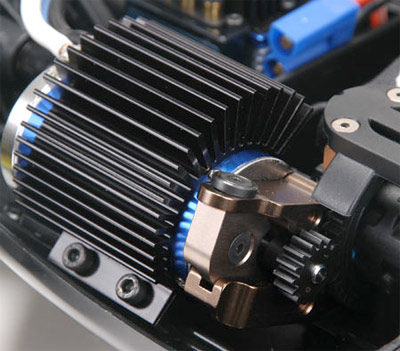
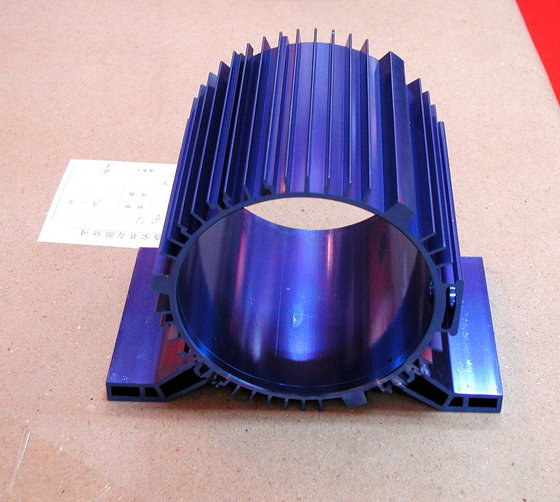
Your going to need thin fins and many of them..
With the copper coil just wrap the coil around the motor case, tape it down as you go, so it dont unwind. An idea with that is get some heat sink transfer grease to help that sink work well.

You might be able to modify some CPU heat sinks from the scrap yard . i know you can find them there alot.

Here is a few pic off hand I found.
For RC car motors, but you get the idea.


Status
Not open for further replies.
Top